Notes on verb agreement prefixes in Tibeto-Burman
Book information
Description
Himalayan Linguistics, Vol. 10(1), 2011. - p. 1–29. - ISSN 1544-7502Research on comparative Tibeto-Burman verbal morphology has achieved preliminary reconstructions of the hierchical patterns and position classes of the agreement system. The status of the prefixes which are part of the system in some branches remains problematic. Only one true personal agreement prefix, 2nd person #te-, appears to be as ancient as the suffixal agreement series. Others are language-specific innovations more recent than PTB. One clue to the origin of these secondary prefixes, as David Watters and Sun Hongkai have suggested, is their resemblance to possessive pronominal prefixes. The 2nd person k- prefix which several scholars reconstruct is a secondary intrusion of a 2nd person possessive prefix into the verb paradigm. The “marked scenario” prefix found in some Nung and Kiranti languages is likewise a secondary innovation in which original #te- was replaced by 2nd person #na- or #i-, the latter originally a 1pl Inclusive index.
Similar books

The Tibeto-Burman languages of Nepal: A general survey

Китайско-тибетские языки
DOC
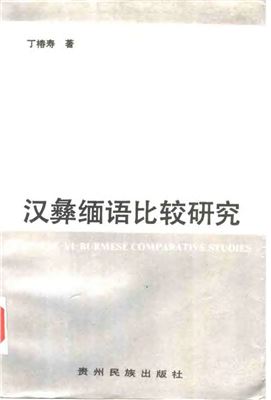
Chinese-Yi-Burmese comparative studies. 丁椿寿 汉彝缅语比较研究

Proceedings of the 21st North American conference on Chinese linguistics. Volume 2

Proceedings of the 21st North American conference on Chinese linguistics. Volume 1

Proceedings of the 23rd North American conference on Chinese linguistics. Volume 2

Proceedings of the 23rd North American conference on Chinese linguistics. Volume 1
