The Routledge Handbook of Language and Persuasion
Book information
Description
This handbook provides a wide-ranging, authoritative, and cutting-edge overview of language and persuasion. Featuring a range of international contributors, the handbook outlines the basic materials of linguistic persuasion – sound, words, syntax, and discourse – and the rhetorical basics that they enable, such as appeals, argument schemes, arrangement strategies, and accommodation devices. After a comprehensive introduction that brings together the elements of linguistics and the vectors of rhetoric, the handbook is divided into six parts. Part I covers the basic rhetorical appeals to character, the emotions, argument schemes, and types of issues that constitute persuasion. Part II covers the enduring effects of persuasive language, from humor to polarization, while a special group of chapters in Part III examines figures of speech and their rhetorical uses. In Part IV, contributors focus on different fields and genres of argument as entry points for research into conventions of arguing. Part V examines the evolutionary and developmental roots of persuasive language, and Part VI highlights new computational methods of language analysis. This handbook is essential reading for those researching and studying persuasive language in the fields of linguistics, rhetoric, argumentation, communication, discourse studies, political science, psychology, digital studies, mass media, and journalism. Cover Half Title Series Page Title Page Copyright Page Dedication Table of Contents Acknowledgments List of contributors Rhetoric, Linguistics, and the Study of Persuasion: An Overview and an Introduction1 I.1 Chapter Overview I.2 Historical Roots I.3 The Basics of Grammar I.3.1 The Sign I.3.2 Levels of Analysis I.3.3 Pragmatics, Sociolinguistics, and Discourse Analysis I.3.4 Cognitive Linguistics I.4 The Basics of Rhetoric I.4.1 The Rhetorical Genres I.4.2 Three Appeals I.4.2.1 Ethos I.4.2.2 Pathos I.4.2.3 Logos I.4.3 The Five Canons of Rhetoric I.4.3.1 Invention Issue Identification: Stases and Theses Topoi I.4.3.2 Units of Delivery and Arrangement I.4.3.3 Memory I.4.3.4 Style Criteria for Judgment and Standards of Composition Accommodation and Levels of Style Figures Prosody and Pace I.5 New Directions and Enduring Questions I.5.1 Designing Studies of Persuasive Language I.5.2 New Methods of Analysis under Development I.5.3 Enduring Questions Notes Works Cited Part I: Basic Constituents of Rhetorical Persuasion Chapter 1: Patterns of Argument: Aristotelian Topoi and Argumentation Schemes 1.1 Introduction 1.2 Aristotle’s Topoi 1.3 Contemporary Argumentation Theory 1.4 The Rhetorical Power of Argumentation Schemes 1.5 Conclusion Notes Works Cited Chapter 2: A Reason to Feel: Rhetorical Style and Pathotic Enthymemes in Political Discourse 2.1 Introduction 2.2 Appeals and Emotions 2.3 The Pathotic Enthymeme 2.4 Frame Metonymy 2.5 Pathotic Enthymemes in Practice 2.6 Conclusion Notes Works Cited Chapter 3: Exploring Expert Appeals to Ethos with Statistical Corpus Analysis: Personal and Contextual Factors and Their Influence on Climate Scientists’ Use of Appeals to Expertise 3.1 Introduction 3.2 Coding Appeals to Expertise 3.2.1 Corpus Building 3.2.2 Categorizing the Appeals 3.3 Descriptive Statistical Analyses 3.4 Inferential Statistical Analyses 3.4.1 Personal Attributes 3.4.2 Contextual Factors 3.5 Conclusion Notes Works Cited Chapter 4: Stasis: Moving People to Action 4.1 Introduction 4.2 The Stases as a System 4.3 The Special Features of Individual Stases 4.3.1 Existence 4.3.2 Definition 4.3.3 Cause 4.3.4 Value 4.3.5 Action 4.4 Conclusion Notes Works Cited Chapter 5: Making Meaning out of Texts: An Approach through the Interpretive Stases 5.1 Introduction 5.2 The Text 5.3 Words 5.3.1 Ambiguity 5.3.2 Definition 5.4 Sentences 5.5 Passages 5.5.1 Conflicting Passages 5.5.2 Jurisdiction: Textual Boundaries 5.6 Intention and Other Animating Sources of Meaning 5.6.1 The Letter of a Text 5.6.2 The Spirit of a Text: Tropes 5.6.3 Intentional Ambiguity, Vagueness, and Inconsistency 5.7 Inference 5.7.1 Assimilation: Deduction, Induction, Eduction 5.7.2 Widening and Narrowing the Gap 5.8 Interpretive Linchpins 5.9 Interpretive Topoi 5.10 Case Study: The Declaration of Independence 5.11 Conclusion Works Cited Chapter 6: Using Examples to Misrepresent the World 6.1 Introduction 6.2 A Brief History of Exempla 6.3 Examples: Exemplifying and Misrepresenting 6.4 Guidelines for Working Outwards and Observing Persuasion 6.4.1 José Branco Speaking at the Annual Portuguese Parliamentary Celebration 6.4.2 Campaigning to Become Prime Minister of the United Kingdom 6.4.3 Selling the Secrets of Seduction 6.5 Conclusion Notes Works Cited Part II: Enduring Features of Persuasive Language Chapter 7: Sonic Rhetoric: The Persuasive Power of Spoken Language 7.1 Introduction 7.2 Prosodic Features 7.3 Sonic Rhetoric in the Classical View 7.4 The Sonics of Emotion 7.5 Communicating Pathos Vocally 7.6 The Sonics of Character 7.7 Communicating Ethos Vocally 7.8 The Sonics of Logos 7.9 Conclusion Works Cited Chapter 8: Humor 8.1 Introduction 8.2 Theories of Humor 8.3 Humor at Different Levels of Language 8.3.1 Phonology and Lexis: Puns and Wordplay 8.3.2 Syntax: Ambiguity and Resources 8.3.3 Pragmatics 8.3.4 Discourse 8.4 Conclusion Works Cited Chapter 9: Strategic Questioning 9.1 Introduction 9.2 Scholarly History of Strategic Questions 9.2.1 Strategic Questioning in Philosophical Inquiry 9.2.2 Strategic Questioning in a Rhetorical Perspective 9.2.3 Strategic Questioning in a Pragma-Linguistic Perspective 9.3 Contextualized Strategic Questions 9.3.1 Contextualized Rhetorical Questions 9.3.2 Contextualized Leading Questions 9.3.3 Contextualized Hypothetical Questions 9.3.4 Distinguishing Rhetorical Questions from Leading Questions and Hypothetical Questions 9.4 Strategic Questioning in Discourse Genres 9.4.1 Strategic Questioning in Media Discourse 9.4.2 Strategic Questioning in Legal Discourse 9.4.3 Strategic Questioning in Parliamentary Discourse 9.5 Conclusions Works Cited Chapter 10: Evaluating to Persuade in Statistical Framing: A Conceptual Tool for Rhetors and Audiences 10.1 Introduction 10.2 Statistics as Rhetorical and Statistical Framing 10.3 Overview of Methods of Amplification and the Appraisal Framework for Analysis of Statistical Rhetoric 10.4 Different and Legitimate Statistical Frames from the December 2017 U.S. Jobs Report 10.5 Providing Partial Context in Statistical Framing: Bacon and Cancer 10.6 Statistical Framing Accounting for Complexity in Tension with Convention: Acknowledgment and Pedagogy 10.7 Conclusion: Let the Numbers and People Deliberate Notes Works Cited Chapter 11: A Framework for Understanding Polarizing Language 11.1 Introduction 11.2 Defining Polarizing Language 11.3 A Framework for Understanding Polarizing Language 11.3.1 Face Threats and Polarized Thinking 11.3.2 Predicting Polarization: Notorious Sources and Absurd Arguments 11.3.3 Amplifiers of Message Discrepancy Effects 11.3.4 Dampers of Message Discrepancy Effects 11.3.5 Language Strength as Message Force 11.3.6 Message Force and Source Evaluation 11.3.7 Emotional Expression as Polarizing Language 11.3.8 Radicalized Reasoning as Polarizing Language 11.4 Exploring Contexts for Illustrating Polarizing Language 11.4.1 Genocide 11.4.2 Hostage Negotiation 11.4.3 Political Expressions 11.4.4 Domestic Terrorism 11.5 Conclusion: Understanding the Key Features of Polarizing Language Note Works Cited Part III: Figures of Speech in Persuasion Chapter 12: The Tropes: Metaphor and Its Friends 12.1 Introduction 1 12.2 Tropes: A Definition 12.3 Classical and Early Modern Views 12.4 Modern and Contemporary Views 12.4.1 The Four Master Tropes 12.4.2 Something Called Metaphor 12.5 Tropological Persuasions 12.5.1 Tropological Condensations 12.5.2 Metonymy, Synecdoche, and Their Frames 12.5.3 Metaphor, Simile, and Analogic Frames 12.6 Conclusion Notes Works Cited Chapter 13: The Rhetoric of Prosopopoeia : Persuading in Others’ Voices 13.1 Introduction 13.2 Prosopopoeia in Classical Context 13.3 Illustrative Forms: Progymnasmata 13.4 Contemporary Scholarship 13.4.1 Prosopopoeia 13.4.2 Animal Voices 13.5 Prosopopoeia as Persuasion 13.5.1 Animal Welfare 13.5.2 Politics 13.6 Conclusion Notes Works Cited Chapter 14: Phantasia, Enargeia, and Catachresis: Use and Abuse of Metaphors in Korean Political Rhetoric 14.1 Introduction 14.2 Phantasia and Enargeia 14.3 Catachresis as Abused Metaphor 14.4 Cases: Use and Abuse of Metaphors in Korean Political Rhetoric 14.4.1 Phantasia in the Metaphors of Korean Presidential Candidates 14.4.2 Phantasia and Enargeia in the Metaphors of Korean Presidents 14.4.3 Catachreses Committed by Korean Presidents 14.5 Conclusions Notes Works Cited Chapter 15: The Proleptic Suite 15.1 Introduction 15.2 Prolepsis: An Overview 15.3 A Flashback 15.4 Prolepsis ( Occupatio): Prolepsis as Anticipation and Rebuttal 15.5 Prolepsis (Ampliatio) : Prolepsis as Future Anteriority 15.6 Prolepsis (Praemonitio): Prolepsis as Presage 15.7 Concluding Remarks Note Works Cited Chapter 16: Litotes and Repetition: The Identification Engine in Classic Chinese Maxims 16.1 Introduction 16.2 Litotes: Definition and Classification 16.2.1 Definition 16.2.2 Classification 16.3 Identification via Repetitive Litotes in Classic Chinese Maxims 16.3.1 Kenneth Burke’s Identification Framework 16.3.2 Repetition: Types and Functions 16.3.3 Sympathy Identification via Repetitive NCDN Litotes 16.3.4 Antithesis Identification via Repetitive CDN Litotes 16.4 Conclusion Notes Works Cited Part IV: Fields and Genres of Persuasion Chapter 17: The Languages of Science 1 17.1 The Expansion of Denotative Control 17.2 Quantifications, Abbreviations, Noun Strings 17.3 From Vernaculars to a Lingua Franca 17.4 The Common Language of Mathematics 17.5 Experiments in Words Only 17.6 Language for Outsiders/Non-Scientists 17.7 Conclusion Notes Chapter 18: Legal/Forensic Persuasion 18.1 Introduction 18.2 Legal Persuasion and the History of Rhetoric 18.3 Legal Persuasion in the Courtroom 18.3.1 Persuasive Resources in the Courtroom 18.3.2 Legal Persuasion in the Various Phases of a Trial 18.4 Legal Persuasion and Judicial Interpretivism/Noninterpretivism 18.4.1 Interpretivism I: Textualism 18.4.2 Interpretivism II: Forms of Originalism 18.4.3 Noninterpretivist Legal Persuasion 18.4.3.1 Noninterpretivism I: Forms of Doctrinal Argument 18.4.3.2 Noninterpretivism II: Forms of Prudential Argument 18.4.3.3 Noninterpretivism III: Dissociation 18.4.3.4 Noninterpretivism IV: Metaphor and Narrative 18.5 Conclusion Works Cited Chapter 19: Asian American Persuasion: The Subtleties of Speaking with Others’ Words 19.1 Introduction 19.2 Crossing Borders 19.3 Laughing While Asian 19.4 Viral Exigencies 19.5 Conclusions Works Cited Chapter 20: Interactivity in Genre Forms: Ceremonial and Legislative Government Apologies as Distinct Rhetorical Acts Toward Reconciliation 20.1 Rhetorical Genre 20.2 Apologia and Apology 20.3 Governmental Apologies 20.4 Cases 20.4.1 PL 103-150: Apology for the Annexation of Hawai’i (1993) 6 20.4.2 S.J. Res. 14 – 111th Congress: Apology to Native Americans (2009) 7 20.4.3 President Clinton: Apology for Tuskegee Syphilis Experiments (1997) 8 20.4.4 Prime Minister Kevin Rudd: Apology to Australia’s Stolen Generations (2008) 10 20.5 Analysis 20.5.1 Audience Presence: Addressing, Naming, Partitioning 20.5.2 Speaker presence: First-person pronouns and subjective metadiscourse 20.5.3 Others’ presence: Orientation to Difference 20.6 Conclusion Notes Works Cited Chapter 21: Persuasion in Songs of Protest: Deliberation Through Metaphors and Music in South African Struggle Songs 21.1 Introduction 21.2 Music and Persuasion 21.3 Protest/Struggle Music 21.4 Struggle Music as Rhetoric 21.5 Metaphors and Persuasion 21.6 Persuasion in South African Struggle Songs 21.7 “Shona Malanga” 4 21.8 “Meadowlands” 5 21.9 Conclusion Notes Works Cited Chapter 22: Games, Language, and Persuasion 22.1 Introduction 22.2 Language-games 22.2.1 Game Work 22.3 Constraints 22.3.1 Constitutive Rules 22.3.2 Regulative Rules 22.4 Play and Persuasion 22.4.1 Identification 22.4.1.1 The Role of Identification in Journey 22.4.2 Rhetorical Situations 22.4.2.1 Rhetorical Situations in The Voter Suppression Trail 22.5 Ludic Language and Discourse 22.5.1 Ludolects 22.5.2 Metaludic Discourse 22.6 Approaches to Games, Language, and Persuasion 22.6.1 Rhetorics of Play 22.6.2 Procedural Rhetoric 22.6.3 Equipment for Living 22.6.4 Gamification 22.7 Conclusion Works Cited Chapter 23: Multi-Genre Arguing in the Sciences: The Genetics of Longevity Controversy 23.1 Introduction 23.2 Controversies as Context 23.3 Case Study: The Genetics of Longevity 23.3.1 Research Reported in News Outlets 23.3.2 Agency across Genres 23.3.3 Headlines Characterizing the Content 23.3.4 Characterization of the Evidence: The Sample 23.3.5 Characterization of the Findings 23.3.6 The Potential Medical Payoff 23.4 Controversy Over the Findings 23.4.1 Expert Commentary 23.4.2 Unfolding Rebuttal 23.4.3 Retraction and Its Coverage 23.5 Conclusion and Implications Works Cited Chapter 24: Propaganda 24.1 Introduction 24.2 A Brief History of Propaganda Scholarship 24.3 Propaganda as Manipulative, Anti-Democratic, and Intertextual 24.3.1 Manipulation 24.3.2 The Anti-Democratic Function of Propaganda 24.3.3 An Intertextual View of Propaganda 24.4 Case Study 24.5 Conclusion Notes Works Cited Part V: Roots of Persuasion Chapter 25: The Development of Persuasive Communication: Animals and the Evolved Mind 25.1 Introduction 25.2 Overview of the Field 25.2.1 Ethology, Zoosemiotics, and Animal Rhetorics 25.2.2 Rhetoricians, Animals, and Symbols 25.3 Ramifications for Humanist Researchers 25.3.1 Minds and Bodies 25.3.2 Persuasion and Sensation in Human and Nonhuman Animals 25.3.3 Did Persuasive Communication Evolve for All or One? 25.4 Conclusion Works Cited Chapter 26: Young Children’s Argumentative Contributions 26.1 Introduction 26.2 The Dialogue 26.3 The Implicit Content 26.3.1 Using Argument Schemes to Reconstruct Implicit Premises in Children’s Argumentation 26.3.2 Different Types of Premises in Children’s (and Adults’) Argumentation 26.4 The Context 26.4.1 Contexts Are Open to Interpretation 26.4.2 Contexts Can Be Designed to Provide Space for Argumentation 26.5 Conclusions Acknowledgments Notes Works Cited Chapter 27: Persuasive Language Development: The Case of Irony and Humour in Children’s Language 27.1 Introduction 27.2 Development of Irony: Production 27.3 Development of Irony: Comprehension 27.4 Constraints on Development 27.5 Humour Development 27.6 Conclusion Works Cited Chapter 28: Grounding Cognition: Intersections of Rhetorical Theory and Cognitive Science 28.1 Introduction 28.2 Historical Review 28.3 Attention Management 28.3.1 The Greater Attention System 28.3.2 Targeting System of Language (Talmy) 28.3.3 Three Stages of a Hearer’s Procedure 28.3.4 Cue Categories 28.3.5 Illustrating the Targeting System in Rhetorical Practices: Attending to Money 28.4 Framing 28.5 Emotional Disposition 28.6 Conclusion Notes Works Cited Part VI: Computational Methods of Examining Persuasive Language Chapter 29: Computer-Aided Close Reading: Visualizing Contrastive Persuasion Strategies 29.1 Introduction 29.2 Background 29.3 DocuScope’s Lineage and Its Ties to Other Projects in This Volume 29.4 Textual Experience 29.5 Topical Structure and Salience 29.6 Design Challenges and Tradeoffs 29.7 Applying DocuScope to the Contrastive Visualization/Analysis of Persuasive Texts 29.8 Jamelle Bouie’s Op-Ed: “Trump” Occupies the Center of Negative Attention 29.9 Chris Buskirk: “Democrat” Impeachment Efforts Are Feckless and Inauthentic 29.10 Conclusion Appendix: DocuScope Categories of Textual Experience Works Cited Chapter 30: Computer-Based Analysis: Argument Mining 30.1 Introduction 30.2 Methods of Argument Mining 30.3 Features of Persuasive Language 30.4 Rhetorical Figures 30.5 Statement Types 30.6 Argument Schemes 30.7 Persuasive Dialogue 30.8 Conclusion Notes Works Cited Glossary Index
Similar books

Rhetorical style: the uses of language in persuasion
2011 · PDF

The Linguistics Wars: Chomsky, Lakoff, and the Battle over Deep Structure
2021 · EPUB

The Linguistics Wars: Chomsky, Lakoff, and the Battle over Deep Structure
2021 · PDF

Rhetorical Style: The Uses of Language in Persuasion
2011 · PDF

The Linguistics Wars
1995 · DJVU

Rhetorical Figures in Science
1999 · PDF
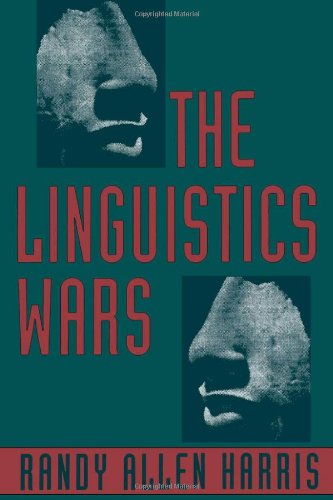
The Linguistics Wars
1995 · PDF

The Linguistics Wars
1993 · PDF