Historical Dictionary of Australian Aborigines
Book information
Description
The Australian Aborigines first arrived on the continent at least 60,000 years ago. They almost certainly landed on the northwest coast by sea from the nearby islands of the Indonesian archipelago. That first arrival may have been replicated many times over. The following exploration and settlement of a vast and varied continent was a venture of heroic proportions. The new settlers had reached southern Tasmania, the point farthest from the original landfall at least 30,000 years ago. By the early 17th century, when the first European seafarers arrived in Australian waters, the Aboriginal nations were living in every part of the continent, having colonized the tropical rainforests of the north, the vast arid deserts of the interior, and the cool and damp woodlands of the southeast.The Historical Dictionary of Australian Aborigines relates the history of Australia's indigenous inhabitants from their arrival on the continent 60,000 years ago to the centuries long European colonization process starting in the 1600s to their role in today's Australia. This is done through a chronology, an introductory essay, an extensive bibliography, and over 300 cross-referenced dictionary entries on significant persons, places, events, institutions, and aspects of culture, society, economy, and politics. This book is an excellent access point for students, researchers, and anyone wanting to know more about Australian Aboriginal peoples.
Similar books

Islam Dreaming: Indigenous Muslims in Australia
2011 · PDF

Webs of Empire: Locating New Zealand’s Colonial Past
2014 · PDF
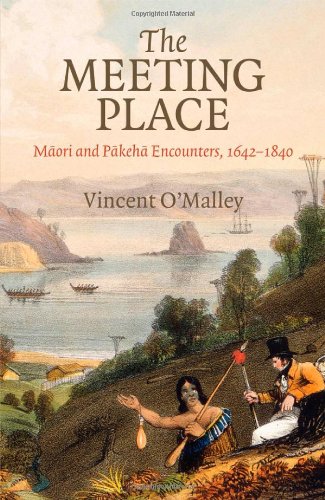
The Meeting Place: Māori and Pākehā Encounters, 1642–1840
2012 · PDF

A Simple Nullity?: The Wi Parata Case in New Zealand Law & History
2011 · PDF

Whaikōrero: The World of Māori Oratory
2010 · PDF

Hostile Shores: Catastrophic Events in Prehistoric New Zealand and Their Impact on Māori Coastal Communities
2008 · PDF

The Tribes of Muriwhenua: Their Stories and Origins
2002 · PDF

Rethinking Social Justice: From Peoples to Populations
2012 · PDF