Rethinking Social Justice: From Peoples to Populations
Book information
Description
In the early 1970s, Australian governments began to treat Aborigines and Torres Strait Islanders as “peoples” with capacities for self-government. Forty years later, confidence in Indigenous self-determination has been eroded by accounts of Indigenous pathology, misplaced policy optimism, and persistent socio-economic gaps. This record accounts for this shift by arguing that Australian thinking about the Indigenous is a continuing, unresolvable tussle between the ideas of “peoples” and “population.” Offering snapshots of moments in the last 40 years in these tensions are palpable—from honoring the heritage and quantifying the disadvantage to acknowledging colonization’s destruction and projecting Indigenous recovery from it—this book not only asks if a settler colonial state can instruct the colonized in the arts of self-government, but also how could it justify doing anything less.
Similar books

Islam Dreaming: Indigenous Muslims in Australia
2011 · PDF

Webs of Empire: Locating New Zealand’s Colonial Past
2014 · PDF
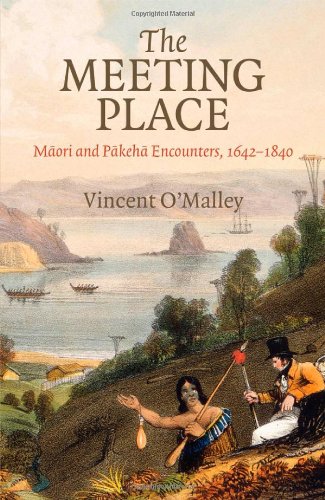
The Meeting Place: Māori and Pākehā Encounters, 1642–1840
2012 · PDF

A Simple Nullity?: The Wi Parata Case in New Zealand Law & History
2011 · PDF

Whaikōrero: The World of Māori Oratory
2010 · PDF

Hostile Shores: Catastrophic Events in Prehistoric New Zealand and Their Impact on Māori Coastal Communities
2008 · PDF

The Tribes of Muriwhenua: Their Stories and Origins
2002 · PDF

Historical Dictionary of Australian Aborigines
2010 · PDF