The Politics of Social Ties: Immigrants in an Ethnic Homeland (Southeast European Studies)
Book information
Description
After forced migration to a country where immigrants form an ethnic majority, why do some individuals support exclusivist and nationalist political parties while others do not? Based on extensive interviews and an original survey of 1,200 local Serbs and ethnic Serbian refugees fleeing violent conflict in Bosnia and Croatia, The Politics of Social Ties argues that those immigrants who form close interpersonal networks with others who share their experiences, such as the loss of family, friends, and home, in addition to the memory of ethnic violence from past wars, are more likely to vote for nationalist parties. Any political mobilization occurring within these interpersonal networks is not strategic, rather, individuals engage in political discussion with people who have a greater capacity for mutual empathy over the course of discussing other daily concerns. This book adds the dimension of ethnic identity to the analysis of individual political behavior, without treating ethnic groups as homogeneous social categories. It adds valuable insight to the existing literature on political behavior by emphasizing the role of social ties among individuals.
Similar books

The Politics of Social Ties: Immigrants in an Ethnic Homeland
2016 · EPUB

Amoral Communities: Collective Crimes in Time of War
2019 · PDF
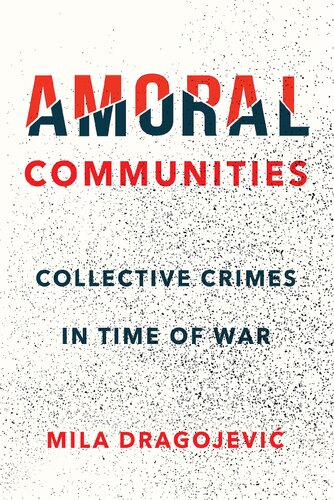
Amoral Communities: Collective Crimes in Time of War
2019 · PDF

The Politics of Social Ties: Immigrants in an Ethnic Homeland
2014 · PDF

MySQL® Notes for Professionals book
2018 · PDF

MrExcel 2022: Boosting Excel
2022 · PDF

MrExcel 2022: Boosting Excel
2022 · PDF

Session C11: Ancient Cultural Landscapes in South Europe – their Ecological Setting and Evolution, Session C22: Gardeners from South America, Session S04: Agro-Pastoralism and Early Metallurgy Sessions, Session WS29: The Idea of Enclosure in Recent Iberian Prehistory, Session C88: Rhytmes et causalites des dynamiques de l'anthropisation en Europe entre 6500 ET 500 BC: Hypotheses socio-culturelles et/ou climatiques: Proceedings of the XV UISPP World Congress (Lisbon 4-9 September 2006) / Actes du XV Congrès Mondial (Lisbonne 4-9 Septembre 2006) Vol.36
2010 · PDF