Greece’s labyrinth of language: A study in the early modern discovery of dialect diversity
Book information
Description
Contents Preface Acknowledgments Editorial choices 1 Introduction 1.1 The history of the Greek language in a nutshell 1.2 The dialects of ancient Greece in premodern scholarship: A typology of sources 1.3 Content in context 2 Order in chaos? Classifications of Greek dialects 2.1 Between mythology and dialectology 2.2 Four or five dialects? The two major dialect classifications in Greek scholarship 2.3 The Koine in Greek scholarship 2.4 Zooming in: Below the level of dialect 2.5 The Greek dialects in the ancient and medieval Latin world 2.6 Tradition and innovation: Old classifications and a new principle 2.7 The invention of a poetical dialect 2.8 Adapting traditional classifications 2.9 The Koine, an eternal problem? 2.10 Test case: Classifying vernacular Greek dialects 2.11 Conclusion 3 A true man of letters: Greek dialects and philology 3.1 The basic motivation: Reading Greek poetry 3.2 The dialects for the advanced philologist 3.2.1 Etymology 3.2.2 Textual criticism 3.2.3 Writing Greek poetry 3.3 Labyrinths and enigmas 3.4 Conclusion: Dialectology as an ancillary subfield of Greek philology 4 Dialects in the mixer: Homeric and Biblical Greek 4.1 Homeric Greek: Puzzling scholars since antiquity 4.2 In Plutarch’s footsteps: Renaissance ideas on Homer’s speech 4.3 Toward a historical solution 4.4 The struggle with Biblical Greek 4.5 New Testament Greek as a dialect mixture 4.6 Biblical Greek, a Hellenistic dialect? 4.7 Conclusion 5 Old, older, oldest: Writing the linguistic history of Greek 5.1 The linguistic history of Greek in ancient and medieval scholarship 5.2 In Strabo’s wake 5.3 The dialects between Greek and biblical genealogy 5.4 The early stages of the Greek language 5.5 The later fate of the Greek dialects: Extinction and vestiges 5.6 Aeolism and its early modern transformations 5.7 The Greek dialects in relation to other tongues 5.8 By way of conclusion: Linguistic histories of Greek 6 Using words like wax: The many mutations of the Greek dialects 6.1 Dialects and the pathology of words 6.2 The heritage of pathology 6.3 Beyond letter changes 6.4 Debating dialectal features 6.5 Conclusion 7 Picturing ancient Greece through the dialects 7.1 Texts and tribes 7.2 Dialect attitudes from antiquity to early modernity 7.3 Evaluative discourse between Greek and the vernacular 7.4 Beyond the early modern era 7.5 Geography, politics, and natural disposition 7.6 Reconstructing ancient Greece: Antiquarians on the dialects 7.7 Conclusion 8 The Greek dialects in confrontation 8.1 The vernaculars of Western Europe and the Greek reflex 8.1.1 Explanation: The Greek dialects in need of clarification 8.1.2 Justification and description: Greek as a polyvalent model 8.1.3 Dissociation: The particularity of the Greek dialects foregrounded 8.1.4 Synthesis 8.2 Latin: Uniquely uniform or diversified like Greek? 8.3 The Oriental language family and the Greek dialects 8.3.1 The Oriental dialects 8.3.2 Hebrew dialects 8.3.3 Summary 8.4 Conclusion: Between exemplarity and particularity 9 Conclusion Primary sources Secondary literature Index Name index Language index Subject index
Similar books

Borgerokko Maffia: Marokkaanse drugsmisdaad in Antwerpen
2017 · EPUB
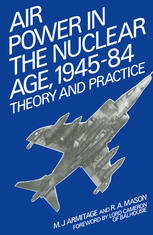
Air Power in the Nuclear Age, 1945–84: Theory and Practice
1985 · PDF

Air Power in the Nuclear Age, 1945–82: Theory and Practice
1983 · PDF

MySQL® Notes for Professionals book
2018 · PDF

MrExcel 2022: Boosting Excel
2022 · PDF

MrExcel 2022: Boosting Excel
2022 · PDF

Session C11: Ancient Cultural Landscapes in South Europe – their Ecological Setting and Evolution, Session C22: Gardeners from South America, Session S04: Agro-Pastoralism and Early Metallurgy Sessions, Session WS29: The Idea of Enclosure in Recent Iberian Prehistory, Session C88: Rhytmes et causalites des dynamiques de l'anthropisation en Europe entre 6500 ET 500 BC: Hypotheses socio-culturelles et/ou climatiques: Proceedings of the XV UISPP World Congress (Lisbon 4-9 September 2006) / Actes du XV Congrès Mondial (Lisbonne 4-9 Septembre 2006) Vol.36
2010 · PDF

THE BRITISH ARMY IN INDIA: ITS PRESERVATION BY AN APPROPRIATE CLOTHING, HOUSING, LOCATING, RECREATIVE EMPLOYMENT, AND HOPEFUL ENCOURAGEMENT OF THE TROOPS. with AN APPENDIX ON INDIA : THE CLIMATE OP ITS HILLS ; THE DEVELOPMENT OF ITS RESODRCBS, INDUSTRY, AND ARTS ; THE ADMINISTRATION OF JUSTICE ; THE BLACK ACT ; THE PROGRESS OF CHRISTIANITY ; THE TRAFFIC IN OPIUM ; THE VALUE OF INDIA ; PERMANENT CAUSES OF DISAFFECTION, AND OF THE RECENT REBELLION ; THE TRADITIONARY POLICY; MISGOVERNMENT BY NATIVE RULERS ; ANNEXATIONS OF THEIR TERRITORY, ETC.
1858 · PDF