Moral Identity in Early Modern English Literature
Book information
Description
Paul Cefalu's study explores the relationship between moral character and religious conversion in the poetry and prose of Sidney, Spenser, Donne, Herbert, and Milton, as well as in early modern English Conformist and Puritan sermons, theological tracts, and philosophical treatises. Cefalu argues that early modern Protestant theologians were often unable to incorporate a coherent theory of practical morality into the order of salvation. Cefalu draws on fresh historicist theories of ideology and subversion, but takes issue with historicist tendency to conflate generic and categorical distinctions among texts. He argues that imaginative literature, by virtue of its tendency to place characters in approximately real ethical quandaries, uniquely points out the inability of early modern English Protestant theology to merge religious theory and ethical practice. This study should appeal not only to literary critics and historians, but also to scholars interested in the history of moral theory.
Similar books

Tragic Cognition in Shakespeare’s Othello: Beyond the Neural Sublime
2015 · PDF

The Return of Theory in Early Modern English Studies: Tarrying with the Subjunctive
2011 · PDF
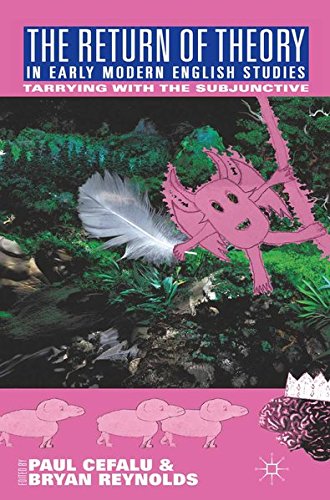
The Return of Theory in Early Modern English Studies: Tarrying with the Subjunctive
2014 · PDF

The Return of Theory in Early Modern English Studies, Volume II
2014 · PDF

Revisionist Shakespeare: Transitional Ideologies in Texts and Contexts
2004 · PDF

English Renaissance Literature and Contemporary Theory: Sublime Objects of Theology
2007 · PDF

English Renaissance Literature and Contemporary Theory: Sublime Objects of Theology
2007 · PDF

Revisionist Shakespeare: Transitional Ideologies in Texts and Contexts
2004 · PDF