Bioanalytical Chemistry: From Biomolecular Recognition to Nanobiosensing
Book information
Description
Bioanalytical chemistry plays today a central role in various fields, from healthcare to food and environmental control. This book presents the main methodologies for analyzing biomacromolecules, with a focus on methods based on molecular recognition. The six chapters move from fundamentals to the most recent advances, achieved by a synergetic combination of bio and nanotechnologies. The need for rapid and reliable analytical tools able to perform a large number of quantitative analyses, not only in centralized laboratories and core facilities but also for point-of-care testing, has been dramatically stressed by the recent crisis caused by the COVID-19 pandemic. The aim of the authors is to provide graduate students and young researchers with the elements of interdisciplinary knowledge necessary not only to use the wide arsenal of bioanalytical tools available today but also to contribute to the development of even more effective devices and methods. Introduces general concepts of molecular recognition in bioanalytical chemistry. Gives an overview of the core techniques and examines their strengths and weaknesses. Discusses innovative methods in bioanalysis and nano-biosensors. Cover Half Title Also of interest Bioanalytical Chemistry: From Biomolecular Recognition to Nanobiosensing Copyright Dedication Preface Contents About the authors Abbreviation list Symbol list 1. Biomacromolecules in analytical chemistry 1.1 Nucleic acids 1.1.1 Structure of nucleotides 1.1.2 Structure of oligonucleotides and duplexes 1.1.3 DNA and genetic information: the central dogma of molecular biology 1.1.3.1 Genetic information in a biological system 1.1.3.2 DNA and the genetic information: mutations in DNA 1.1.4 Binding of oligonucleotides and thermodynamics 1.1.5 Synthetic DNA as a biochemical tool 1.1.5.1 Solid-phase DNA/RNA synthesis 1.1.5.2 Modified oligonucleotides 1.1.5.3 Post-synthetic labelling of modified oligonucleotides 1.2 Introduction to proteins 1.2.1 Amino acids 1.2.2 Zwitterionic character, pK and pI 1.2.3 The peptide bond 1.2.4 The structure of proteins 1.2.5 Protein folding and denaturation 1.2.6 The biological function of proteins 1.3 Enzymes 1.3.1 Substrate specificity 1.3.2 Active sites, coenzymes and cofactors 1.3.3 Oxidoreductases 1.3.4 Kinetics of enzymatic reactions 1.4 Antibodies and antigens 1.4.1 Methods to produce antibodies 1.4.2 Antibody structure 1.4.3 Classification of immunoglobulins 1.4.4 Antigen–antibody interaction 1.4.5 Factors influencing antigen–antibody interactions 1.4.6 Quantitative evaluation of antibody properties Further readings Books and book chapters Review and research papers 2. Introduction to bioanalytical assays and biosensors 2.1 Molecular biorecognition and analytical assays 2.1.1 Example: bioassays for lactate 2.2 Principles of kinetic analytical methods 2.3 Introduction to biosensors 2.4 Classification of biosensors according to the receptor 2.4.1 Catalytic biosensors 2.4.2 Affinity biosensors 2.5 Classification of biosensors on the basis of the transducer 2.6 Immobilisation of biomolecules 2.6.1 Physical entrapping within dialysis membranes 2.6.2 Physical adsorption of biomacromolecules 2.6.3 Electrostatic adsorption 2.6.4 Physical entrapment within a polymeric gel 2.6.5 Cross-linking with polyfunctional reagents 2.6.6 Non-specific covalent bonds 2.6.7 Specific covalent bonds 2.6.8 Biospecific adsorption 2.7 Immobilisation of biomolecules in practice 2.7.1 Entrapment within dialysis membranes 2.7.2 Entrapment within polymeric matrices 2.7.2.1 Enzyme entrapment in the polymer structure during chemical polymerisation 2.7.2.2 Enzyme entrapment in electropolymerised films 2.7.2.3 Enzyme entrapment with sol–gel technique 2.7.2.4 Entrapment within polyelectrolyte polymers 2.7.3 Encapsulation in bilayer lipid membranes 2.7.4 Cross-linking 2.7.5 Covalent bonding 2.8 Functionalisation of transducer surfaces 2.8.1 Self-assembled monolayers 2.8.2 Silanisation 2.8.3 Functionalisation of surfaces with diazonium salts Further readings 3. Enzymatic biosensors 3.1 Properties of immobilised enzymes 3.1.1 Effects of the thickness of the enzymatic layer 3.2 Electrochemical biosensors 3.2.1 Potentiometric biosensors 3.2.1.1 Ion-selective electrodes 3.2.1.2 From ISE to potentiometric biosensors 3.2.2 Principles of dynamic electrochemical techniques 3.2.2.1 Reactions controlled by mass transport 3.2.2.2 Fundamentals of cyclic voltammetry 3.2.2.3 Steady-state voltammetric techniques 3.2.3 Electron transfer between enzymes and electrodes 3.2.3.1 Direct and mediated electron transfer 3.2.3.2 Deviations from the ideal catalytic CV 3.2.3.3 Catalytic current 3.2.4 Amperometric biosensors 3.2.4.1 Electrochemical glucose biosensors: a successful story 3.2.4.2 Commercial glucose biosensors 3.3 Optical biosensors 3.3.1 Optical fibres 3.3.2 Light source and detector 3.3.3 Optical phenomena employed in biosensors 3.3.3.1 Absorption 3.3.3.2 Fluorescence 3.3.3.3 Chemiluminescence 3.3.3.4 Bioluminescence 3.3.4 Principles of the most common optical sensors 3.3.4.1 Optical sensors for H+ (or pH) 3.3.4.2 Optical sensors for ammonia and carbonate 3.3.4.3 Optical sensors for oxygen 3.3.5 Enzymatic optodes 3.3.5.1 Bio-optodes for glucose 3.3.5.2 Bio-optodes detecting NADH 3.3.5.3 Bio-optodes based on inhibition reactions Further readings 4. Immunochemical assays and immunosensors 4.1 Introduction 4.2 Immunoprecipitation and radioimmunoassay 4.3 Enzyme immunoassays (EIA and ELISA) 4.4 Lateral flow immunoassays 4.4.1 Pregnancy test 4.4.2 Strip tests for antibodies and antigens related to SARS-CoV-2 4.5 Western blotting 4.5.1 Electrophoretic separation 4.5.2 Transfer to solid membrane 4.5.3 Blocking unspecific binding 4.5.4 Incubation with antibodies 4.5.5 Detection 4.6 Enzyme label immunosensors 4.7 Microbead-based immunoassays 4.7.1 Multiplexed microbead immunoassays based on flow cytometry 4.7.2 Magnetic beads electrochemiluminescence assays 4.7.3 Mechanism of electrochemiluminescence 4.8 Label-free immunosensors: SPR and QCM 4.8.1 Surface plasmon resonance immunosensors 4.8.2 Quartz crystal microbalance: immunosensors based on piezoelectric effect Further readings 5. Analysis of nucleic acids 5.1 DNA extraction 5.2 Southern blotting 5.3 Amplification and detection of specific DNA sequences: PCR 5.3.1 The polymerase chain reaction 5.3.2 Analytical PCR: quantitative PCR or real-time PCR 5.3.3 Signal generation in PCR 5.3.4 PCR in action: the coronavirus disease (COVID-19) 5.3.5 Digital PCR 5.4 DNA microarrays 5.5 DNA sequencing 5.5.1 Sanger sequencing 5.5.2 Illumina sequencing: an example of short-read next-generation sequencing 5.5.3 Pacific Biosciences and Oxford Nanopore Technologies sequencing: examples of long-read third-generation sequencing Further readings 6. Nanotechnologies for bioanalysis 6.1 Introduction 6.2 Classification of nanomaterials 6.2.1 Zero-dimensional nanomaterials 6.2.2 One-dimensional nanomaterials 6.2.2.1 Carbon nanotubes 6.2.2.2 Metal nanorods 6.2.2.3 Nanowires and nanofibres 6.2.3 Two-dimensional nanomaterials 6.2.4 Three-dimensional nanomaterials 6.3 Synthesis of nanomaterials 6.3.1 Approaches based on physical changes 6.3.1.1 Nanolithography 6.3.1.2 Milling 6.3.1.3 Electrospinning 6.3.2 Approaches based on chemical trasformations 6.3.2.1 Template synthesis 6.3.2.2 Seed-mediated growth 6.3.2.3 Hydrothermal synthesis 6.4 Functionalisation of nanomaterials 6.5 Analytical techniques for nanomaterial characterisation 6.6 Bioanalytical applications of nanomaterials 6.6.1 Optical properties of metal nanoparticles 6.6.2 DNA–AuNP sensors 6.6.3 Colorimetric detection of proteins with nanoparticles 6.6.4 SERS assay for DNA denaturation 6.7 Electrochemical nano-biosensors 6.7.1 Voltammetry with nanoelectrode arrays 6.7.2 Bioelectroanalysis with nanoelectrode arrays 6.8 Final remarks Further readings Index
Similar books
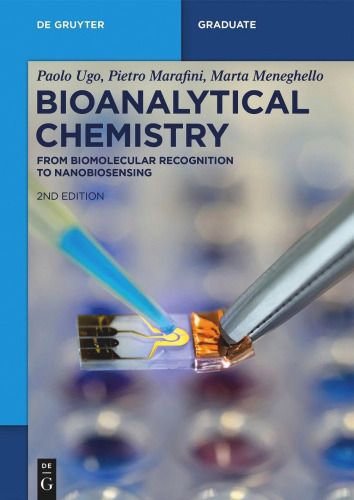
Bioanalytical Chemistry: From Biomolecular Recognition to Nanobiosensing
2025 · PDF

MySQL® Notes for Professionals book
2018 · PDF

MrExcel 2022: Boosting Excel
2022 · PDF

MrExcel 2022: Boosting Excel
2022 · PDF

Session C11: Ancient Cultural Landscapes in South Europe – their Ecological Setting and Evolution, Session C22: Gardeners from South America, Session S04: Agro-Pastoralism and Early Metallurgy Sessions, Session WS29: The Idea of Enclosure in Recent Iberian Prehistory, Session C88: Rhytmes et causalites des dynamiques de l'anthropisation en Europe entre 6500 ET 500 BC: Hypotheses socio-culturelles et/ou climatiques: Proceedings of the XV UISPP World Congress (Lisbon 4-9 September 2006) / Actes du XV Congrès Mondial (Lisbonne 4-9 Septembre 2006) Vol.36
2010 · PDF

THE BRITISH ARMY IN INDIA: ITS PRESERVATION BY AN APPROPRIATE CLOTHING, HOUSING, LOCATING, RECREATIVE EMPLOYMENT, AND HOPEFUL ENCOURAGEMENT OF THE TROOPS. with AN APPENDIX ON INDIA : THE CLIMATE OP ITS HILLS ; THE DEVELOPMENT OF ITS RESODRCBS, INDUSTRY, AND ARTS ; THE ADMINISTRATION OF JUSTICE ; THE BLACK ACT ; THE PROGRESS OF CHRISTIANITY ; THE TRAFFIC IN OPIUM ; THE VALUE OF INDIA ; PERMANENT CAUSES OF DISAFFECTION, AND OF THE RECENT REBELLION ; THE TRADITIONARY POLICY; MISGOVERNMENT BY NATIVE RULERS ; ANNEXATIONS OF THEIR TERRITORY, ETC.
1858 · PDF

Idries Shah 27 Books Collection : A Perfumed Scorpion, A Veiled Gazelle, Caravan of Dreams, Darkest England, Destination Mecca, Evenings with Idries Shah, Knowing How to Know, Learning How to Learn, Letters and Lectures of Idries Shah, Neglected aspects of Sufi study, Observations, Oriental Magic, Reflections, Seeker after Truth, Special Illumination, Special Problems in the study of Sufi ideas, Sufi thought and action, Tales of the Dervishes, The Dermis Probe, The Elephant in the Dark, The Englishman Handbook, Idries Shah Antology, The Magic Monastery, The natives are restless, wisdom of the Idiots PDF.
2022 · PDF

The travels of Capts. Lewis and Clarke from St. Louis, by way of the Missouri and Columbia rivers, to the Pacific ocean; performed in the years 1804, 1805 & 1806, by order of the government of the United States. Containing delineations of the manners, customs, religion, &c. of the Indians, comp. from various authentic sources, and original documents, and a summary of the Statistical view of the Indian nations, from the official communication of Meriwether Lewis. Illustrated with a map of the country, inhabited by the western tribes of Indians
1809 · PDF