The Names of Science: Terminology and Language in the History of the Natural Sciences
Book information
Description
The history of science is echoed in the development of its language and the names chosen for its technical terms. The Names of Science examines in detail how, over time, new words have entered the scientific lexicon and how some of them, but far from all, have survived to the present. Why is a transistor called a transistor and not something else? Why was the term 'scientist' only coined in 1834, and why was the name regarded as controversial for a long time afterwards? There is a story behind every scientific word we use today. In this work, Helge Kragh tells many of these stories, taking a broad historical perspective from the Renaissance to the present. By combining elements of linguistics with the history of the natural sciences including physics, chemistry, and astronomy, this book offers a new and innovative perspective on the historical development of the natural sciences. Following an introductory list of useful linguistic terms, the book is structured in six chapters, which cover important phases in the history of science, dealing with a vast range of scientific terminology from physics, chemistry, geology, astronomy, to cosmology. It also considers, if only briefly, how English - and not, say, Latin or French - developed to become the internationally accepted language of science. Contrary to other works dealing with the subject, The Names of Science pays serious attention to the historical dimension of scientific language, and to the way in which scientists have, sometimes unconsciously, acted as linguists and neologists in their research work.
Similar books

Einsteins univers: en fysikers tanker om natur og erkendelse
2007 · EPUB

Sandhed (Tænkepauser; 18)
2013 · EPUB

Den sære historie om Venus' måne
2019 · EPUB

Quantum Generations: A History of Physics in the Twentieth Century
2020 · PDF

From Transuranic to Superheavy Elements: A Story of Dispute and Creation
2018 · EPUB

Niels Bohr and the Quantum Atom: The Bohr Model of Atomic Structure 1913-1925
2012 · PDF

Niels Bohr: On the Constitution of Atoms and Molecules
2022 · PDF
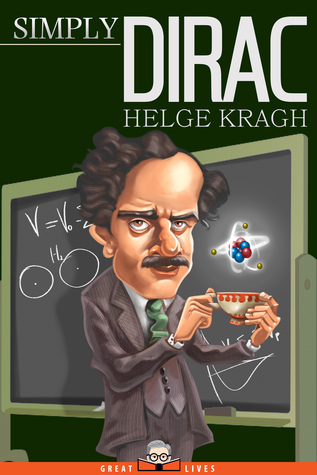
Simply Dirac
2016 · EPUB