Probability with applications in R
Book information
Description
Probability: With Applications and R; Copyright; Contents; Preface; Acknowledgments; Introduction; 1 First Principles; 1.1 Random Experiment, Sample Space, Event; 1.2 What Is a Probability?; 1.3 Probability Function; 1.4 Properties of Probabilities; 1.5 Equally Likely Outcomes; 1.6 Counting I; 1.7 Problem-Solving Strategies: Complements, Inclusion-Exclusion; 1.8 Random Variables; 1.9 A Closer Look at Random Variables; 1.10 A First Look at Simulation; 1.11 Summary; Exercises; 2 Conditional Probability; 2.1 Conditional Probability; 2.2 New Information Changes the Sample Space;"A good probability book at the undergraduate level should develop proper problem-solving skills and mathematical maturity; contain a nice mix of theory and application; and be useful in numerous client disciplines (such as computer science, economics, and engineering). It should be written by someone who has consistently taught the course over numerous years and is tolerant of varying levels of student/reader backgrounds. Probability with Applications in R by Robert Dobrow is such a book. Passionate about problem-solving methods and strategies, Dobrow offers guided assistance for techniques that can be generalized to a wide range of situations (e.g. taking complements, working with indicator variables, conditioning, etc.). The author also introduces and then emphasizes simulation (by way of the ever-increasing popularity of freeware R) throughout the text in order to illustrate concepts and highlight computational and theoretical results. Real-life data and examples, over 150 applications, and a multitude of simple and provocative exercises are prevalent. Other key features include discussion of probabilistic topics rather than combinatorial ones; multiple "point-of-view" arguments; and an early introduction to random variables"-- Probability: With Applications and R Copyright Contents Preface Acknowledgments Introduction 1 First Principles 1.1 Random Experiment, Sample Space, Event 1.2 What Is a Probability? 1.3 Probability Function 1.4 Properties of Probabilities 1.5 Equally Likely Outcomes 1.6 Counting I 1.7 Problem-Solving Strategies: Complements, Inclusion-Exclusion 1.8 Random Variables 1.9 A Closer Look at Random Variables 1.10 A First Look at Simulation 1.11 Summary Exercises 2 Conditional Probability 2.1 Conditional Probability 2.2 New Information Changes the Sample Space 2.3 Finding P(A and B)2.3.1 Birthday Problem 2.4 Conditioning and the Law of Total Probability 2.5 Bayes Formula and Inverting a Conditional Probability 2.6 Summary Exercises 3 Independence and Independent Trials 3.1 Independence and Dependence 3.2 Independent Random Variables 3.3 Bernoulli Sequences 3.4 Counting II 3.5 Binomial Distribution 3.6 Stirling's Approximation 3.7 Poisson Distribution 3.7.1 Poisson Approximation of Binomial Distribution 3.7.2 Poisson Limit 3.8 Product Spaces 3.9 Summary Exercises 4 Random Variables 4.1 Expectation 4.2 Functions of Random Variables4.3 Joint Distributions 4.4 Independent Random Variables 4.4.1 Sums of Independent Random Variables 4.5 Linearity of Expectation 4.5.1 Indicator Random Variables 4.6 Variance and Standard Deviation 4.7 Covariance and Correlation 4.8 Conditional Distribution 4.8.1 Introduction to Conditional Expectation 4.9 Properties of Covariance and Correlation 4.10 Expectation of a Function of a Random Variable 4.11 Summary Exercises 5 A Bounty of Discrete Distributions 5.1 Geometric Distribution 5.1.1 Memorylessness 5.1.2 Coupon Collecting and Tiger Counting5.1.3 How R Codes the Geometric Distribution 5.2 Negative Binomial-Up from the Geometric 5.3 Hypergeometric-Sampling Without Replacement 5.4 From Binomial to Multinomial 5.4.1 Multinomial Counts 5.5 Benford's Law 5.6 Summary Exercises 6 Continuous Probability 6.1 Probability Density Function 6.2 Cumulative Distribution Function 6.3 Uniform Distribution 6.4 Expectation and Variance 6.5 Exponential Distribution 6.5.1 Memorylessness 6.6 Functions of Random Variables I 6.6.1 Simulating a Continuous Random Variable 6.7 Joint Distributions 6.8 Independence6.8.1 Accept-Reject Method 6.9 Covariance, Correlation 6.10 Functions of Random Variables II 6.10.1 Maximums and Minimums 6.10.2 Sums of Random Variables 6.11 Geometric Probability 6.12 Summary Exercises 7 Continuous Distributions 7.1 Normal Distribution 7.1.1 Standard Normal Distribution 7.1.2 Normal Approximation of Binomial Distribution 7.1.3 Sums of Independent Normals 7.2 Gamma Distribution 7.2.1 Probability as a Technique of Integration 7.2.2 Sum of Independent Exponentials 7.3 Poisson Process 7.4 Beta Distribution
Similar books

Logic with a probability semantics: including solutions to some philosophical problems
2011 · PDF

Fabric Filtration for Combustion Sources: Fundamentals and Basic Technology
2020 · PDF

Film, Form, and Culture
2015 · PDF

Lessons for the Young Economists
2010 · EPUB

Cost engineering in printed circuit board manufacturing
2020 · PDF

Planet of the grapes: a geography of wine
2017 · EPUB
Lessons for the Young Economist.: (Arabic)
2010 · PDF
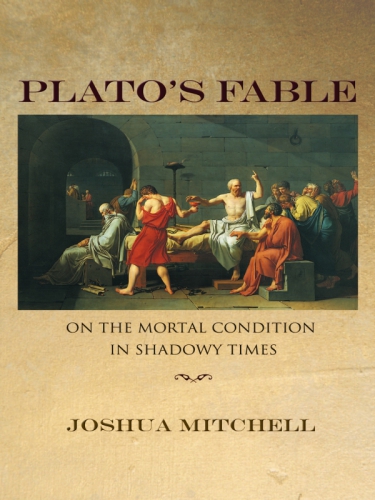
Plato's Fable: On the Mortal Condition in Shadowy Times
EPUB