The Other Middle East: An Anthology of Modern Levantine Literature
Book information
Description
This unique literary collection offers a window on the contemporary Levant, a region comprising most of Lebanon, Syria, Jordan, Palestine, Israel, Cyprus, parts of southern Turkey and northwestern Iraq, and the Sinai Peninsula. Originally written in Arabic, French, Aramaic, Lebanese, Egyptian, and Hebrew, and reflecting an extraordinary diversity of cultures, faiths, traditions, and languages, the selections in this book also convey a wide range of ideas and perspectives, to offer readers a nuanced understanding of the mosaic that is the contemporary Middle East. Franck Salameh, who compiled this anthology over the course of more than two decades, introduces and annotates each selection for the benefit of the uninitiated reader, offering background on the various peoples and politics of the Levant. In these pages, we discover a Middle East in which, as one writer puts it, “an Armenian and a Turk can still hold hands in the midst of massacres.”
Similar books

Charles Corm: An Intellectual Biography of a Twentieth-Century Lebanese "Young Phoenician"
2015 · PDF
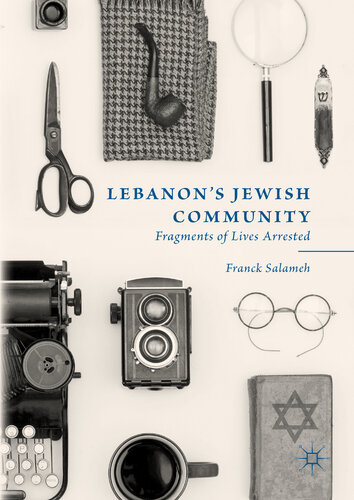
Lebanon’s Jewish Community: Fragments of Lives Arrested
2018 · EPUB

Lebanon’s Jewish Community: Fragments of Lives Arrested
2019 · PDF

Language, Memory, and Identity in the Middle East: The Case for Lebanon
2010 · PDF

MySQL® Notes for Professionals book
2018 · PDF

MrExcel 2022: Boosting Excel
2022 · PDF

MrExcel 2022: Boosting Excel
2022 · PDF

Session C11: Ancient Cultural Landscapes in South Europe – their Ecological Setting and Evolution, Session C22: Gardeners from South America, Session S04: Agro-Pastoralism and Early Metallurgy Sessions, Session WS29: The Idea of Enclosure in Recent Iberian Prehistory, Session C88: Rhytmes et causalites des dynamiques de l'anthropisation en Europe entre 6500 ET 500 BC: Hypotheses socio-culturelles et/ou climatiques: Proceedings of the XV UISPP World Congress (Lisbon 4-9 September 2006) / Actes du XV Congrès Mondial (Lisbonne 4-9 Septembre 2006) Vol.36
2010 · PDF