Dutch Cartesianism and the Birth of Philosophy of Science: From Regius to ‘s Gravesande
Book information
Description
How did the relations between philosophy and science evolve during the 17th and the 18th century? This book analyzes this issue by considering the history of Cartesianism in Dutch universities, as well as its legacy in the 18th century. It takes into account the ways in which the disciplines of logic and metaphysics became functional to the justification and reflection on the conceptual premises and the methods of natural philosophy, changing their traditional roles as art of reasoning and as science of being. This transformation took place as a result of two factors. First, logic and metaphysics (which included rational theology) were used to grant the status of indubitable knowledge of natural philosophy. Second, the debates internal to Cartesianism, as well as the emergence of alternative philosophical world-views (such as those of Hobbes, Spinoza, the experimental science and Newtonianism) progressively deprived such disciplines of their foundational function, and they started to become forms of reflection over given scientific practices, either Cartesian, experimental, or Newtonian.
Similar books

The Quarrel Over Swammerdam's Posthumous Works (Brill's Studies in Intellectual History)
2023 · PDF
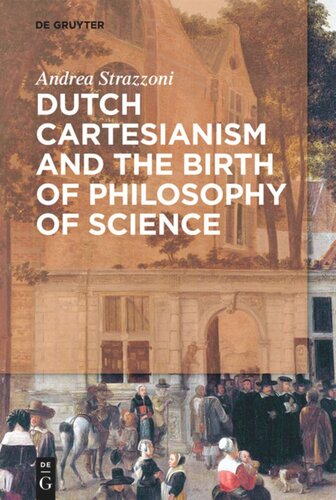
Dutch Cartesianism and the Birth of Philosophy of Science: From Regius to ‘s Gravesande
2018 · EPUB
Burchard de Volder and the Age of the Scientific Revolution
2019 · PDF

Dutch Cartesianism and the Birth of Philosophy of Science
2019 · PDF

Dutch Cartesianism and the Birth of Philosophy of Science
2018 · ZIP

MySQL® Notes for Professionals book
2018 · PDF

MrExcel 2022: Boosting Excel
2022 · PDF

MrExcel 2022: Boosting Excel
2022 · PDF