How to Live at the End of the World: Theory, Art, and Politics for the Anthropocene
Book information
Description
Assessing the dawn of the Anthropocene era, a poet and philosopher asks: How do we live at the end of the world? The end of the Holocene era is marked not just by melting glaciers or epic droughts, but by the near universal disappearance of shared social enterprise: the ruling class builds walls and lunar shuttles, while the rest of us contend with the atrophy of institutional integrity and the utter abdication of providing even minimal shelter from looming disaster. The irony of the Anthropocene era is that, in a neoliberal culture of the self, it is forcing us to consider ourselves as a collective again. For those of us who are not wealthy enough to start a colony on Mars or isolate ourselves from the world, the Anthropocene ends the fantasy of sheer individualism and worldlessness once and for all. It introduces a profound sense of time and events after the so-called "end of history" and an entirely new approach to solidarity. How to Live at the End of the World is a hopeful exploration of how we might inherit the name "Anthropocene," renarrate it, and revise our way of life or thought in view of it. In his book on time, art, and politics in an era of escalating climate change, Holloway takes up difficult, unanswered questions in recent work by Donna Haraway, Kathryn Yusoff, Bruno Latour, Dipesh Chakrabarty, and Isabelle Stengers, sketching a path toward a radical form of democracy—a zoocracy, or, a rule of all of the living.
Similar books

How to Live at the End of the World
2022 · EPUB
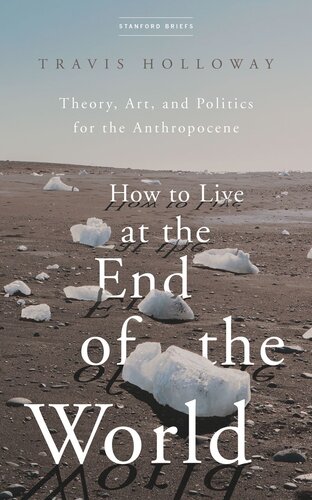
How to Live at the End of the World: Theory, Art, and Politics for the Anthropocene
2022 · PDF

MySQL® Notes for Professionals book
2018 · PDF

MrExcel 2022: Boosting Excel
2022 · PDF

MrExcel 2022: Boosting Excel
2022 · PDF

Session C11: Ancient Cultural Landscapes in South Europe – their Ecological Setting and Evolution, Session C22: Gardeners from South America, Session S04: Agro-Pastoralism and Early Metallurgy Sessions, Session WS29: The Idea of Enclosure in Recent Iberian Prehistory, Session C88: Rhytmes et causalites des dynamiques de l'anthropisation en Europe entre 6500 ET 500 BC: Hypotheses socio-culturelles et/ou climatiques: Proceedings of the XV UISPP World Congress (Lisbon 4-9 September 2006) / Actes du XV Congrès Mondial (Lisbonne 4-9 Septembre 2006) Vol.36
2010 · PDF

THE BRITISH ARMY IN INDIA: ITS PRESERVATION BY AN APPROPRIATE CLOTHING, HOUSING, LOCATING, RECREATIVE EMPLOYMENT, AND HOPEFUL ENCOURAGEMENT OF THE TROOPS. with AN APPENDIX ON INDIA : THE CLIMATE OP ITS HILLS ; THE DEVELOPMENT OF ITS RESODRCBS, INDUSTRY, AND ARTS ; THE ADMINISTRATION OF JUSTICE ; THE BLACK ACT ; THE PROGRESS OF CHRISTIANITY ; THE TRAFFIC IN OPIUM ; THE VALUE OF INDIA ; PERMANENT CAUSES OF DISAFFECTION, AND OF THE RECENT REBELLION ; THE TRADITIONARY POLICY; MISGOVERNMENT BY NATIVE RULERS ; ANNEXATIONS OF THEIR TERRITORY, ETC.
1858 · PDF

Idries Shah 27 Books Collection : A Perfumed Scorpion, A Veiled Gazelle, Caravan of Dreams, Darkest England, Destination Mecca, Evenings with Idries Shah, Knowing How to Know, Learning How to Learn, Letters and Lectures of Idries Shah, Neglected aspects of Sufi study, Observations, Oriental Magic, Reflections, Seeker after Truth, Special Illumination, Special Problems in the study of Sufi ideas, Sufi thought and action, Tales of the Dervishes, The Dermis Probe, The Elephant in the Dark, The Englishman Handbook, Idries Shah Antology, The Magic Monastery, The natives are restless, wisdom of the Idiots PDF.
2022 · PDF