Presidents in Semi-Presidential Regimes: Moderating Power in Portugal and Timor-Leste
Book information
Description
This book offers a comparative perspective on the semi-presidential regimes of Portugal and Timor-Leste, suggesting that they both reserve a “moderating power” for presidents in line with what was theorized by Benjamin Constant. Historical legacies, political culture and short-term political considerations combined create an institutional design that has endured and produced incentives to power-sharing and inclusiveness. A critical element of this model finds roots in the electoral system facilitating the emergence of “independent” presidents with political platforms that tend to supersede those of political parties. Elected presidents dispose of an array of competences that do not overlap with those of prime ministers, but represent a category of its own. The vast array of presidential competences contributes to reinforcing a system of checks and balances, and to foster horizontal accountability. The book argues that this specific form of government with “moderating powers” and presidents who are largely “independent” from the party system contributed to the successful democratic transitions of Portugal and Timor-Leste.
Similar books

Understanding Revolution: A Multi-Paradigmatic Approach
2020 · PDF

Local Power and Female Political Pathways in Turkey: Cycles of Exclusion
2020 · PDF
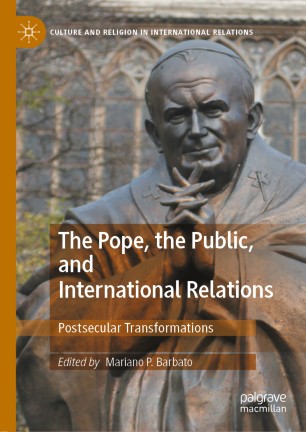
The Pope, the Public, and International Relations: Postsecular Transformations
2020 · PDF

The Palgrave Handbook of Gender, Sexuality, and Canadian Politics
2020 · PDF

Political Theory of Armed Groups: Social Order and Armed Groups
2020 · PDF

The Evolution of Social Institutions: Interdisciplinary Perspectives
2020 · PDF

Strategy in the 21st Century: The Continuing Relevance of Carl von Clausewitz
2020 · PDF

Nostra Aetate, Non-Christian Religions, and Interfaith Relations
2021 · PDF