Stone Tools in Human Evolution: Behavioral Differences among Technological Primates
Book information
Description
In Stone Tools in Human Evolution, John J. Shea argues that over the last three million years hominins' technological strategies shifted from occasional tool use, much like that seen among living non-human primates, to a uniquely human pattern of obligatory tool use. Examining how the lithic archaeological record changed over the course of human evolution, he compares tool use by living humans and non-human primates and predicts how the archaeological stone tool evidence should have changed as distinctively human behaviors evolved. Those behaviors include using cutting tools, logistical mobility (carrying things), language and symbolic artifacts, geographic dispersal and diaspora, and residential sedentism (living in the same place for prolonged periods). Shea then tests those predictions by analyzing the archaeological lithic record from 6,500 years ago to 3.5 million years ago. COVER CONTENTS FIGURES TABLES BOXES PREFACE ACKNOWLEDGMENTS CHAPTER 1 | INTRODUCTION CHAPTER 2 | HOW WE KNOW WHAT WE THINK WE KNOW ABOUT STONE TOOLS CHAPTER 3 | DESCRIBING STONE TOOLS CHAPTER 4 | STONE CUTTING TOOLS CHAPTER 5 | LOGISTICAL MOBILITY CHAPTER 6 | LANGUAGE AND SYMBOLIC ARTIFACTS CHAPTER 7 | DISPERSAL AND DIASPORA CHAPTER 8 | RESIDENTIAL SEDENTISM CHAPTER 9 | CONCLUSION APPENDIX | TRADITIONAL ARCHAEOLOGICAL AGE-STAGES AND INDUSTRIES GLOSSARY BIBLIOGRAPHY INDEX
Similar books

Reconstructing Late Pleistocene Human Behavior in the Jordan Rift Valley: The Middle Paleolithic stone tool assemblage from Ar Rasfa
2009 · PDF

The Unstoppable Human Species: The Emergence of Homo Sapiens in Prehistory
2023 · PDF

Prehistoric Stone Tools of Eastern Africa: A Guide
2020 · PDF
Out of Africa I: The First Hominin Colonization of Eurasia
2010 · PDF
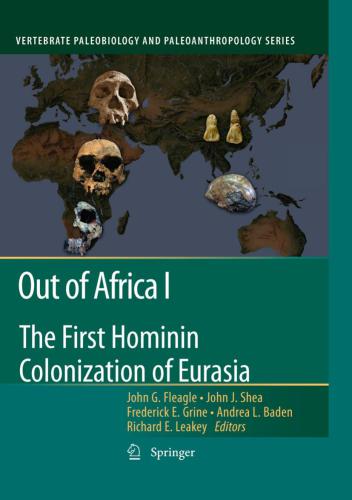
Out of Africa I: The First Hominin Colonization of Eurasia
2010 · PDF

Stone Tools in the Paleolithic and Neolithic Near East: A Guide
2013 · PDF

Out of Africa I: The First Hominin Colonization of Eurasia
2010 · PDF

MySQL® Notes for Professionals book
2018 · PDF