The Fourfold: Reading the Late Heidegger
Book information
Description
Heidegger’s later thought is a thinking of things, so argues Andrew J. Mitchell in The Fourfold. Heidegger understands these things in terms of what he names “the fourfold”—a convergence of relationships bringing together the earth, the sky, divinities, and mortals—and Mitchell’s book is the first detailed exegesis of this neglected aspect of Heidegger’s later thought. As such it provides entrée to the full landscape of Heidegger’s postwar thinking, offering striking new interpretations of the atomic bomb, technology, plants, animals, weather, time, language, the holy, mortality, dwelling, and more. What results is a conception of things as ecstatic, relational, singular, and, most provocatively, as intrinsically tied to their own technological commodification. A major new work that resonates beyond the confines of Heidegger scholarship, The Fourfold proposes nothing less than a new phenomenological thinking of relationality and mediation for understanding the things around us.
Similar books
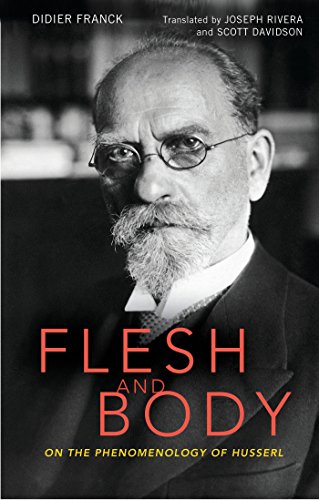
Flesh and Body: On the Phenomenology of Husserl
2014 · PDF

Normativity and Phenomenology in Husserl and Heidegger
2013 · PDF

Moral Emotions: Reclaiming the Evidence of the Heart
2014 · PDF

Knowing by Heart: Loving as Participation and Critique
2021 · PDF

Surprise: An Emotion?
2018 · PDF

Heidegger Among the Sculptors: Body, Space, and the Art of Dwelling
2010 · EPUB

Bremen and Freiburg Lectures: Insight Into That Which Is and Basic Principles of Thinking
2012 · PDF

Phenomenology and Mysticism: The Verticality of Religious Experience (Indiana Series in the Philosophy of Religion)
2007 · PDF