Cold War Kitchen: Americanization, Technology, and European Users
Book information
Description
Richard Nixon and Nikita Khrushchev's famous "kitchen debate" in 1958 involved more than the virtues of American appliances. Both Nixon and Khrushchev recognized the political symbolism of the modern kitchen; the kind of technological innovation represented in this everyday context spoke to the political system that produced it. The kitchen connects the "big" politics of politicians and statesmen to the "small" politics of users and interest groups. Cold War Kitchen looks at the kitchen as material object and symbol, considering the politics and the practices of one of the most famous technological icons of the mid-twentieth century. Defining the kitchen as a complex technological artifact as important as computers, cars, and nuclear missiles, the book examines the ways in which a range of social actors in Europe shaped the kitchen as both ideological construct and material practice. These actors—from manufacturers and modernist architects to housing reformers and feminists—constructed and domesticated the technological innovations of the postwar kitchen. The home became a "mediation junction" in which women users and others felt free to advise producers from the consumer's point of view. In essays illustrated by striking period photographs, the contributors to Cold War Kitchen consider such topics as Soviet consumers' ambivalent responses to the American dream kitchen argued over by Nixon and Khrushchev; the Frankfurter Küche, a European modernist kitchen of the interwar period (and its export to Turkey when its designer fled the Nazis); and the British state-subsidized kitchen design so innovative that it was mistaken for a luxury American product. The concluding essays challenge the received wisdom of past interpretations of the kitchen debate. Contributors : Esra Akcan, Liesbeth Bervoets, Cristina Carbone, Greg Castillo, Irene Cieraad, Shane Hamilton, Martina Hessler, Matthew Hilton, Julian Holder, Ruth Oldenziel, Susan E. Reid Kirsi Saarikangas, Karin Zachmann Inside Technology series
Similar books

Cold War kitchen: Americanization, technology, and European users
2009 · PDF
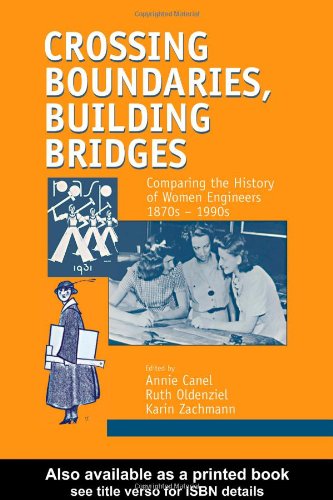
Crossing boundaries, building bridges: comparing the history of women engineers, 1870s-1990s
2000 · PDF

Making Technology Masculine: Men, Women, and Modern Machines in America, 1870-1945
2004 · PDF

MySQL® Notes for Professionals book
2018 · PDF

MrExcel 2022: Boosting Excel
2022 · PDF

MrExcel 2022: Boosting Excel
2022 · PDF

Session C11: Ancient Cultural Landscapes in South Europe – their Ecological Setting and Evolution, Session C22: Gardeners from South America, Session S04: Agro-Pastoralism and Early Metallurgy Sessions, Session WS29: The Idea of Enclosure in Recent Iberian Prehistory, Session C88: Rhytmes et causalites des dynamiques de l'anthropisation en Europe entre 6500 ET 500 BC: Hypotheses socio-culturelles et/ou climatiques: Proceedings of the XV UISPP World Congress (Lisbon 4-9 September 2006) / Actes du XV Congrès Mondial (Lisbonne 4-9 Septembre 2006) Vol.36
2010 · PDF

THE BRITISH ARMY IN INDIA: ITS PRESERVATION BY AN APPROPRIATE CLOTHING, HOUSING, LOCATING, RECREATIVE EMPLOYMENT, AND HOPEFUL ENCOURAGEMENT OF THE TROOPS. with AN APPENDIX ON INDIA : THE CLIMATE OP ITS HILLS ; THE DEVELOPMENT OF ITS RESODRCBS, INDUSTRY, AND ARTS ; THE ADMINISTRATION OF JUSTICE ; THE BLACK ACT ; THE PROGRESS OF CHRISTIANITY ; THE TRAFFIC IN OPIUM ; THE VALUE OF INDIA ; PERMANENT CAUSES OF DISAFFECTION, AND OF THE RECENT REBELLION ; THE TRADITIONARY POLICY; MISGOVERNMENT BY NATIVE RULERS ; ANNEXATIONS OF THEIR TERRITORY, ETC.
1858 · PDF