Popular Protest and Ideals of Democracy in Late Renaissance Italy
Book information
Description
Popular Protest and Ideals of Democracy in Late Renaissance Italy is the first study to analyse popular protest across the Italian peninsula and the Venetian colonies during the early modern period, 1494 to 1559. Drawing on over 100 contemporary chronicles and diaries, the fifty-eight volumes of Marin Sanudo's diplomatic dispatches, mercantile letters, and commentary, and 586 collective supplications scattered through archival sources from towns and villages in the Grand duchy of Milan, Samuel K. Cohn, Jr. places these incidents and their patterns in comparative perspectives, first with the late medieval heyday of popular revolt and then with regions north of the Alps. Cohn finds new developments during the early modern period such as an increase in women rebels, mutinies of soldiers, and new tactics of revolts such as shop closures, peaceful demonstrations of strength, and use of religious processions for discussions of tactics and strategies for obtaining logistic advantage. At the same time, these protests show convergences with the medieval Italian past, with leaders coming almost exclusively from the ranks of nonelites, religious ideology playing a surprisingly minor role, and the majority of revolts centring overwhelming in towns and cities. Finally, this study demonstrates that democracies do not just die under the duress of military occupation and growing powers of autocratic regimes. Ideals of representation and equality not only persisted; they could emerge in new forms and with greater sophistication. Cover Popular Protest and Ideals of Democracy in Late Renaissance Italy Copyright Dedication Acknowledgements Contents List of Figures, Charts, and Maps List of Abbreviations Maps Introduction: Questions and Sources Questions Sources Key Words: Revolt and Popolo The Databases Prologue: Decline in Popular Revolt in Fifteenth-Century Part I: Differences 1: Chants and Flags Chants Flags 2: Prices and Crises Conjuncture Grain Riots Success in Revolting 3: Women As Pictured by Chroniclers Celebrations Religious Movements Political Movements The Popolo’s Defence of Women Women as Rebels Beyond Supporting Roles 4: Shopkeepers and Soldiers Shopkeepers Processions Cross-Class Alliances Mutinies of Soldiers Part II: Convergences 5: Varieties of Protest: (i) Peasants, Alliances, Economics, Religion Peasant Protests City–Country Alliances ‘Economic’ Protests Religious Revolts: Anti-Semitic Violence Peace Movements and Further Religious Protest 6: Varieties of Revolt (ii): Leaders, Hate, Nobles, Ritual, Children, the Popolo Leaders Hate Revolts against Nobilities Ritual Children and Adolescents The Popolo Minuto Revolts of the Popolo Part III: Democracy 7: Ideals of Representation Cries of Libertà Revolts of Democracy (a) Elections (b) Parlamenti (c) Statutes ‘Capitoli’ (d) Revolts for Representation 8: Equality Collective Supplications Natural Disasters? Expressions of Equality and Inequality Exemptions Notions of Equality Compared Conclusion Bibliography Index
Similar books

Lust for Liberty: The Politics of Social Revolt in Medieval Europe, 1200–1425
2009 · PDF

Cultures of Plague: Medical thinking at the end of the Renaissance
2009 · PDF

Epidemics: Hate and Compassion from the Plague of Athens to AIDS
2018 · PDF

Cultures of Plague: Medical thought at the end of the Renaissance
2010 · PDF
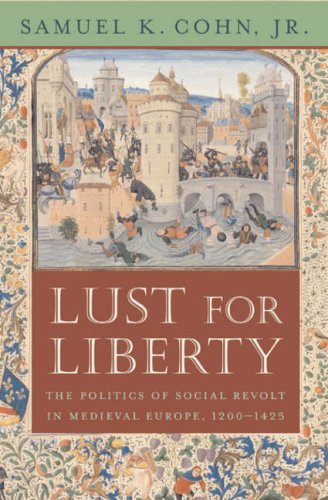
Lust for Liberty: The Politics of Social Revolt in Medieval Europe, 1200-1425
2006 · PDF

MySQL® Notes for Professionals book
2018 · PDF

MrExcel 2022: Boosting Excel
2022 · PDF

MrExcel 2022: Boosting Excel
2022 · PDF