The Baltic States and Weimar Ostpolitik
Book information
Description
The historical and geographical significance of the Baltic Sea as a Russian gateway to the West has sometimes overshadowed its reciprocal significance as a German window on the East, but in the period after the First World War the Baltic was to become of critical importance to a German state then shorn of much international authority. This study shows in detail how the Weimar Republic sought to develop its economic influence in the newly independent Baltic states, to ensure the retention of a vital 'springboard' into Russia after 1918. At one level this book therefore presents a fresh chapter in the chronicle of Weimar-Soviet relations. In addition, however, Germany's highly successful trade policy involved competition with other Western powers, notably Britain, and necessarily had important implications for inter-war international politics: analysis of Polish and French diplomatic intentions in the region leads Dr Hiden to a wider evaluation of the whole relationship between trade and foreign policy in Weimar Ostpolitik.
Similar books

The Weimar Republic (Seminar Studies)
1996 · PDF
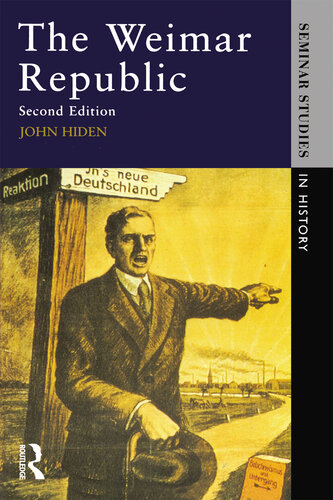
The Weimar Republic (Seminar Studies)
1996 · EPUB

Germany and Europe 1919-1939
2014 · EPUB

Republican and Fascist Germany: Themes and Variations in the History of Weimar and the Third Reich, 1918-1945
2020 · EPUB

Ethnic Diversity and the Nation State: National Cultural Autonomy Revisited
2012 · PDF

The Baltic and the Outbreak of the Second World War
1992 · PDF

The Baltic States and Weimar Ostpolitik
2002 · PDF

Neighbours or enemies?: Germans, the Baltic and beyond (On the Boundary of Two Worlds: Identity, Freedom, & Moral Imagination in the Baltics)
2008 · PDF