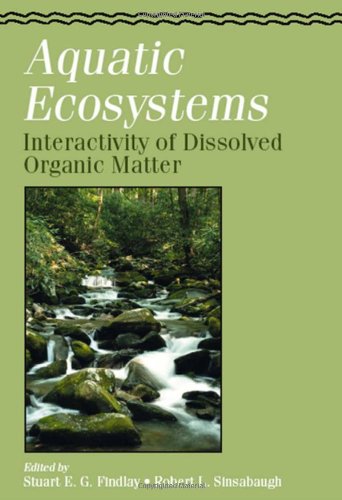
Aquatic Ecosystems: Interactivity of Dissolved Organic Matter (Aquatic Ecology)
Book information
Description
Aquatic Ecosystems explains the interplay between various movements of matter and energy through ecosystems mediated by Dissolved Organic Matter. This book provides information on how much DOM there is in a particular aquatic ecosystem and where it originates. It explains whether the DOM composition varies from time to time and place to place. It also details how DOM becomes incorporated into microbial food webs, and gives a better, clarifying, understanding to its significance of DOM. Dissolved Organic Matter (called DOM) is incredibly important in all aquatic ecosystems. Although it might seem that logs and leaves are more important, in fact the DOM is more crucial because the DOM is in a form that is available for use by all the organisms living in the the water. Furthermore, DOM influences complex food webs by mediating the availability of aquatic nutrients, metals, salts and minerals. DOM also affects water clarity, which of course has alters the way animals and plants live and feed in the water.There are many ways to study DOM and this book focuses on several central questions. How much DOM is there in a particular aquatic ecosytem? Where does it come from? Does the composition of the DOM vary from time to time and place to palce? How does DOM become incorporated into microbial food webs, which are the basis of plant, invertebrate and vertebrate food webs? How can the answers to these and other questions about DOM be considered together so that a better understanding of the significance of DOM can emerge?
Similar books

Aquatic Ecosystems: Interactivity of Dissolved Organic Matter
2002 · PDF

Aquatic Ecosystems, Interactivity of Dissolved Organic Matter
2003 · PDF
Aquatic Ecosystems: Interactivity of Dissolved Organic Matter (Aquatic Ecology)
2002 · PDF

MySQL® Notes for Professionals book
2018 · PDF

MrExcel 2022: Boosting Excel
2022 · PDF

MrExcel 2022: Boosting Excel
2022 · PDF

Session C11: Ancient Cultural Landscapes in South Europe – their Ecological Setting and Evolution, Session C22: Gardeners from South America, Session S04: Agro-Pastoralism and Early Metallurgy Sessions, Session WS29: The Idea of Enclosure in Recent Iberian Prehistory, Session C88: Rhytmes et causalites des dynamiques de l'anthropisation en Europe entre 6500 ET 500 BC: Hypotheses socio-culturelles et/ou climatiques: Proceedings of the XV UISPP World Congress (Lisbon 4-9 September 2006) / Actes du XV Congrès Mondial (Lisbonne 4-9 Septembre 2006) Vol.36
2010 · PDF

THE BRITISH ARMY IN INDIA: ITS PRESERVATION BY AN APPROPRIATE CLOTHING, HOUSING, LOCATING, RECREATIVE EMPLOYMENT, AND HOPEFUL ENCOURAGEMENT OF THE TROOPS. with AN APPENDIX ON INDIA : THE CLIMATE OP ITS HILLS ; THE DEVELOPMENT OF ITS RESODRCBS, INDUSTRY, AND ARTS ; THE ADMINISTRATION OF JUSTICE ; THE BLACK ACT ; THE PROGRESS OF CHRISTIANITY ; THE TRAFFIC IN OPIUM ; THE VALUE OF INDIA ; PERMANENT CAUSES OF DISAFFECTION, AND OF THE RECENT REBELLION ; THE TRADITIONARY POLICY; MISGOVERNMENT BY NATIVE RULERS ; ANNEXATIONS OF THEIR TERRITORY, ETC.
1858 · PDF