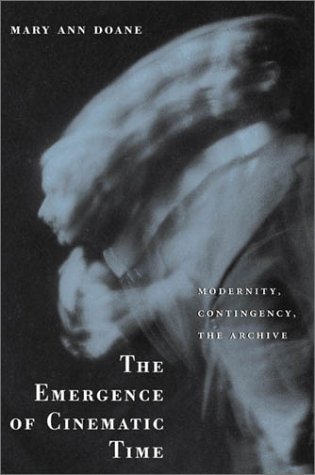
The Emergence of Cinematic Time: Modernity, Contingency, the Archive
Book information
Description
Hailed as the permanent record of fleeting moments, the cinema emerged at the turn of the nineteenth century as an unprecedented means of capturing time--and this at a moment when disciplines from physics to philosophy, and historical trends from industrialization to the expansion of capitalism, were transforming the very idea of time. In a work that itself captures and reconfigures the passing moments of art, history, and philosophy, Mary Ann Doane shows how the cinema, representing the singular instant of chance and ephemerality in the face of the increasing rationalization and standardization of the day, participated in the structuring of time and contingency in capitalist modernity. At this book's heart is the cinema's essential paradox: temporal continuity conveyed through "stopped time," the rapid succession of still frames or frozen images. Doane explores the role of this paradox, and of notions of the temporal indeterminacy and instability of an image, in shaping not just cinematic time but also modern ideas about continuity and discontinuity, archivability, contingency and determinism, and temporal irreversibility. A compelling meditation on the status of cinematic knowledge, her book is also an inquiry into the very heart and soul of modernity.
Similar books

Bigger Than Life: The Close-Up and Scale in the Cinema
2021 · PDF

The Emergence of Cinematic Time: Modernity, Contingency, the Archive
2002 · PDF
Bigger Than Life: The Close-Up and Scale in the Cinema
2021 · PDF

The Emergence of Cinematic Time: Modernity, Contingency, the Archive
2002 · PDF

Femmes Fatales: Feminism, Film Theory, Psychoanalysis
2013 · EPUB

The desire to desire : the woman's film of the 1940s
The Emergence of Cinematic Time: Modernity, Contingency, the Archive
2002 · PDF

Re-Vision Essays in Feminist Film Criticism (American Film Institute Monograph Series)
1984 · PDF