Metaphysics, Sophistry, and Illusion: Toward a Widespread Non-Factualism
Book information
Description
Metaphysics, Sophistry, and Illusion does two things. First, it introduces a novel kind of non-factualist view, and argues that we should endorse views of this kind in connection with a wide class of metaphysical questions, most notably, the abstract-object question and the composite-object question. (More specifically, Mark Balaguer argues that there's no fact of the matter whether there are any such things as abstract objects or composite objects--or material objects of any other kind.) Second, Metaphysics, Sophistry, and Illusion explains how these non-factualist views fit into a general anti-metaphysical view called neo-positivism, and explains how we could argue that neo-positivism is true. Neo-positivism is the view that every metaphysical question decomposes into some subquestions—call them Q1, Q2, Q3, etc.—such that, for each of these subquestions, one of the following three anti-metaphysical views is true of it: non-factualism, or scientism, or metaphysically innocent modal-truth-ism. These three views can be defined (very roughly) as follows: non-factualism about a question Q is the view that there's no fact of the matter about the answer to Q. Scientism about Q is the view that Q is an ordinary empirical-scientific question about some contingent aspect of physical reality, and Q can't be settled with an a priori philosophical argument. And metaphysically innocent modal-truth-ism about Q is the view that Q asks about the truth value of a modal sentence that's metaphysically innocent in the sense that it doesn't say anything about reality and, if it's true, isn't made true by reality. Dedication Table of Contents Acknowledgments 1. Introduction PART I: NON-FACTUALISM 2. Against Trivialism and Mere-Verbalism (and Toward a Better Understanding of the Kind of Non-Factualism Argued for in This Book) 3. How to Be a Fictionalist about Numbers and Tables and Just about Anything Else 4. Non-Factualism about Composite Objects (or Why There’s No Fact of the Matter Whether Any Material Objects Exist) 5. Non-Factualism about Abstract Objects 6. Modal Nothingism PART II: NEO-POSITIVISM 7. What Is Neo-Positivism and How Could We Argue for It? 8. Conceptual Analysis 9. Widespread Non-Factualism 10. A Worldview References Index
Similar books

Mathematical Anti-Realism and Modal Nothingism
2022 · PDF

Free Will
2013 · EPUB

Free Will
EPUB

Platonism and Anti-Platonism in Mathematics
1998 · PDF

Free Will as an Open Scientific Problem (A Bradford Book)
2009 · PDF

Free Will as an Open Scientific Problem
2009 · PDF

Platonism and anti-platonism in mathematics
1998 · DJVU
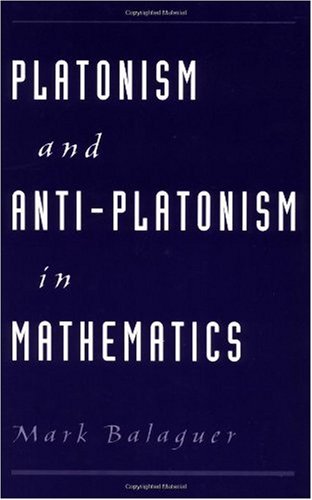
Platonism and anti-Platonism in mathematics
2001 · PDF