Biostimulants: Exploring Sources and Applications (Plant Life and Environment Dynamics)
Book information
Description
This edited book is a comprehensive compilation highlighting sources of biostimulants, their production, influence on plant growth and development, and regulatory status of plant biostimulants for better understanding and opening new vistas for future research. Biostimulants, the biological formulations are known to meliorate the plants growth and vigour, improve nutritional efficiency along with maintaining their well-being mainly via providing protection against a wide range of infections. Both horticultural as well as agricultural crops involve the utilization of the biostimulants. Fulvic and humic acids, nitrogen-containing compounds, protein hydrolysates, favourable bacteria and fungi, and extracts of seaweed are the chief active components of these. The major driving force for these materials is the organic farming industry and demand for sustainable crop production. This book will be of great interest to researchers, teachers, climate change scientists, capacity builders, and policy makers. Moreover, this book does the work of a supplementary reading for students in various fields such as agriculture, soil science, ecology, environmental science and forestry at undergraduate as well as graduate level. This will be a gainful read for national and international agricultural scientists and the policy makers. • Elaborates on biostimulants induced influence of plant growth and development • Covers all aspects of biostimulants sources and its role in plant life in detail • Discusses evidence based approach in biostimulants sources and its useful applications in plants Preface Contents About the Editors 1: Plant Biostimulants: Overview of Categories and Effects 1.1 Introduction 1.2 Sources of Biostimulants 1.3 Humic Substance 1.4 Smoke Water 1.5 Protein Hydrolysates and Amino Acids 1.6 Polysaccharides 1.7 Inorganic Compounds 1.7.1 Silicon (Si) 1.7.2 Selenium (Se) 1.8 Microorganisms 1.8.1 Fungi 1.8.2 Bacteria 1.9 Seaweeds References 2: Biostimulant Potential of Seaweed Extracts Derived from Laminaria and Ascophyllum nodosum 2.1 Introduction 2.2 Historical and Traditional Uses as Fertilizers 2.3 Biostimulant Uses 2.3.1 Plant Growth 2.3.2 Tolerance to Abiotic Stresses 2.3.3 Resistance to Biotic Stresses 2.3.4 Fruit Quality and Productivity 2.4 Conclusion References 3: Borage Extracts as Biostimulants of Plant Growth and Development 3.1 Plant Extracts 3.1.1 Extraction Methods 3.1.2 Plant Extract in Agriculture 3.2 Borage as Biostimulant Source 3.2.1 Taxonomical Classification 3.2.2 Botanical Characteristics 3.2.3 Origin and Cultivation 3.2.4 Phytochemical Constituents 3.2.5 Borage Uses 3.2.5.1 Evaluation of Borage Extracts as Potential Biostimulants References 4: Simple Organic Acids as Plant Biostimulants 4.1 Introduction 4.2 Physiological Implications: Foliar Organic Acids as they Regulate Plant Growth and Development 4.2.1 Malic Acid on Nitrogen Metabolism 4.2.2 Root Exudation of Organic Acids 4.2.2.1 Effect on Soil Flora and Fauna 4.2.3 Nutrients Abortion 4.2.4 Carbohydrate Partitioning 4.2.5 Protein Metabolism 4.2.6 Cell Membrane 4.2.7 Morphogenesis 4.2.8 Photosynthetic Parameters 4.2.8.1 Foliar 4.2.8.2 Added OA to Medium 4.2.9 Antioxidative Capacity and Stress Tolerance 4.2.9.1 Foliar OA 4.2.9.2 Adding OA Medium 4.2.10 Plant Defense 4.2.11 Miscellaneous 4.3 Agricultural Implications 4.3.1 Yield Components 4.3.1.1 Shoot 4.3.1.2 Leaf 4.3.1.3 Leaf Count 4.3.1.4 Florescence Count 4.3.1.5 Seed 4.3.1.6 Oil Production 4.3.1.7 Protein Content 4.3.1.8 Root 4.3.1.9 Bulb 4.3.1.10 Fruit Flowering 4.3.2 Stress Tolerance 4.3.2.1 Abiotic Stress Salt and Drought Stress Heat Stress Chilling Stress Nutrients Toxicity Addition to Growth Medium Foliar Application Other Abiotic Stress 4.3.2.2 Biotic Stress 4.3.3 Postharvest Quality 4.3.3.1 Oxalic Acid 4.3.3.2 Citric Acid 4.3.3.3 Malic Acid (L-Malic Acid) 4.3.3.4 Other Combinations 4.3.4 Secondary Metabolism and Essential Oil Production by Plants 4.3.5 Quality Indices of Product 4.3.6 Mineral Acquisition 4.3.7 Other 4.4 Conclusion References 5: Animal-Derived Hydrolyzed Protein and Its Biostimulant Effects 5.1 Regulatory Status of Animal-Derived Hydrolyzed Protein, Production Methods, and Characteristics 5.1.1 International Regulatory Status 5.1.2 European Regulatory Status 5.1.3 Production Processes 5.1.3.1 Acid or Alkaline Hydrolysis 5.1.3.2 Enzymatic Hydrolysis by Cell-Free Proteases 5.1.4 Physicochemical Characteristics and Analysis Methods 5.1.4.1 Raw Material Protein Chemistry 5.1.4.2 Chemical Characteristics of Hydrolyzed Protein 5.1.4.3 Analytical Methods Degree of Hydrolysis Racemization Degree Molecular Weight Distribution Determination of Free and Total Amino Acids Determination of Nitrogen Determination of Carbon Determination of Micro- and Macronutrients 5.2 The Effects of Animal-Derived Hydrolyzed Protein on Crop Performance 5.2.1 Plant Growth, Development, and Quality Traits 5.2.2 Response to Stresses 5.2.3 Nutrient Uptake and Assimilation 5.2.4 Impact on Soil Properties 5.2.5 Action Mechanisms of Hydrolyzed Protein: Experimental Evidences and Hypotheses 5.3 Conclusions References 6: Protein Hydrolysates as Biostimulants of Plant Growth and Development 6.1 Introduction 6.2 Proteins from By-Products for Hydrolysates Production 6.3 Fundamentals in Protein Hydrolysates Production 6.3.1 Amino Acid Content and Profile Analysis 6.3.2 Hydrolysis Degree 6.4 Protein Hydrolysate Production 6.4.1 Protein Substrates Treatment 6.4.2 Enzymatic Proteolysis Performance 6.5 Effects of PH-Based Biostimulant on Crops´ Traits 6.5.1 Foliar and Radicular Administration of Hydrolysates 6.5.2 Effects in Crop Growth and Quality 6.6 Approaches to Elucidate PH Mode of Action 6.6.1 High-Throughput Phenotyping Characterization 6.6.2 Metabolomic Analysis 6.6.3 Differential Gene Expression Analysis 6.7 Conclusions References 7: Biostimulants and Their Extraction from Food and Agro-Based Industries 7.1 Introduction 7.2 Biostimulants from Food and Agro-Based Industries 7.3 Modes of Action of Biostimulants from Organic Waste 7.4 Extraction of Biostimulants from Food and Agro Waste 7.5 Conclusion References 8: Foliar Application of Microbial and Plant-Based Biostimulants on Plant Nutrition 8.1 Introduction 8.2 Mode of Action of Biostimulants 8.3 Plant Biostimulants on Crop Growth and Yield 8.4 Implications of Biostimulants for Abiotic Stress Tolerances 8.5 Enhancing Nutrient Uptake and Translocation 8.6 Improving Nutrient Use Efficiency 8.7 Improving Nutritional and Nutraceutical Quality of Plant Products References 9: The Role of Biostimulants in Plant Growth, Development, and Abiotic Stress Management: Recent Insights 9.1 Introduction 9.2 Biostimulants as Plant Growth and Development Regulators: An Efficient Agronomic Tool 9.2.1 Abiotic Stress 9.3 Abiotic Stress Management Through Biostimulants Application 9.3.1 Salinity 9.3.2 Drought 9.3.3 Cold/Chilling Stress 9.3.4 Heat Stress 9.3.5 Heavy Metals 9.4 Future Thrust and Conclusion References 10: Role of Biostimulants in Agriculture 10.1 Introduction 10.2 Main Categories of Biostimulants 10.2.1 Humic Acid 10.2.2 Protein Hydrolysates and Amino Acids 10.2.3 Inorganic Compounds 10.2.4 Chitosan and Other Biopolymers 10.2.5 Microorganism 10.2.6 Fulvic Acid 10.2.7 Seaweed Extract 10.3 Effects/Applications of Biostimulants in Different Crops 10.3.1 Plant Growth, Yield, and Nutrient Efficiency 10.3.2 Physiology and Metabolism 10.3.3 Antioxidant Properties 10.3.4 Stimulation of Plant Defences Against Abiotic Stresses 10.3.5 Effect of Biostimulants on Physical Characteristics 10.3.6 Effect on Chemical Composition 10.4 Methods of Application 10.5 Conclusion References 11: Biostimulants: Emerging Trend and Opportunities 11.1 Introduction 11.2 Microbial Biostimulants 11.2.1 Mode of Action of Microbial Biostimulants 11.2.2 Novel Approach in Microbial Biostimulants Development 11.3 Protein Hydrolysates 11.3.1 Mode of Action of Protein Hydrolysates 11.3.2 Novel Approach in Protein Hydrolyzate Development 11.4 Algae Extracts 11.4.1 Production of Seaweeds 11.4.2 Biostimulatory Action of Seaweed 11.4.3 Novel Approach in Seaweed Extracts Development 11.5 Humic Substances 11.5.1 Humic Acids 11.5.2 Fulvic Acids 11.5.3 Humic Substances´ Effects 11.5.3.1 Direct Effects 11.5.3.2 Indirect Effects 11.5.4 Concluding Remarks and Potential Future Research 11.6 Conclusions and Perspectives References
Similar books
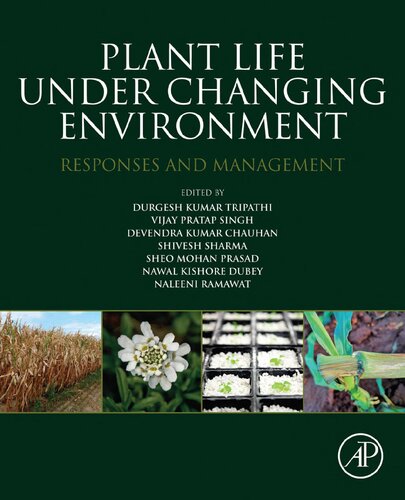
Plant Life under Changing Environment: Responses and Management
2019 · PDF

MySQL® Notes for Professionals book
2018 · PDF

MrExcel 2022: Boosting Excel
2022 · PDF

MrExcel 2022: Boosting Excel
2022 · PDF

Session C11: Ancient Cultural Landscapes in South Europe – their Ecological Setting and Evolution, Session C22: Gardeners from South America, Session S04: Agro-Pastoralism and Early Metallurgy Sessions, Session WS29: The Idea of Enclosure in Recent Iberian Prehistory, Session C88: Rhytmes et causalites des dynamiques de l'anthropisation en Europe entre 6500 ET 500 BC: Hypotheses socio-culturelles et/ou climatiques: Proceedings of the XV UISPP World Congress (Lisbon 4-9 September 2006) / Actes du XV Congrès Mondial (Lisbonne 4-9 Septembre 2006) Vol.36
2010 · PDF

THE BRITISH ARMY IN INDIA: ITS PRESERVATION BY AN APPROPRIATE CLOTHING, HOUSING, LOCATING, RECREATIVE EMPLOYMENT, AND HOPEFUL ENCOURAGEMENT OF THE TROOPS. with AN APPENDIX ON INDIA : THE CLIMATE OP ITS HILLS ; THE DEVELOPMENT OF ITS RESODRCBS, INDUSTRY, AND ARTS ; THE ADMINISTRATION OF JUSTICE ; THE BLACK ACT ; THE PROGRESS OF CHRISTIANITY ; THE TRAFFIC IN OPIUM ; THE VALUE OF INDIA ; PERMANENT CAUSES OF DISAFFECTION, AND OF THE RECENT REBELLION ; THE TRADITIONARY POLICY; MISGOVERNMENT BY NATIVE RULERS ; ANNEXATIONS OF THEIR TERRITORY, ETC.
1858 · PDF

Idries Shah 27 Books Collection : A Perfumed Scorpion, A Veiled Gazelle, Caravan of Dreams, Darkest England, Destination Mecca, Evenings with Idries Shah, Knowing How to Know, Learning How to Learn, Letters and Lectures of Idries Shah, Neglected aspects of Sufi study, Observations, Oriental Magic, Reflections, Seeker after Truth, Special Illumination, Special Problems in the study of Sufi ideas, Sufi thought and action, Tales of the Dervishes, The Dermis Probe, The Elephant in the Dark, The Englishman Handbook, Idries Shah Antology, The Magic Monastery, The natives are restless, wisdom of the Idiots PDF.
2022 · PDF

The travels of Capts. Lewis and Clarke from St. Louis, by way of the Missouri and Columbia rivers, to the Pacific ocean; performed in the years 1804, 1805 & 1806, by order of the government of the United States. Containing delineations of the manners, customs, religion, &c. of the Indians, comp. from various authentic sources, and original documents, and a summary of the Statistical view of the Indian nations, from the official communication of Meriwether Lewis. Illustrated with a map of the country, inhabited by the western tribes of Indians
1809 · PDF