Jewish Identity in Early Rabbinic Writings
Book information
Description
An original study of Jewish identity or 'Jewishness' in all its social and cultural dimensions in Talmudic and Midrashic writings. Topics include the physical embodiment of Jewish identity, the 'boundaries' of Israel, and resistance to assimilation. JEWISH IDENTITY IN EARLY RABBINIC WRITINGS Contents Acknowledginents Abbreviations Note on transliteration Introduction 1. The topic 2. Anthropological issues 3. Approaches to rabbinic writings 4. The historical dimension and its limits 5. Additional remarks I. Israel and the nations: assumptions, images and representations 1. Self and other: cultural representations A. The dialectics of self and other B. The other as a cultural construct 2. Jews and non:Jews: collectivity, polarity and interdependence A. Jews and non-Jews: nomenclature B. Israel as a single body C. The nations: plurality and ethnographic confusion D. Jacob and Esau: polarity and interdependence 3. The wicked and the righteous A. The non-Jews as wicked B. Israel as 'the righteous' 4. Animals and angels A. The non-Jews as animals B. Israel as angels 5. Israel among the nations and the world A. The superiority of Israel B. Israel in the world C. Non-Jewish attitudes towards Israel II. Identity, the commandments, and bodily experience 1. Non-Jewish impurity and the experience of revulsion A. Impurity B. Forbidden food C. The prepuce D. Revulsion and identity: a bodily experience 2. The bodily features of Israel A. Circumcision B. External features 3. The commandments: experience and praxis A. The commandments as a whole B. Torah learning C. Shabbat, festivals, and other customs 4. Conclusion Appendix to chapters I-II: Israel in symbolic imagery A. Rabbinic sources B. Archaeological sources III. The people of Israel: centre and periphery 1. Introduction: lineal identity and the 'periphery' 2. Converts A. Regular conversion B. Residents and slaves C. Kutim (Samaritans) 3. Apostates A. Apostasy: limited and comprehensive B. Minim and heresy C. The Sadducees 4. The common people A. Amei haAretz B. 'Sinners of Israel' 5. The rabbis and the people: a centripetal experience A. The problem of the 'grey areas' B. 'Israel' and centripetal experience C. Jewish identity and 'boundaries' IV. The protection of Jewish identity: dissociation and dissimilation 1. Social control: 'boundaries' and dissociation A. Commercial transactions B. Social relations C. Dissociation and Jewish identity D. The prohibition of intermarriage E. Preliminary conclusion 2. Cultural control: resistance to assimilation A. Introduction: assimilation and dissimilation B. Greek wisdom C. The ways of the Amorite D. The customs of the nations E. Clothes, names, and language 3. Conclusion V. Being Israel: solipsism, introversion and transcendence 1. Solipsism: the nations excluded A. The Torah and the commandments B. The Noahide laws C. The praxis of Jewish identity D. Solipsism: an interpretation 2. Tzeniut the ontology of concealment A. The norms of tzeniut B. Tzeniut and Jewish identity C. Ontology and habitus D. Women, tzeniut, and Jewish identity E. Conclusion 3. Transcendence: the Almighty and Israel A. Endearment to the Almighty B. 'Chosenness' and reciprocity C. Concreteness and transcendence D. Solipsism and transcendence E. Conclusion: Israel and covenantal transcendence Bibliography Index ARBEITEN ZUR GESCHICHTE DES ANTIKEN JUDENTUMS UNO DES URCHRISTENTUMS
Similar books

Zeitgemäßes Zuwanderungs- und Asylrecht - ein Problem der Industriestaaten: Internationale wissenschaftliche Tagung des Japanisch-Deutschen Zentrums Berlin vom 16. bis 18. Juni 2002
2003 · PDF

Les chansons Mozarabes
1953 · PDF

Eat Your Flowers
2023 · EPUB

New York 1900 metropolitan architecture and urbanism, 1890-1915
1983 · PDF
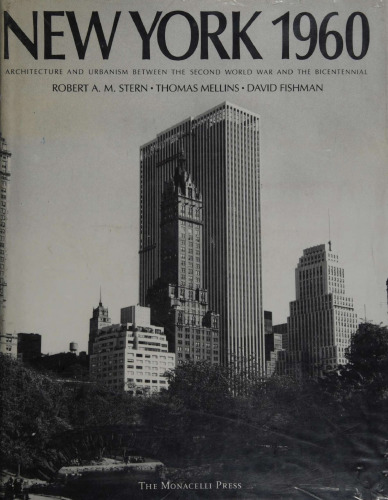
New York 1960 architecture and urbanism between the Second World War and the Bicentennial
1997 · PDF

Modern classicism
1988 · PDF

Howard Stern comes again
2019 · PDF

The Blue Willow Inn Cookbook
2013 · PDF