Handbook of Alkali-Activated Cements, Mortars and Concretes
Book information
Description
This book provides an updated state-of-the-art review on new developments in alkali-activation. The main binder of concrete, Portland cement, represents almost 80% of the total CO2 emissions of concrete which are about 6 to 7% of the Planet’s total CO2 emissions. This is particularly serious in the current context of climate change and it could get even worse because the demand for Portland cement is expected to increase by almost 200% by 2050 from 2010 levels, reaching 6000 million tons/year. Alkali-activated binders represent an alternative to Portland cement having higher durability and a lower CO2 footprint.Reviews the chemistry, mix design, manufacture and properties of alkali-activated cement-based concrete bindersConsiders performance in adverse environmental conditions.Offers equal emphasis on the science behind the technology and its use in civil engineering.
Similar books

Eco-efficient Materials for Mitigating Building Cooling Needs: Design, Properties and Applications
2015 · PDF

Handbook of recycled concrete and demolition waste
2013 · PDF

Adapting the Built Environment for Climate Change: Design Principles for Climate Emergencies
2023 · PDF

Advances in the Toxicity of Construction and Building Materials
2022 · PDF

Eco-efficient Pavement Construction Materials
2020 · PDF

Cost-Effective Energy Efficient Building Retrofitting: Materials, Technologies, Optimization and Case Studies
2017 · PDF
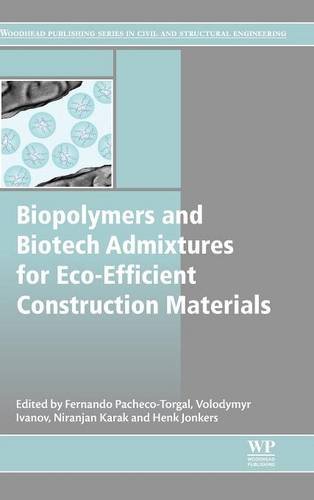
Biopolymers and Biotech Admixtures for Eco-Efficient Construction Materials
2016 · PDF

Start-Up Creation. The Smart Eco-Efficient Built Environment
2016 · PDF