Banking the World: Empirical Foundations of Financial Inclusion
Book information
Description
Experts report on the latest research on extending access to financial services to the 2.5 billion adults around the world who lack it. About 2.5 billion adults, just over half the world's adult population, lack bank accounts. If we are to realize the goal of extending banking and other financial services to this vast “unbanked” population, we need to consider not only such product innovations as microfinance and mobile banking but also issues of data accuracy, impact assessment, risk mitigation, technology adaptation, financial literacy, and local context. In Banking the World, experts take up these topics, reporting on new research that will guide both policy makers and scholars in a broader push to extend financial markets. The contributors consider such topics as the complexity of surveying people about their use of financial services; evidence of the impact of financial services on income; the occasional negative effects of financial services on poor households, including disincentives to work and overindebtedness; and tools for improving access such as nontraditional credit scores, financial incentives for banking, and identification technologies that can dramatically reduce loan default rates. Contents 1 Introduction: Banking the World I Where Are We Now? 2 Half the World Is Unbanked II Better Data 3 Cause and Effect of Financial Access: Cross-Country Evidence from the FinScope Surveys 4 How to Ask Households about Financial Services: Experimental Evidence from Ghana and Timor-Leste 5 Going with the Flow: Measuring Financial Usage in Poor Households III Creating Impact 6 The Economic Impact of Expanding Access to Finance in Mexico 7 Finance and Hunger: Empirical Evidence of the Agricultural Productivity Channel 8 Entrepreneurial Finance in the Western Balkans: Characteristics of the Newly Self-Employed in Albania, Bosnia and Herzegovina, and Serbia IV Cautionary Tales 9 The Impact of International Remittances on Income, Work Efforts, Poverty, and Inequality: Evidence from Vietnam Household Living Standard Surveys 10 Mortgage Finance in Central and Eastern Europe — Opportunity or Burden? V More than Products 11 Measuring Personality Traits and Predicting Loan Default with Experiments and Surveys 12 Valuing Financial Literacy 13 Use of Biometric Technology in Developing Countries 14 Accessing Credit from Banks, Microfinance Institutions, and Informal Groups: What Is the Role of Social Capital? VI Conclusion 15 Ten Research Questions Contributors Index
Similar books

Microeconomics Improve Your World
2020 · PDF

Microeconomics
2019 · PDF
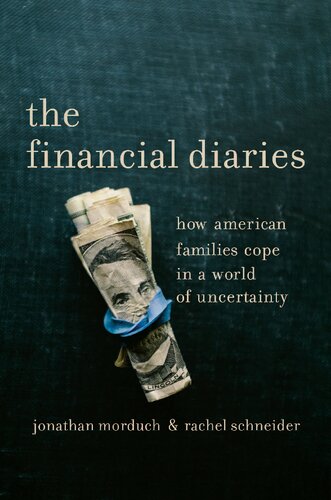
The Financial Diaries: How American Families Cope in a World of Uncertainty
2017 · PDF

Portfolios of the Poor: How the World’s Poor Live on $2 a Day
2010 · EPUB

Microeconomics
2013 · PDF

Portfolios of the Poor: How the World's Poor Live on $2 a Day
2009 · PDF

The Economics of Microfinance, Second Edition
2010 · PDF

The economics of microfinance
2005 · PDF