Jury nullification: the evolution of a doctrine
Book information
Description
Introduction. What jury independence is all about -- The origins of the doctrine. Pre-Revolutionary history -- Bushell's Case: recognition for jury independence -- Fox's Libel Act: British juries change the law -- Revolutionary times. Georgia v. Brailsford: a unanimous supreme court instruction -- The Fries Case and the Chase impeachment trial -- Jury independence in the state courts -- The development of the modern view. Resolving tensions between judge and jury -- The unconstitutionality of slavery: Spooner's influence on jury independence -- State legislative, judicial, and constitutional developments -- Sparf et al.: the Supreme Court rejects jury independence -- Vices, crimes, and the national prohibition act -- The modern era. State legislative, judicial, and constitutional developments revisited -- The Vietnam War cases: a preference for Sua Sponte nullification -- The current debate. Why juries still refuse to convict -- Political developments and renewed interest in independent juries -- Model fully informed jury act legislation -- Scapegoating the jury. The bigoted jury: acquittals in lynchings and civil rights murder cases -- The lynching cases -- The civil rights murders -- Can racist nullification be discouraged or controlled? -- The impartial jury: black victims, black defendants, and black jurors -- Inside the jury room: can jurors act responsibly when race is an issue? -- The capital jury. Early juror discretion in capital cases -- Furman and its progeny: resolving the disparities in capital sentencing -- The death-qualified jury -- Penry and the requirement of individualized sentencing -- The obligations of jury duty. Understanding the juror's oath -- The juror's oath in early American history -- What's a juror to do? -- The context of the juror's oath -- Other obligations jurors face -- The lawyer's challenge. Empowering the jury -- Theories and themes of the nullification case -- Voir dire -- Opening statement -- Presentation of evidence -- Closing argument -- Reconstruction of closing arguments in the Rodger Sless trial -- Summary. The role of the jury: a political question. Introduction. What jury independence is all about -- The origins of the doctrine. Pre-Revolutionary history -- Bushell's Case: recognition for jury independence -- Fox's Libel Act: British juries change the law -- Revolutionary times. Georgia v. Brailsford: a unanimous supreme court instruction -- The Fries Case and the Chase impeachment trial -- Jury independence in the state courts -- The development of the modern view. Resolving tensions between judge and jury -- The unconstitutionality of slavery: Spooner's influence on jury independence -- State legislative, judicial, and constitutional developments -- Sparf et al.: the Supreme Court rejects jury independence -- Vices, crimes, and the national prohibition act -- The modern era. State legislative, judicial, and constitutional developments revisited -- The Vietnam War cases: a preference for Sua Sponte nullification -- The current debate. Why juries still refuse to convict -- Political developments and renewed interest in independent juries -- Model fully informed jury act legislation -- Scapegoating the jury. The bigoted jury: acquittals in lynchings and civil rights murder cases -- The lynching cases -- The civil rights murders -- Can racist nullification be discouraged or controlled? -- The impartial jury: black victims, black defendants, and black jurors -- Inside the jury room: can jurors act responsibly when race is an issue? -- The capital jury. Early juror discretion in capital cases -- Furman and its progeny: resolving the disparities in capital sentencing -- The death-qualified jury -- Penry and the requirement of individualized sentencing -- The obligations of jury duty. Understanding the juror's oath -- The juror's oath in early American history -- What's a juror to do? -- The context of the juror's oath -- Other obligations jurors face -- The lawyer's challenge. Empowering the jury -- Theories and themes of the nullification case -- Voir dire -- Opening statement -- Presentation of evidence -- Closing argument -- Reconstruction of closing arguments in the Rodger Sless trial -- Summary. The role of the jury: a political question.
Similar books

Elizabeth of the Trinity Complete Works (vol. 2): Letters from Carmel
1984 · EPUB
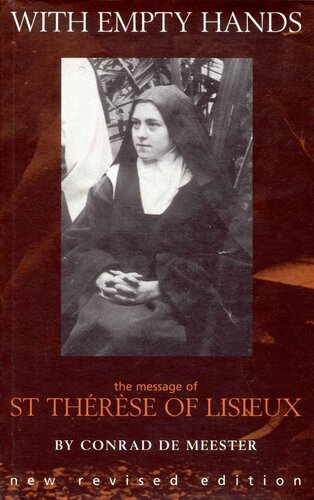
With Empty Hands: The Message of St. Therese of Lisieux
2014 · AZW3

With Empty Hands: The Message of St. Therese of Lisieux
2014 · MOBI

With Empty Hands: The Message of St. Therese of Lisieux
2014 · EPUB

Interdimensional Encounters: Tales of Interdimensional Entities and Their Trespass into Our World (Paranormal and Unexplained Mysteries Book 23)
2022 · EPUB

Breaking Through the Barrier of Time: Tales of Those Who Have Entertained Visions, Visionaries, and Visitors from the Future (Paranormal and Unexplained Mysteries Book 9)
2018 · EPUB

Reincarnation: Astonishing Cases of People Who Remember Their Past Lives (Paranormal and Unexplained Mysteries Book 13)
2019 · EPUB

Zugang zu Geodaten: Neue Impulse für das Informationsverwaltungsrecht durch die INSPIRE-Richtlinie
2014 · PDF