Hitler And The Rise Of The Nazi Party
Book information
Description
Now fully revised and reformatted, Hitler and the Rise of the Nazi Party is an indispensible guide to the history of the Nazi party between its initial electoral breakthrough in 1930 and its victory in 1933. Arguing that the Nazis owed their success as much to Hitler’s charismatic leadership and their own effective propaganda and organisation as to the weakness of the Weimar regime, Frank McDonough provides an original perspective on the subject as well as a concise, readable introduction to key events and debates. This new edition includes: • A new introduction on the broad context of Weimar Germany • Two new chapters on the reasons for the Nazi breakthrough in 1930 and on the crucial 1930-1933 period • New clearer student-friendly format Supported by an expanded documents section and fully revised bibliography, a chronology of key events and a who’s who of leading figures, Hitler and the Rise of the Nazi Party will provide an invaluable introduction for any student of this fascinating period. Cover Half Title Title Page Copyright Page Table of Contents Publisher’s acknowledgements Chronology Who’s who Glossary of terms and organisations PART ONE BACKGROUND 1 THE VULNERABILITIES OF WEIMAR DEMOCRACY, 1918–1933 Introduction The Impact of War The German Revolution of 1918 The Impact of Versailles The Culture of Violence The Constitution and the Emergency Powers of the President The Political Parties The Anti-Democratic Forces within the German State Economic Difficulties PART TWO ANALYSIS 2 ADOLF HITLER: PERSONALITY AND EARLY LIFE Family Background Parents Childhood Youth The Death of his Mother The Vienna Period (1908–1913) Hitler’s Political Ideas in Vienna Hitler’s Anti-Semitism in Vienna Munich (1913–1914) The First World War 3 THE EARLY GROWTH OF THE NAZI PARTY, 1918–1924 The Birth of the Nazi Party The Early Programme of the Nazi Party The Emergence of Hitler as Leader of the Nazi Party The Growth of the ‘Führer Cult’ The Munich Beer Hall Putsch 4 THE IDEOLOGY OF HITLER AND THE NAZI PARTY Links with Fascism and Totalitarianism The Historical Roots of Nazism The Philosophical Roots of National Socialism Hitler’s Central Role in Nazi Ideology The Importance of Foreign Policy The Centrality of Race The Function of Anti-Semitism and Anti-Marxism in Nazi Ideology The Folk Community The Function of Socialism in National Socialism 5 THE NAZI PARTY: ORGANISATION, PROPAGANDA AND MEMBERSHIP Organisation Propaganda Membership 6 THE NAZI BREAKTHROUGH, 1925–1930 A New Direction Rebuilding the Nazi Party The Strange Mystery of Hitler and Geli Raubal The Emergence of a New Nazi Party Election Strategy The Impact of ‘The Great Depression’ The Emergence of Hitler on the National Stage The Nazi Electoral Breakthrough in 1930 Why Did the Nazi Party Appeal to Voters? The Psychological Attraction of Nazism to Voters 7 HITLER’S INTRIGUING ROAD TO POWER, 1930–1933 The Brüning Experiment, 1930–1932 Hitler Courts Big Business and the Army Hitler Bids for the Presidency, 1932 Franz von Papen: A Nazi in a Pin-Striped Suit? The July 1932 Election and its Aftermath General von Schleicher’s Fifty-Seven Days in Office Hitler Comes to Power, January 1933 PART THREE ASSESSMENT 8 WHY DID HITLER COME TO POWER? PART FOUR DOCUMENTS 1 Hitler in Vienna 2 Hitler’s First Appearance at a Meeting of the German Workers’ Party 3 The Twenty-Five Points of the Nazi Party Programme 4 The Demands of the Nazi Party 5 Hitler on the Leadership Principle 6 The Munich Beer Hall Putsch 7 Hitler on the Key Lesson of the Munich Beer Hall Putsch 8 Joseph Goebbels’ Views on National Socialism 9 Hitler on the Power of the Spoken Word 10 The Nazi Party and Private Property 11 Hitler Debates the Meaning of ‘Socialism’ with Otto Strasser 12 Hitler Defines National Socialism 13 The Appeal of National Socialism: A Pacifist View 14 The Nazi Appeal to Farmers 15 A Schoolteacher Describes the Atmosphere at a Nazi Party Meeting 16 Hitler’s Speech to the Dusseldorf Industry Club 17 Edgar Jung on the ‘Conservative Revolution’ 18 ‘How Do We Struggle Against a Third Reich?’: The Views of a German Novelist 19 Joseph Goebbels Instructs Party Workers to Tone Down ‘Radical’ Aspects of the Nazi Programme 20 Countdown to Hitler Coming to Power 21 Hitler’s Views on Anti-Semitism 22 Hitler Defines the Difference between the Nazi Party and the Traditional German Conservative Party 23 Meeting of Hitler and Hindenburg, 13 August 1932 24 The Appeal of National Socialism to Youth REFERENCES BIBLIOGRAPHICAL ESSAY INDEX Plates Plate 1 Plate 2 Plate 3 Plate 4
Similar books
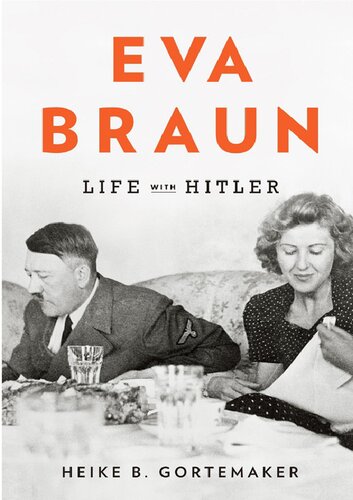
Eva Braun; Life with Hitler
2011 · PDF

Hitler And America
2011 · PDF

Hitler's Philosophers
EPUB

Young Hitler - the Making of the Fuhrer
2017 · EPUB

Hitler: The Pathology of Evil
2007 · PDF

Blitzed: drugs in the Third Reich
2017 · EPUB

Deathride: Hitler vs. Stalin - The Eastern Front, 1941-1945
2010 · EPUB

Deathride: Hitler vs. Stalin - The Eastern Front, 1941-1945
2010 · MOBI