Economic Governance in the Age of Globalization
Book information
Description
Rapid growth, reduced poverty, and stable societies: the announced benefits of the world economy celebrated by neoliberal proponents of "the Washington consensus" have failed to materialize. What does this failure mean for future world order and the U.S. role as global hegemon? Addressing this crucial question, William Tabb argues that global economic institutions such as the World Bank and the International Monetary Fund constitute a nascent international state for which all previous models of sovereignty, accountability and equity are inadequate. Integrating economics and political science, Tabb traces the emergence of this global state from the closing days of World War II and examines its future prospects.Even as the United States will continue to dominate the emerging structures of world governance, Tabb maintains, it will have to change the assumptions behind its championing of classical models of international free trade. A new financial architecture must encompass debt forgiveness, multilateral agreements on investment, and a more inclusive model of growth in the twenty-first century.
Similar books

The Restructuring of Capitalism in Our Time
2011 · EPUB

The Amoral Elephant. Globalization and the Struggle for Social Justice in the Twenty-First Century
2001 · PDF
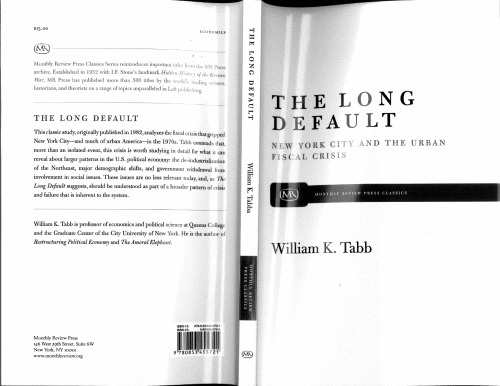
The Long Default: New York City and the Urban Fiscal Crisis
1982 · PDF

The Future of Socialism: Perspectives from the Left
1991 · PDF

The Long Default: New York City and the Urban Fiscal Crisis
1982 · PDF
Reconstructing Political Economy: The Great Divide in Economic Thought
2002 · EPUB

Instability and change in the world economy
1989 · PDF

The Postwar Japanese System: Cultural Economy and Economic Transformation
1995 · PDF