The Road to Barbarossa: Soviet-German Relations, 1917-1941
Book information
Description
From the chaos of the First World War, during which Germany and Russia had fought each other to a standstill, there emerged two societies whose diametrically opposed ideologies of communism and fascism represented the opposite extremes of the political spectrum. Despite this, in time the governments and military establishments in both countries were able to create an environment where political expediency led to both cooperation and an eventual alliance. Western democracies found both systems repellent but the two countries, Germany and the Soviet Union, embodied vast resources of, in the case of the Soviets, raw materials and, in the case of Germany, huge intellectual, scientific and industrial expertise. Both offered massive opportunities for trade, but neither made comfortable partners. Britain, whose sympathies lay more with the Germans, and France, whose history tied them more to Eastern Europe, tended to treat both Germany and the Soviet Union as outcast states. This created a great deal of animosity in return and ultimately drove the outcasts into each other’s arms. Whilst animosity was rampant on a political level, both countries, now having equal pariah status in the eyes of the Western allies, began to see huge benefits in military and economic cooperation. Collaborative ventures for covert armament production and training facilities were initiated in 1921. These schemes would continue, with varying degrees of success, for more than a decade until the rise of Nazism in Germany put an end to it. The Spanish Civil War saw not only thee two rival political philosophies but opposing military doctrines also being tested against each other on the field of battle. It is remarkable, therefore, that these two nations emerged from this maelstrom to re-discover the ‘spirit of Rapallo’. It was a spirit which culminated in the signing of the Molotov–Ribbentrop Pact in August 1939. Within weeks, both sides would display their unity as they fell together with ruthless efficiency upon the hapless Poland. This book looks at how these two ‘strange bedfellows’ dealt with western hostility and found ways to accommodate each other in a bid to recover from the economic devastation and dismantling of their historic territorial boundaries. The extent to which cooperation was achieved is unusual given the circumstances, especially as they had to contend with the machinations of the Western Powers. The era of the Molotov–Ribbentrop Pact proved to be a brief liaison, one that collapsed into savagery again when Hitler launched Operation Barbarossa just a few months later.
Similar books

Military Air Power in Europe Preparing for War: A Study of European Nations’ Air Forces Leading Up to 1939
2022 · EPUB

Spying for Hitler
2024 · EPUB

Horror of Himmler's Death Squads: The Einsatzgruppen and the Holocaust in the Baltics
2024 · PDF

Hitler's British Nazis - The Hidden Story of the Fascist Movement in the UK
2024 · EPUB
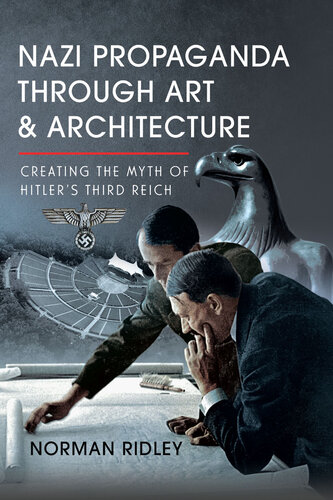
Nazi Propaganda Through Art and Architecture: Creating the Myth of Hitler’s Third Reich
2024 · EPUB

Nazi Propaganda Through Art and Architecture: Creating the Myth of Hitler’s Third Reich
2024 · PDF

The Race for the Atomic Bomb: Scientists, Spies and Saboteurs – The Allies’ and Hitler’s Battle for the Ultimate Weapon
EPUB

The Venlo Sting: MI6's Deadly Fiasco
EPUB