The Art of Defiance: Dissident Culture and Militant Resistance in 1970s Iran
Book information
Description
Examines how the arts popularised militant resistance to the monarchy in 1970s IranExplores how the arts help enhance political ideologiesExamines the dialectics of arts (poetry, fiction, film, songs/soundtracks) and action (militant operations) in 1970s IranDevelops a theory about how the construction of a popular myth around a political event deploys symbolic discourses and tropes of resistanceFeatures an array of case studies examining popular poets (Nima Yushij, Ahmad Shamlou, Mehdi Akhavan-Sales, Forough Farrokhzad), writers (Samad Behrangi, Sadeq Chubak, Ali Ashraf Darvishian), filmmakers (Massoud Kimiai, Amir Naderi, Ebrahim Golestan), lyricists (Shahiyar Ghanbari and Iraj Janati Atai) and singers (Farhad Mehrad and Darioush Eqbali)At a time of growing state control, censorship and wholesale crackdown on opposition in post-1953 Iran, intellectuals and artists began to produce works that defied the Shah’s dictatorship and the regime’s “Great Civilisation” propaganda. With the emergence of urban guerrilla warfare in 1971 – spearheaded by Marxist People’s Fadai Guerrillas (PFG) – dissident artists created symbolic works that popularised the militants’ ideas through artistic depictions and tropes, while portraying the militants as immortal freedom-fighters. The arts of defiance thus swayed young educated Iranians, as well as certain layers of the public, to perceive the state through the eyes of its most radical critiques: militant dissidents.By closely examining and interpreting the poetry, short fiction, songs and films of the 1960s and 1970s, this book uncovers how militant action was translated into artistic expressions and vice versa. It also explores how the PFG (and other) militants – who were few in number – were able to acquire a ‘heroic’ dimension in the eyes of the public, portraying a symbolic image of defiance far beyond their actual militant existence.
Similar books

Violence and Nonviolence: Conceptual Excursions into Phantom Opposites
2019 · PDF

Violence and Nonviolence: Conceptual Excursions into Phantom Opposites
2019 · PDF

A Guerrilla Odyssey: Modernization, Secularism, Democracy, and Fadai Period of National Liberation in Iran, 1971-1979
2010 · PDF

A Rebel's Journey: Mostafa Sho'aiyan and Revolutionary Theory in Iran
2020 · PDF
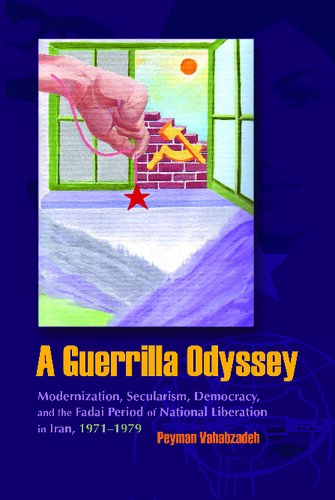
A Guerrilla Odyssey: Modernization, Secularism, Democracy, and the Fadai Period of National Liberation in Iran, 1971–1979
2010 · PDF

Articulated Experiences: Toward a Radical Phenomenology of Contemporary Social Movements
2003 · PDF

MySQL® Notes for Professionals book
2018 · PDF

MrExcel 2022: Boosting Excel
2022 · PDF