Laughing Out Loud: Writing the Comedy-Centered Screenplay
Book information
Description
Whoever wrote "Make 'em laugh!" knew that it's easier said than done. But people love to laugh, and good comedy will always sell. With the help of this complete and entertaining guide, writers and would-be writers for film and television can look forward to writing comedy that goes far beyond stereotypic jokes and characters. In Laughing Out Loud, award-winning screenwriter and author Andrew Horton blends history, theory, and analysis of comedy with invaluable advice. Using examples from Chaplin to Seinfeld, Aristophanes to Woody Allen, Horton describes comedy as a perspective rather than merely as a genre and then goes on to identify the essential elements of comedy. His lively overview of comedy's history traces its two main branchesanarchistic comedy and romantic comedyfrom ancient Greece through contemporary Hollywood, by way of commedia dell'arte, vaudeville, and silent movies. Television and international cinema are included in Horton's analysis, which leads into an up-close review of the comedy chemistry in a number of specific films and television shows. The rest of the book is a practical guide to writing feature comedy and episodic TV comedy, complete with schedules and exercises designed to unblock any writer's comic potential. The appendices offer tips on networking, marketing, and even producing comedies, and are followed by a list of recommended comedies and a bibliography. Laughing Out Loud CONTENTS ACKNOWLEDGMENTS INTRODUCTION Unexploded Mimes The Comic Perspective 1— Comedy Is a Way of Looking at the Universe, More Than Merely a Genre of Literature, Drama, Film o... 2— Comedy Is a Form of "Play" That Embraces Fantasy and Festivity 3— Comedy and Tragedy Are near Cousins Whose Paths Often Cross 4— Comedy Is Seldom "Pure" 5— Comedy Involves a Playful and Imaginative Tension between the Constructed and the Discovered, bet... 6— Comedy Implies a Special Relationship with and to Its Audience 7— Comedy Thrives on Details, for Details Reveal the Contradictions and Celebrate the Incongruities ... 8— In the World of the Truly Comic, Nothing Is Sacred and Nothing Human Is Rejected 9— It Is Not That Comedy Has a "Happy Ending" So Much As a festive Climax That Celebrates a Communit... 10— Comedy Is One of the Most Important Ways a Culture Talks to Itself about Itself Introduction Summary I— COMIC ELEMENTS AND EXERCISES Chapter 1— Elements of Comedy That Writers Should Know Comic Climate Areas of Comedy Comedian-Driven Comedy Story- or Situation-Oriented Comedy Character-Centered Comedy Comic Characters Comic Plots Comic Plot Devices Repetition Inversion Reciprocal Interference Disguise and Exaggeration Interruption The Reaction Shot Chapter Summary Chapter 2— Exercises to Nurture the Comic Muse Your Comic Profile A Comic Writing Environment Partners and Comic Sounding Boards Comic Story Circles A Dozen Comedy-Centered Exercises 1— Practice Random Acts of Kindness 2— Surprise Yourself from Time to Time 3— Comic Observation: Spend an Hour from Time to Time in the Neighborhood Park or the Mall or Playgr... 4— The Humor of Real Life: Keep a File of Pieces from Your Daily Paper That Might Work Their Way int... 5— Comic Character Study: Make at Least a Half-Hour Interview on Video with Someone You Consider to ... 6— Comic Foreground/Background: Write a Scene in Which Two People Talk Seriously While Six Motor Sco... 7— Comedy-documentary: What Famous "Departed" Person Could You Have an Actor or Actress Friend Prete... 8— Ensemble Comedy: Imagine Four to Eight Guys or Gals Who Gather at One Café Every Morning for a Go... 9— Visual Comedy: In One Page, Write a Complete Comic Scene with No Dialogue 10— Comedy from the Bringing Together of Three Disparate Directions: Create a Story from Three Photo... 11— Adapt the Following Television Miniseries for Your Own Times in Your Own Area or Country 12— The Grown-up Children's Film: Come up with Characters and a Plot for a Children's Film in the Ve... II— A WRITER'S OVERVIEW OF THE TRADITIONS AND GENRES OF COMEDY Chapter 3— From Stage and Page to Screen: Anarchistic and Romantic Comedy Anarchistic Comedy: Aristophanes Romantic Comedy Menander, Greece, and Rome Shakespeare and Comedy of the Green World Comedy and the Tradition of the Novel and Print Fiction Chapter 4— Physical Humor: From Commedia Dell'Arte and Molière to Vaudeville and Silent Screen Comed... Commedia Dell'Arte and Molière Vaudeville and the Marx Brothers Chapter 5— Sound Comedy: American Screwball Romantic Comedy, Then and Now Screwballs in the 1930s Screwball Variation: Comedy of Remarriage Stretching the Boundaries of Screwball Close-up on Screwball: As Good As It Gets Chapter 6— Comedy and Television: Stand-up, Sitcom and Everything in Between Stand-up: Anarchistic Comedians Skit Comedy Sitcom Then and Now American Family Values Variation #1— Ensemble and/or Just Single Variation #2— Animation Chapter 7— Comedies from around the World Britain: Eccentric Anarchists: Peter Sellers, Monty Python, the Full Monty, and Beyond Spain and Mexico: The Surrealist Humor of Luis Buñuel Five Easy Lessons to Learn from Buñuel about Writing Comedy Italy: Love and Anarchy Italian Style in Boccaccio, Dante, Fellini, and Cinema Paradiso The Czech Republic: Wry Humor and Pathos, from Closely Watched Trains to Kolya France: Warm Romantic Farce, from Renoir to Tati and Truffaut The Former Yugoslavia: Balkan Black Humor and Magic Realism Japan: Ceremony and Carnival in Akira Kurosawa's Dreams Chapter 8— Comedy and the Documentary Impulse Documentaries with Humor Performance Documentary The Comedy of Improv within Narrative The Humor of Fake Documentaries III— CLOSE-UPS ON COMEDIES Chapter 9— Feature Film Comedies Romantic Anarchistic Comedy: Preston Sturges's Sullivan's Travels Fresh Variations on the Buddy Comedy: Big Night, a Culinary Comedy Women and American Comedy: Penny Marshall's a League of Their Own Race, Politics and Humor: Spike Lee's Get on the Bus Children and Comedy: The White Balloon, a Young Girl's Comic Odyssey Teens and Comedy: Amy Heckerling's Clueless, a Valley-Talking Anarchistic Romance Blurring the Boundaries: Crime and Comedy in the Coen Brothers' Fargo Chapter 10— Television Comedy: Seinfeld and the Simpsons Seinfeld: Much Ado about Something "The Kiss Hello" up Close Scene Breakdown for "The Kiss Hello" Comic Narrative Structures The Simpsons: "We're a Nice Normal Family!" "There's No Disgrace Like Home" up Close Four Elements of Vintage Simpsons Writing to Admire IV— WRITING COMEDY Chapter 11— The Fifteen-Week Feature Comedy Screenplay Getting Started Week 1— Comic Explorations Week 2— Humorous Brainstorming, or Three Ideas Are Better Than One On Creating Truly Zany Script Ideas Week 3— Constructing a Comedy-Centered Treatment A Romantic Comedy Treatment Sub Sub-Let Week 4— Fade in Laughing Week 5— Focus on Scene and Sequence Construction Sequence Construction and Comic Rhythm Week 6— Focus on Comic Dialogue Week 7— Focus on Comic Subplots and Minor Characters Week 8— Are You Surprising and Entertaining Yourself As You Write? Week 9— Reviewing the Treatment A Sample Anarchistic Romantic Treatment Tractor Blues, an Original Screen Treatment by Andrew Horton, Marina Drozdova, and Sasha Kiselev Week 10— Focus on Comic Texture and Tone Week 11— Balancing Fantasy and Festivity Week 12— A Few Words on Tears and Laughter Week 13— Comic Endings Versus Endings of Comedies Week 14— Share the Laughter Toward a Comic Out-Loud Reading of Your Script Week 15— Retaining Your Humor from Page to Screen Chapter 12— The Seven-Week Half-Hour Television Comedy Pilot Script Week 1— Conceiving Episodic Comedy Week 2— Structuring Your Pilot Week 3— Outlining Five to Ten Episodes for Your Series Week 4— Writing Act 1 Week 5— Writing Act 2 Week 6— Writing Act 3 or Polishing the Two-Act Pilot Week 7— A Performance and Celebration Evening BEYOND HAPPY ENDINGS: TOWARD A COMIC CONCLUSION APPENDIX 1— A RECOMMENDED VIEWING LIST OF AMERICAN AND FOREIGN FEATURE COMEDIES Silent Comedy Anarchistic and Black Satirical Comedy Romantic Comedy Magical Realism in Romantic Comedy Half 'N' Half (Anarchistic and Romantic) Buddy Comedy Teen and Youth Comedy Children's Comedy Comedy in Drama Comedy from around the World Australia and New Zealand Czechoslovakia/Czech Republic Denmark Finland France Great Britain Greece Hungary Iran Italy Russia/USSR South Africa Spain and Mexico Sweden Switzerland Taiwan Yugoslavia APPENDIX 2— NETWORKING, MARKETING AND MAKING YOUR OWN COMEDY Networking and Sharpening Skills Newsletters The Internet Sites for Writers Screenplays on Line Comedy on Line Workshops and Conferences Film, TV and Comedy Festivals Marketing Your Comedies Abroad Writing for Foreign Television Co-Writing or Writing for Foreign Film Productions Studying Screenwriting Abroad Making Your Own Comedies Selling Your Script in the United States APPENDIX 3— FOOD, RECIPES AND COMIC SCREENWRITING A Screenwriter's Recipe for Comic Jambalaya BIBLIOGRAPHY On Comedy On Film and Television Comedy Screenplays and Works on Comedy Screenwriting Literature, Stage Comedy and Specific Studies Autobiographies INDEX A B C D E F G H I J K L M N O P Q R S T U V W Y Z
Similar books

Laughing out loud: writing the comedy-centered screenplay
2000 · PDF

Comedy/cinema/theory
1991 · PDF
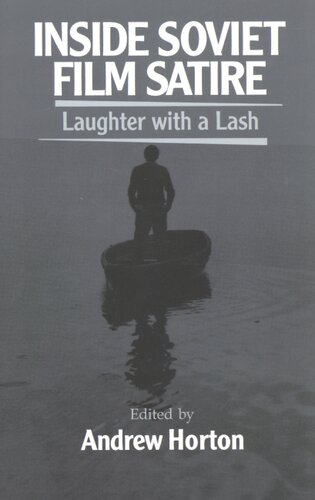
Inside Soviet film satire: laughter with a lash
1993 · PDF

The Films of Theo Angelopoulos: A Cinema of Contemplation
2016 · PDF

Henry Bumstead and the World of Hollywood Art Direction
2010 · PDF

Ernie Kovacs & Early TV Comedy: Nothing in Moderation
2010 · PDF

Screenwriting for a Global Market: Selling Your Scripts from Hollywood to Hong Kong
2004 · PDF

Laughing Out Loud: Writing the Comedy-Centered Screenplay
2023 · PDF