Rawlsian Explorations in Religion and Applied Philosophy
Book information
Description
To probe the underlying premises of a liberal political order, John Rawls felt obliged to use a philosophical method that abstracted from many of the details of ordinary life. But this very abstraction became a point of criticism, as it left unclear the implications of his theory for public policies and life in the real political world. Rawlsian Explorations in Religion and Applied Philosophy attempts to ferret out those implications, filling the gap between Rawls’s own empyrean heights and the really practical public policy proposals made by government planners, lobbyists, and legislators. Among the topics examined are natural rights, the morality of war, the treatment of mentally deficient humans and nonhuman sentient creatures, the controversies over legacy and affirmative action in college admissions, and the place of religious belief in a democratic society. The final chapter explores how Rawls’s own religious beliefs, as revealed in two works posthumously published in 2009, played into his formulation of his theory of justice. Title Page Copyright Contents Preface Chapter 1 Rawls, Natural Rights, and the Process of Reflective Equilibirum Wolterstorff's View Chapter 2 A Rawlsian View of War Opposition to Realism Capitulation to Realism Pacifism and Political Liberalism Two Objections Some Examples Cahpter 3 Nussbaum, Mental Disability, and Animal Entitlements: A Rawlsian Perspective Utilitarianism Rights-Based Views Criticisms of Social Contract Theory An Animal-Friendly Version of Social Contract Theory Animal Emotions The Capabilities Approach Reflective Equilibrium Chapter 4 A Rawlsian Critique of Legacy and Affirmative Action Taylor's Thesis The Core of the Argument Implications of the Argument Distributive Justice Chapter 5 "All for the Greater Glory of God": Was Saint Ignatius Irrational? Inclusive Ends versus Dominant Ends Types of Dominant Ends Justice Love Freeman and Religion Pogge's Contriubution Chapter 6 Rawlsian Religion Neo-Orthodoxy and Liberal Theology Anticipations of Later Political Views The Imago Dei Hypothesis Rawl's Religion and Rawlsian Religion References Index Back Cover
Similar books

Whitehead's Religious Thought: From Mechanism to Organism, from Force to Persuasion
2017 · PDF

Whitehead's Religious Thought: From Mechanism to Organism, from Force to Persuasion
2017 · EPUB

Process Mysticism
2023 · EPUB
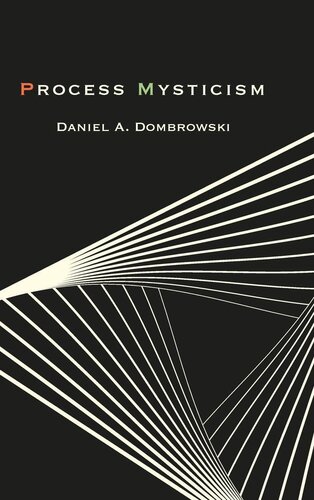
Process Mysticism
2023 · PDF
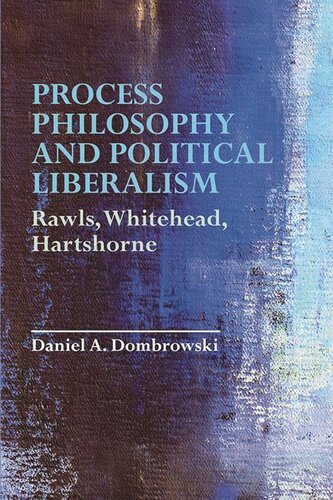
Process Philosophy and Political Liberalism: Rawls, Whitehead, Hartshorne
2022 · PDF

Pre-Liberal Political Philosophy Rawls and Plato, Aristotle, Augustine, Aquinas
2022 · PDF

Rawlsian Explorations in Religion and Applied Philosophy
2015 · PDF
Process Philosophy and Political Liberalism: Rawls, Whitehead, Hartshorne
2019 · PDF