RESTful Java Patterns and Best Practices: Learn best practices to efficiently build scalable, reliable, and maintainable high performance RESTful services
Book information
Description
The convergence of social networking, cloud computing, and the era of mobile applications has created a generation of emerging technologies that allow different networked devices to communicate with each other over the Internet with REST. REST has the benefits of being stateless; easing scalability, visibility, and reliability; and being platform and language agnostic. This book is a practical, hands-on guide that provides you with clear and pragmatic information to take advantage of the real power of RESTful services and gives you a good foundation for using them in your applications. By comparing APIs from platforms such as Facebook, Twitter, GitHub, and PayPal, the book teaches a range of exciting capabilities with RESTful services and explores the infinite possibilities by using the diverse building blocks and tips covered in various chapters.
Similar books

REST. Najlepsze praktyki i wzorce w języku Java
2012 · PDF
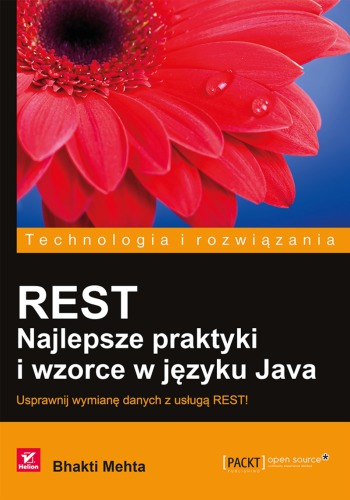
Rest - Najlepsze praktyki i wzorce w języku Java
2015 · PDF

Developing RESTful Services with JAX-RS 2.0, WebSockets, and JSON: A complete and practical guide to building RESTful Web Services with the latest Java EE7 API
2013 · PDF

RESTful Java Patterns and Best Practices
2014 · PDF

MySQL® Notes for Professionals book
2018 · PDF

MrExcel 2022: Boosting Excel
2022 · PDF

MrExcel 2022: Boosting Excel
2022 · PDF

Session C11: Ancient Cultural Landscapes in South Europe – their Ecological Setting and Evolution, Session C22: Gardeners from South America, Session S04: Agro-Pastoralism and Early Metallurgy Sessions, Session WS29: The Idea of Enclosure in Recent Iberian Prehistory, Session C88: Rhytmes et causalites des dynamiques de l'anthropisation en Europe entre 6500 ET 500 BC: Hypotheses socio-culturelles et/ou climatiques: Proceedings of the XV UISPP World Congress (Lisbon 4-9 September 2006) / Actes du XV Congrès Mondial (Lisbonne 4-9 Septembre 2006) Vol.36
2010 · PDF