Java for Bioinformatics and Biomedical Applications
Book information
Description
Java for Bioinformatics and Biomedical Applications describes the work of the U.S. National Cancer Institute (NCI, National Institutes of Health, U.S. Department of Health and Human Services) and a large number of cancer centers across the U.S. under the caBIG[Trademark] (cancer Biomedical Informatics Grid) program as well as standard bioinformatics applications. The goal of NCI caBIG[Trademark] is to create a standards based, interoperable network of individuals, applications and data to enhance the pace of cancer research. CaBIG[Trademark] uses J2EE and open source standards for all software development work. This book examines the tools and technologies being developed under caBIG[Trademark] to meet the goal of eliminating suffering and death from cancer by 2015 as formulated by the former NCI Director, Dr. Andrew von Eschenbach. In doing so, it provides a vignette into the efforts of thousands of people-molecular biologists, medical practitioners, software developers, to name a few-across the country to bring the promise of translational research to individuals with cancer.From a software perspective, a functional approach is used to teach the Java platform and its features for enterprise-level application development. Under this approach, the various syntactical and operative elements of the language and any software libraries that have been used (for example, BioJava, Apache, etc.) are taught not in isolation but in the context of discrete definable research problems that enable the user to relate how the different parts of the language fit together in the big picture. All examples are derived from practical problems faced in biomedical/clinical data retrieval and analysisduring routine bioinformatics and cancer research. Further, the book illustrates how individual bioinformatics applications (such as BLAST and Genscan) can be stitched together into a pipeline so that users can direct the output of one tool (for example, gene predictions using Genscan) to perform further analysis (say, homology searching using BLAST).
Similar books

Информатика: конспект лекций
TXT
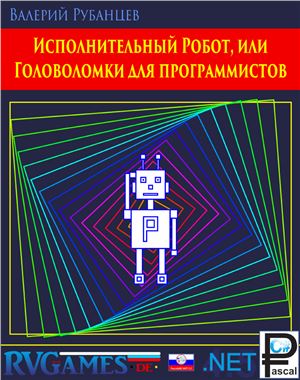
Исполнительный Робот, или Головоломки для программистов (Демо)
RAR

Спортивное программирование. Сборник рецептов для программирующих на С++
Сборник задач и упражнений по языку С++

Информатиканың қолданбалы есептері пәні бойынша

Учебное пособие по вычислительной технике и информационным технологиям
DOC

Microsoft Office: от начинающего пользователя до профессионала. Часть 1. Microsoft Office для пользователя
MOBI

Microsoft Office: от начинающего пользователя до профессионала. Часть 1. Microsoft Office для пользователя
FB2