Nabokov's Early Fiction: Patterns of Self and Other
Book information
Description
This book traces the evolution of Vladimir Nabokov's prose fiction from the mid-1920s to the late 1930s. While individual works by Nabokov have attracted extensive commentary, the precise contours of Nabokov's development as a writer of fiction have received little attention. Julian Connolly traces this development by focusing on a crucial subject: the relationship between self and other in its various forms (including character to character, character to author, author to reader). At the core of Professor Connolly's analysis is the discovery of a powerful structure of bifurcation in Nabokov's work, between the character dimensions of a protagonist's identity and its latent authorial dimensions. As Nabokov's works grow more sophisticated, the author manipulates the relationship between these two dimensions, creating a series of memorable characters who seek to attain the status of authentic author by shedding that aspect of the self which functions as a character. Julian Connolly's investigation into the relationship between self and other in the early fiction provides an original model for approaching all of Nabokov's fictional writing, and constitutes a major contribution to Nabokov scholarship.
Similar books

Dostoevsky’s The Brothers Karamazov
2013 · PDF

A reader's guide to Nabokov's Lolita
2009 · DJVU
A reader's guide to Nabokov's Lolita
2009 · DJVU
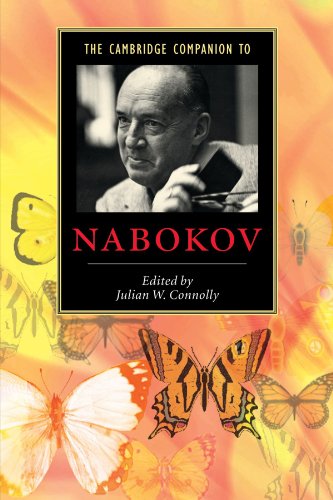
The Cambridge Companion to Nabokov (Cambridge Companions to Literature)
2005 · PDF

Nabokov and his Fiction: New Perspectives
1999 · PDF

MySQL® Notes for Professionals book
2018 · PDF

MrExcel 2022: Boosting Excel
2022 · PDF

MrExcel 2022: Boosting Excel
2022 · PDF