Analysis and Design of FRP Reinforced Concrete Structures
Book information
Description
Title Contents Chapter 1. Introduction 1.1. Evolution of FRP Reinforcement 1.2. Review of FRP Composites 1.3. The Importance of the Polymer Matrix 1.3.1. Matrix polymers 1.3.2. Polyester resins 1.3.3. Structural considerations in processing polymer matrix resins 1.3.4. Reinforcing fibers for structural composites 1.3.5. Effects of fiber length on laminate properties 1.3.6. Bonding interphase 1.3.7. Design considerations 1.4. Description of Fibers 1.4.1. Forms of glass fiber reinforcements 1.4.2. Behavior of glass fibers under load 1.4.3. Carbon fibers 1.4.4. Aramid fibers 1.4.5. Other organic fibers 1.4.6. Hybrid reinforcements 1.5. Manufacturing and Processing of Composites 1.5.1. Steps of fabrication scheme 1.5.2. Manufacturing methods 1.6. Sandwich Construction 1.7. Compression Molding 1.8. Multi-Axial Fabric for Structural Components 1.9. Fabrication of Stirrups 1.10. FRP Composites 1.11. FRP Composite Applications 1.12. Composite Mechanics 1.12.1. Laminate terminology 1.12.2. Composite product forms 1.13. Laminates Types and Stacking Sequence Chapter 2. Material Characteristics of FRP Bars 2.1. Physical and Mechanical Properties 2.2. Physical Properties 2.3. Mechanical Properties and Behavior 2.3.1. Tensile behavior 2.3.2. Compressive behavior 2.3.3. Shear behavior 2.3.4. Bond behavior 2.4. Time-Dependent Behavior 2.4.1. Creep rupture 2.4.2. Fatigue 2.5. Durability 2.6. Recommended Materials and Construction Practices 2.6.1. Strength and modulus grades of FRP bars 2.6.2. Surface geometry, bar sizes, and bar identification 2.7. Construction Practices 2.7.1. Handling and storage of materials 2.7.2. Placement and assembly of materials 2.8. Quality Control and Inspection Chapter 3. History and Uses of FRP Technology 3.1. FRP Composites in Japan 3.1.1. Development of FRP materials 3.1.2. Development of design methods in Japan 3.1.3. Typical FRP reinforced concrete structures in Japan 3.1.4. FRP for retrofitting and repair 3.1.5. Future uses of FRP 3.1.6. FRP construction activities in Europe 3.2. Reinforced and Prestressed Concrete: Some Applications 3.2.1. Rehabilitation and strengthening 3.2.2. Design guidelines 3.3. FRP Prestressing in the USA 3.3.1. Historical development of FRP tendons 3.3.2. Research and demonstration projects 3.3.3. Future prospects Chapter 4. Design of RC Structures Reinforced with FRP Bars 4.1. Design Philosophy 4.1.1. Design material properties 4.1.2. Flexural design philosophy 4.1.3. Nominal flexural capacity 4.1.4. Strength reduction factor for flexure (f) 4.1.5. Check for minimum FRP reinforcement 4.1.6. Serviceability 4.2. Shear 4.2.1. Shear design philosophy 4.2.2. Shear failure modes 4.2.3. Minimum shear reinforcement 4.2.4. Shear failure due to crushing of the web 4.2.5. Detailing of shear stirrups 4.2.6. Punching shear strength of FRP reinforced, two-way concrete slab 4.3. ISIS Canada Design Approach for Flexure 4.3.1. Flexural strength 4.3.2. Serviceability 4.4. Design Approach for CFRP Prestressed Concrete Bridge Beams 4.4.1. Theoretical development of design equations 4.4.2 Deflection and stesses under service load condition 4.4.3. Nonlinear response E4.1. Design Example 1 E4.2. Design Example 2 E4.3. Design Example 3 E4.4. Design Example 4: A Case Study Problem E4.5. Design Example 5: Case Study of CFRP Prestressed Concrete Double-T Beam E4.6. Design Example 6: Case Study of CFRP Prestressed Concrete Box-Beam E4.7. Design Example Chapter 5. Design Philosophy for FRP External Strengthening Systems 5.1. Introduction 5.1.1. Non-prestressed soffit plates 5.1.2. End anchorage for unstressed (non-prestressed) plates 5.1.3. Prestressed soffit plates 5.2. Flexural Failure Modes and Typical Behavior 5.2.1. Flexural failure 5.2.2. Shear failure 5.2.3. Plate-end debonding failures 5.2.4. Plate-end interfacial debonding 5.2.5. Intermediate crack-induced interfacial debonding 5.2.6. Other debonding failures 5.2.7. Some additional aspects of debonding 5.3. Flexural Design Considerations 5.3.1. Flexural design philosophy (ACI 440-2R-02) 5.3.2. Strengthening limits 5.4. Design Material Properties 5.5. General Considerations for Flexural Strengthening 5.5.1. Assumptions 5.5.2. Section shear strength 5.5.3. Existing substrate strain 5.6. Nominal Strength, Mn 5.6.1. Controlling failure modes 5.6.2. Strain level in FRP reinforcement 5.6.3. Stress level in the FRP reinforcement 5.7. Ductility 5.8. Serviceability 5.9. Creep-Rupture and Fatigue Stress Limits 5.10. Applications of Flexural Design Considerations to a Singly Reinforced Rectangular Section 5.10.1. Ultimate flexural strength 5.10.2. Stress in steel under service loads 5.10.3. Stress in FRP under service loads 5.11. Shear Strengthening 5.11.1. Nominal shear strength (ACI 440.2R-02) 5.11.2. Shear strength contribution of FRP system 5.12. Spacing of FRP Strips 5.13. Reinforcement Limits 5.14. Design Procedure for Strengthening of RC Beam Using NSM Bars 5.14.1. Flexural strengthening 5.14.2. Design procedure for flexural strengthening using NSM FRP rebars 5.14.3. Shear strengthening 5.14.4. Anchorage length requirement 5.15. ACI 440.2R-02 Design Approach for NSM FRP Strengthening 5.15.1. Flexural design approach 5.15.2. Nominal flexural strength 5.16. Design for Shear Strength 5.16.1. Ultimate shear strength 5.17. Serviceability 5.18. Detailing 5.19. Development Length of NSM FRP Bars 5.20. ISIS Canada Design Approach for External FRP Strengthening 5.20.1. Flexural strengthening of beam and one-way slab 5.20.2. Flexural design approach 5.21. ISIS Canada Design Guidelines for Shear Strengthening 5.21.1. Design principles 5.22. External Strengthening of Columns 5.22.1. Slenderness limits of circular columns 5.22.2. Confinement 5.23. Fundamentals of Seismic Retrofit of Columns 5.23.1. Potential failure modes 5.23.2. Flexural ductility of retrofitted columns 5.23.3. Shear strength contributions 5.23.4. Flexural plastic hinge confinement 5.23.5. Lap splice clamping E5.1. Design Example 1 E5.2. Design Example 2 E5.3. Design Example 3: Shear Strengthening Using CFRP Laminates—A Case Study E5.4. Design Example 4: A Case Study Problem E5.5. Design Example 5 E5.6. Design Example 6 E5.7. Design Example 7 E5.8. Design Example 8 E5.9. Design Example 9 E5.10. Design Example 10 E5.11. Design Example 11 E5.12. Design Example 12 E5.13. Design Example 13 E5.14. Design Example 14 E5.15. Design Example 15: Shear Strengthening as per ISIS Canada Design Approach Chapter 6. Durability-Based Design Approach for External FRP Strengthening of RC Beams 6.1. Designing of Reinforced Concrete Beams 6.1.1. Compute design material properties 6.1.2. Compute the existing substrate strain 6.1.3. Compute the balanced plate ratio (ρf, b) 6.1.4. Compute the maximum allowable plate ratio (ρf, max) 6.1.5. Proportion of the FRP plate 6.1.6. Compute the balanced plate ratio (ρf, bb) to determine failure modes 6.1.7. Determine the critical plate ratio (ρf, c) 6.1.8. Determine the mode of failure 6.1.9. Nominal moment capacity of strengthened beams 6.1.10. Compute design moment capacity 6.1.11. Allowable services stresses E6.1. Design Example 1: A Case Study Problem E6.2. Design Example 2: A Case Study Problem E6.3. Design Example 3: A Case Study Bibliography Index
Similar books
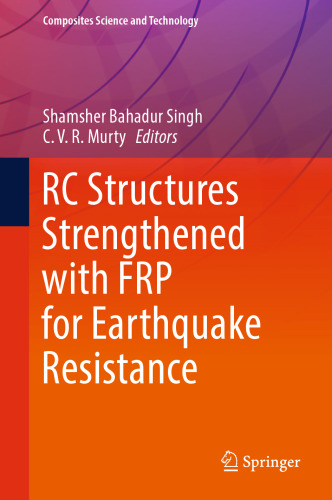
RC Structures Strengthened with FRP for Earthquake Resistance
2024 · PDF

Fiber Reinforced Polymeric Materials and Sustainable Structures
2023 · PDF

Stability and Failure of High Performance Composite Structures
2022 · PDF

MySQL® Notes for Professionals book
2018 · PDF

MrExcel 2022: Boosting Excel
2022 · PDF

MrExcel 2022: Boosting Excel
2022 · PDF

Session C11: Ancient Cultural Landscapes in South Europe – their Ecological Setting and Evolution, Session C22: Gardeners from South America, Session S04: Agro-Pastoralism and Early Metallurgy Sessions, Session WS29: The Idea of Enclosure in Recent Iberian Prehistory, Session C88: Rhytmes et causalites des dynamiques de l'anthropisation en Europe entre 6500 ET 500 BC: Hypotheses socio-culturelles et/ou climatiques: Proceedings of the XV UISPP World Congress (Lisbon 4-9 September 2006) / Actes du XV Congrès Mondial (Lisbonne 4-9 Septembre 2006) Vol.36
2010 · PDF

THE BRITISH ARMY IN INDIA: ITS PRESERVATION BY AN APPROPRIATE CLOTHING, HOUSING, LOCATING, RECREATIVE EMPLOYMENT, AND HOPEFUL ENCOURAGEMENT OF THE TROOPS. with AN APPENDIX ON INDIA : THE CLIMATE OP ITS HILLS ; THE DEVELOPMENT OF ITS RESODRCBS, INDUSTRY, AND ARTS ; THE ADMINISTRATION OF JUSTICE ; THE BLACK ACT ; THE PROGRESS OF CHRISTIANITY ; THE TRAFFIC IN OPIUM ; THE VALUE OF INDIA ; PERMANENT CAUSES OF DISAFFECTION, AND OF THE RECENT REBELLION ; THE TRADITIONARY POLICY; MISGOVERNMENT BY NATIVE RULERS ; ANNEXATIONS OF THEIR TERRITORY, ETC.
1858 · PDF