Modeling and Use of Context in Action
Book information
Description
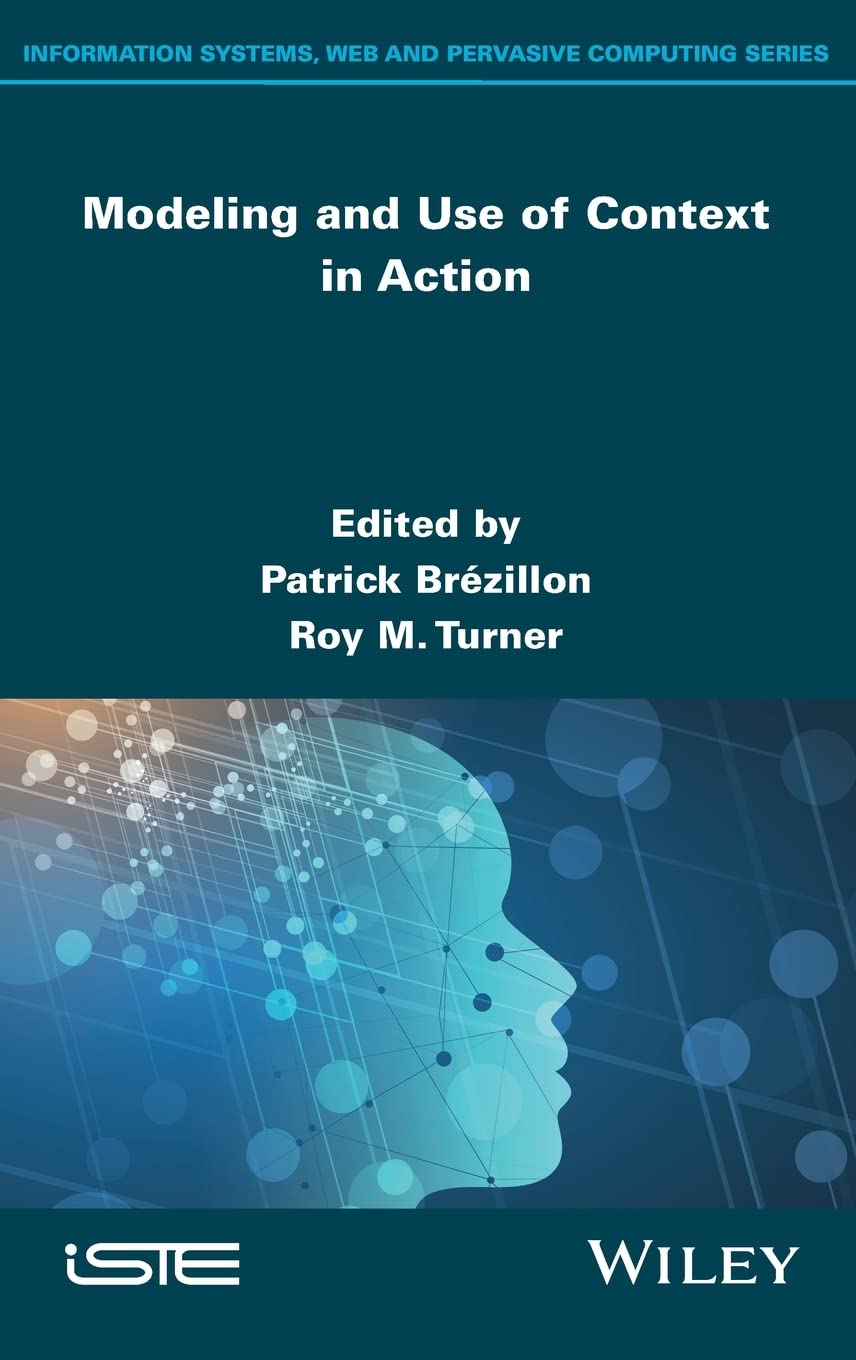
This book brings together current research and adopts a pragmatic approach to modeling and using context to solve real-world problems. The editors were instrumental in creating - and continue to be involved in - the interdisciplinary research community, centered around the biennial CONTEXT (International and Interdisciplinary Conference on Modeling and Using Context) conference series, focused on studying context and its implications for artificial intelligence, software applications, psychology, philosophy, linguistics, neuroscience, as well as other fields. The first three chapters lay the foundations, looking at the lessons learned over the past 25 years and arguing for a continued shift toward more pragmatic approaches. The remaining chapters contain contributions to pragmatic context-based research from a wide range of domains, including technological problems - such as subway incident management and autonomous underwater vehicle control - identifying emotions from speech without understanding the words, anonymization in a world where privacy is increasingly threatened, teaching in context and improving management teaching in a business school. Cover Half-Title Page Title Page Copyright Page Contents Preface Introduction 1. Pragmatic Research on Context Modeling and Use 1.1. Introduction 1.2. Pragmatic research on context 1.3. Role of context in AI systems 1.3.1. Data, information and knowledge 1.3.2. Contextual knowledge 1.4. Three examples of pragmatic research on context 1.4.1. Introduction 1.4.2. Contextual graphs (CxGs) 1.4.3. Context-based reasoning (CxBR) 1.4.4. Context-mediated behavior (CMB) 1.4.5. Conclusions and lessons learned 1.5. Conclusion 1.6. References 2. Modeling and Using Context: 25 Years of Lessons Learned 2.1. Introduction 2.2. Knowledge in action 2.2.1. Operational knowledge and contextual knowledge 2.2.2. Operational knowledge and mental models 2.2.3. Modeling operational knowledge 2.2.4. Indirect modeling from experience reuse 2.2.5. Lessons learned 2.3. Context in action 2.3.1. Conceptual modeling 2.3.2. A typology of contexts 2.3.3. About contextual elements 2.3.4. Implementation of the contextual graphs formalism 2.4. Using context in real-world applications 2.4.1. Context and focus processing 2.4.2. Context and actors 2.4.3. Extension of the CxG formalism 2.5. Conclusion 2.6. References 3. Toward Pragmatic Context-Based Intelligent Systems 3.1. Introduction 3.2. Evolution of AI systems 3.2.1. Formal versus pragmatic acontextual approaches 3.2.2. Formal consideration of context 3.2.3. Pragmatic consideration of context 3.3. Pragmatic context-based intelligent systems 3.3.1. Explicit context representation 3.3.2. Context assessment mechanism 3.3.3. Context transitioning mechanism 3.3.4. Context-based intelligent assistant systems 3.3.5. Context-based intelligent autonomous agents 3.4. Conclusion 3.5. References 4. Activating the Context for Learning and Teaching: Findings from the TEEC Project 4.1. Introduction 4.2. Theoretical framework 4.2.1. Internal and external contexts for education 4.2.2. Modeling external context 4.3. The research focuses 4.4. Methodology 4.4.1. DBR methodology 4.4.2. Data collection and analysis 4.4.3. TEEC organization 4.5. Results and findings 4.5.1. Context effects identification and specification 4.5.2. Using the digital technologies 4.5.3. Learning as an evolution of mental representations 4.5.4. The development of digital tools 4.6. Discussion and interpretation 4.6.1. Context effect and affective dimension: learning with contexts, 4.6.2. Digital education and context 4.6.3. Mazcalc needs to interact with the scripting tool 4.7. Conclusion and related work 4.8. Acknowledgment and credits 4.9. Appendices: description of the TEEC experiments 4.9.1. Historical event/social realities 4.9.2. Geothermal energy 4.9.3. Literature 4.9.4. Sustainable development: sugar 4.9.5. Sustainable development: fruit 4.10. References 5. Pragmatic Reasoning in Context: Context-Mediated Behavior 5.1. Introduction 5.2. Context-mediated behavior 5.2.1. CMB for autonomous agents: Orca Project 5.2.2. Contextual schemas 5.2.3. Context assessment 5.3. CMB and planning 5.4. CMB in multiagent systems 5.4.1. Context-appropriate organization and reorganization 5.4.2. An ontology for contextual knowledge and contexts 5.4.3. Trust in context 5.5. (Deep) learning in context 5.6. Conclusion 5.7. Acknowledgments 5.8. References 6. Using Context to Help Identify the Emotional State of a Human in a Conversation 6.1. Introduction and background 6.2. Use case and research hypothesis 6.3. Related works 6.4. Sentiment analysis as a way to model context 6.5. Our approach to the problem 6.5.1. Our overall approach to paralinguistic affect recognition 6.5.2. A (very) brief description of phase I (context-free classification) 6.5.3. Phase II – the context-centered process 6.6. Example application: smart phone 6.6.1. Phase 1: context-free process 6.6.2. Phase 2: context-centered process 6.7. Summary and conclusion 6.8. References 7. Context-Driven Behavior: A Proactive Approach to Contextual Reasoning 7.1. Motivation for a proactive model 7.2. Challenges associated with a proactive model 7.2.1. Coping with uncertainty 7.2.2. A lack of initial knowledge 7.3. Context and contextual knowledge 7.3.1. Problem-solving contexts 7.3.2. Contextual schemas 7.4. A framework for context-driven agent 7.4.1. Defining a problem-solving scenario 7.4.2. Predicting future contexts 7.4.3. Identifying context-inappropriate behavior 7.4.4. Strategy modification 7.5. Conclusion 7.6. References 8. Context-Based Personal Data Discovery for Anonymization 8.1. Introduction 8.2. Personal and sensitive data 8.3. Procedure of personal data discovery 8.3.1. Objective of personal data discovery procedures 8.3.2. Role of a DPO in personal data discovery 8.3.3. Description of procedure of data discovery 8.4. Specifying personal data in the context of an anonymization process 8.4.1. Definition of anonymization 8.4.2. Motivation for data anonymization 8.4.3. Examples of techniques of anonymization 8.4.4. Anonymization process 8.4.5. Contextual elements in personal data discovery 8.5. Related work 8.6. Procedure contextualization for data discovery 8.6.1. The concept of context 8.6.2. Conceptual graph approach 8.6.3. A case study 8.7. Conclusion 8.8. References 9. Situated Management Learning 9.1. Introduction 9.2. Management practices, values and theoretical insights 9.2.1. Management practices 9.2.2. Management values 9.2.3. Management insights 9.2.4. Toward a dynamic model of situated management learning 9.3. Situated learning – an application in an accounting classroom 9.3.1. The rules of the learning game 9.3.2. The accounting decision-making situation 9.3.3. Learning teams 9.3.4. Deliverables by the learning teams 9.3.5. Feedback to the learning teams 9.4. Results 9.5. Discussion, outlook and related research 9.6. Acknowledgments 9.7. References List of Authors Index Other titles from iSTE in Information Systems, Web and Pervasive Computing
Similar books

Modeling and Use of Context in Action
2022 · PDF
Modeling and Use of Context in Action
2022 · EPUB

Research on Modeling and Using Context Over 25 Years (SpringerBriefs in Computer Science)
2023 · PDF

Modeling and Using Context: 10th International and Interdisciplinary Conference, CONTEXT 2017, Paris, France, June 20-23, 2017, Proceedings
2017 · PDF

Context Sensitive Decision Support Systems: IFIP TC8 / WG8.3 International Conference on Context-Sensitive Decision Support Systems 13–15 July 1998, Bled, Slovenia
1998 · PDF
Context in Computing: A Cross-Disciplinary Approach for Modeling the Real World
2014 · PDF

Modeling and Using Context: 8th International and Interdisciplinary Conference, CONTEXT 2013, Annecy, France, October 28 -31, 2013, Proceedings
2013 · PDF

Supporting Real Time Decision-Making: The Role of Context in Decision Support on the Move
2011 · PDF