Consuming Visions: Cinema, Writing, and Modernity in Rio de Janeiro
Book information
Description
Consuming Visions explores the relationship between cinema and writing in early twentieth-century Brazil, focusing on how the new and foreign medium of film was consumed by a literary society in the throes of modernization. Maite Conde places this relationship in the specific context of turn-of-the-century Rio de Janeiro, which underwent a radical transformation to a modern global city, becoming a concrete symbol of the country's broader processes of change and modernization. Analyzing an array of literary texts, from journalistic essays and popular women's novels to anarchist treatises and vaudeville plays, the author shows how the writers' encounters with the cinema were consistent with the significant changes taking place in the city. The arrival and initial development of the cinema in Brazil were part of the new urban landscape in which early Brazilian movies not only articulated the processes of the city's modernization but also enabled new urban spectators―women, immigrants, a new working class, and a recently liberated slave population―to see, believe in, and participate in its future. In the process, these early movies challenged the power of the written word and of Brazilian writers, threatening the hegemonic function of writing that had traditionally forged the contours of the nation's cultural life. An emerging market of consumers of the new cultural phenomena―popular theater, the department store, the factory, illustrated magazines―reflected changes that not only modernized literary production but also altered the very life and everyday urban experiences of the population. Consuming Visions is an ambitious and engaging examination of the ways in which mass culture can become an agent of intellectual and aesthetic transformation. Contents List of Illustrations Acknowledgments Introduction Part One: Writers, Film, and the New Visual Landscape of Rio de Janeiro 1. Documenting New Urban Experiences: The Cinematic Work of the Crônica 2. Comic Visions of the New City: Writersand Film Production during the Belle Époqueof Brazilian Cinema Part Two: Writers, Film, and Alternative Visions of Rio de Janeiro 3. Envisioning a New Political Landscape: Martin Fontes’s Anarchist Flirtation with Film 4. Women, Rio’s Modernity, and Film’s Visual Pleasures: Benjamin Costallat’s Mademoiselle Cinema Conclusion: Reviving the Lettered City Appendices Notes Bibliography Filmography Index
Similar books
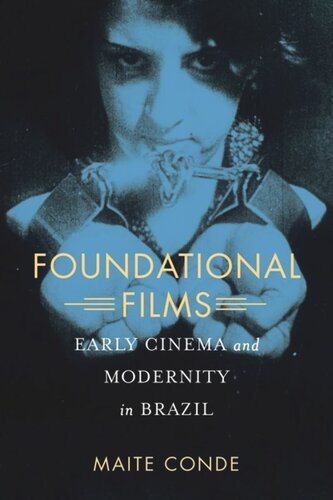
Foundational Films: Early Cinema and Modernity in Brazil
2018 · PDF

Manifesting Democracy?: Urban Protests and the Politics of Representation in Brazil Post 2013
2022 · PDF

Between Conformity and Resistance: Essays on Politics, Culture, and the State
2011 · PDF

MySQL® Notes for Professionals book
2018 · PDF

MrExcel 2022: Boosting Excel
2022 · PDF

MrExcel 2022: Boosting Excel
2022 · PDF

Session C11: Ancient Cultural Landscapes in South Europe – their Ecological Setting and Evolution, Session C22: Gardeners from South America, Session S04: Agro-Pastoralism and Early Metallurgy Sessions, Session WS29: The Idea of Enclosure in Recent Iberian Prehistory, Session C88: Rhytmes et causalites des dynamiques de l'anthropisation en Europe entre 6500 ET 500 BC: Hypotheses socio-culturelles et/ou climatiques: Proceedings of the XV UISPP World Congress (Lisbon 4-9 September 2006) / Actes du XV Congrès Mondial (Lisbonne 4-9 Septembre 2006) Vol.36
2010 · PDF

THE BRITISH ARMY IN INDIA: ITS PRESERVATION BY AN APPROPRIATE CLOTHING, HOUSING, LOCATING, RECREATIVE EMPLOYMENT, AND HOPEFUL ENCOURAGEMENT OF THE TROOPS. with AN APPENDIX ON INDIA : THE CLIMATE OP ITS HILLS ; THE DEVELOPMENT OF ITS RESODRCBS, INDUSTRY, AND ARTS ; THE ADMINISTRATION OF JUSTICE ; THE BLACK ACT ; THE PROGRESS OF CHRISTIANITY ; THE TRAFFIC IN OPIUM ; THE VALUE OF INDIA ; PERMANENT CAUSES OF DISAFFECTION, AND OF THE RECENT REBELLION ; THE TRADITIONARY POLICY; MISGOVERNMENT BY NATIVE RULERS ; ANNEXATIONS OF THEIR TERRITORY, ETC.
1858 · PDF