Daoism: An Introduction
Book information
Description
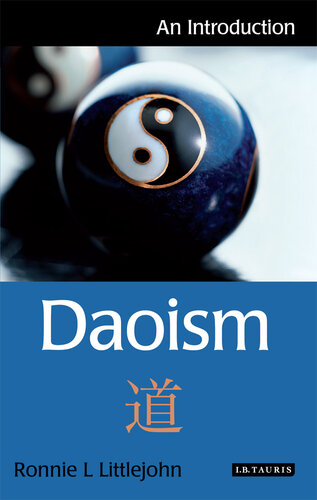
"The way that can be told is not the eternal Way; the name that can be named is not the eternal Name." So begins the first verse of the mysterious Dao De Jing, foundation text of the ancient Chinese religion of Daoism. Often attributed to semi-mythical sage Laozi, the origins of this enigmatic document--which probably came into being in the third century BCE--are actually unknown. But the tenets of Daoism laid down in the Dao De Jing, and in later texts like the Yi Jing (or Book of Changes), continue to exert considerable fascination, particularly in the West, where in recent years they have been popularized by writers such as the novelist Ursula K LeGuin. In this fresh and engaging introduction to Daoism, Ronnie L. Littlejohn discusses the central facets of a tradition which can sometimes seem as elusive as the slippery notion of "Dao" itself. The author shows that fundamental to Daoism is the notion of "Wu-wei," or non-action: a paradoxical idea emphasising alignment of the self with the harmony of the universe, a universe in continual flux and change. This flux is expressed by the famous symbol of Dao, the "taiji" representing yin and yang eternally correlating in the form of a harmonious circle. Exploring the great subtleties of this ancient religion, Littlejohn traces its development and encounters with Buddhism, its expression in art and literature, its fight for survival during the Cultural Revolution, and its manifestations in modern-day China and beyond. Front Cover Title Copyright Contents Map of Important Daoist sites in China Introduction and Acknowledgements Preliminary Considerations and Conventions Chapter I: Telling the Story of Daoism Chapter II: The Sprouting of the Trunk of Daoism Chapter III: The Composite Trunk of Daoism Chapter IV: The Masters Who Nurtured the Trunk of Daoism Chapter V: Growth of the Daoist Vine During the Qin and Han Dynasties Chapter VI: The Earliest Branches of Daoism Chapter VII: The Spread of Celestial Masters’ Daoism Chapter VIII: New Vines and the Masters Who Began Them Chapter IX: Daoism in the Tang: Robust Maturity of the Vine Chapter X: Scrambling and Overlapping Vines and Stems of Daoism in the Song and Yuan Chapter XI: Daoism Overgrows Chinese Culture: The Ming and Qing Dynasties Chapter XII: Spreading the Daoist Vine at Home and Abroad A Quick Guide to Pronunciation Glossary of Titles Glossary of Names and Terms Illustration, Map and Picture Credits Notes Works Cited Back Cover
Similar books

Daoism: An Introduction (Introductions to Religion)
2009 · PDF
Daoism: An Introduction (Introductions to Religion)
2009 · EPUB

Chinese Philosophy: An Introduction
2015 · PDF

Confucianism: An Introduction (I.B.Tauris Introductions to Religion)
2010 · PDF

MySQL® Notes for Professionals book
2018 · PDF

MrExcel 2022: Boosting Excel
2022 · PDF

MrExcel 2022: Boosting Excel
2022 · PDF

Session C11: Ancient Cultural Landscapes in South Europe – their Ecological Setting and Evolution, Session C22: Gardeners from South America, Session S04: Agro-Pastoralism and Early Metallurgy Sessions, Session WS29: The Idea of Enclosure in Recent Iberian Prehistory, Session C88: Rhytmes et causalites des dynamiques de l'anthropisation en Europe entre 6500 ET 500 BC: Hypotheses socio-culturelles et/ou climatiques: Proceedings of the XV UISPP World Congress (Lisbon 4-9 September 2006) / Actes du XV Congrès Mondial (Lisbonne 4-9 Septembre 2006) Vol.36
2010 · PDF