Ukraine: Democratization, Corruption, and the New Russian Imperialism
Book information
Description
A definitive contemporary political, economic, and cultural history from a leading international expert, this is the first single-volume work to survey and analyze Soviet and post-Soviet Ukrainian history since 1953 as the basis for understanding the nation today. Ukraine dominated international headlines as the Euromaidan protests engulfed Ukraine in 2013–2014 and Russia invaded the Crimea and the Donbas, igniting a new Cold War. Written from an insider's perspective by the leading expert on Ukraine, this book analyzes key domestic and external developments and provides an understanding as to why the nation's future is central to European security. In contrast with traditional books that survey a millennium of Ukrainian history, author Taras Kuzio provides a contemporary perspective that integrates the late Soviet and post-Soviet eras. The book begins in 1953 when Soviet leader Joseph Stalin died during the Cold War and carries the story to the present day, showing the roots of a complicated transition from communism and the weight of history on its relations with Russia. It then goes on to examine in depth key aspects of Soviet and post-Soviet Ukrainian politics; the drive to independence, Orange Revolution, and Euromaidan protests; national identity; regionalism and separatism; economics; oligarchs; rule of law and corruption; and foreign and military policies. Moving away from a traditional dichotomy of "good pro-Western" and "bad pro-Russian" politicians, this volume presents an original framework for understanding Ukraine's history as a series of historic cycles that represent a competition between mutually exclusive and multiple identities. Regionally diverse contemporary Ukraine is an outgrowth of multiple historical Austrian-Hungarian, Polish, Russian, and especially Soviet legacies, and the book succinctly integrates these influences with post-Soviet Ukraine, determining the manner in which political and business elites and everyday Ukrainians think, act, operate, and relate to the outside world.
Similar books

Ukraine: Democratization, Corruption, and the New Russian Imperialism
2015 · EPUB

Fascism and Genocide: Russia’s War Against Ukrainians
2023 · PDF
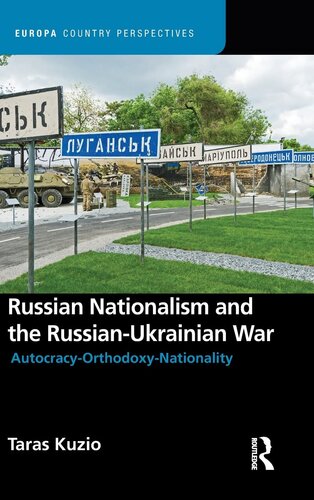
Russian Nationalism and the Russian-Ukrainian War
2022 · EPUB

Democratic Revolution in Ukraine: From Kuchmagate to Orange Revolution
2013 · EPUB

Russian Nationalism and the Russian-Ukrainian War
2022 · EPUB

Russian Nationalism and the Russian-Ukrainian War; Autocracy-Orthodoxy-Nationality
2022 · EPUB

Putin's War Against Ukraine: Revolution, Nationalism, and Crime
2017 · EPUB

Independent Ukraine: Nation-state Building and Post-communist Transition (Contemporary Ukraine: Dynamics of Post-Soviet Transformation)
1998 · PDF