The Cunning of Recognition: Indigenous Alterities and the Making of Australian Multiculturalism
Book information
Description
The Cunning of Recognition is an exploration of liberal multiculturalism from the perspective of Australian indigenous social life. Elizabeth A. Povinelli argues that the multicultural legacy of colonialism perpetuates unequal systems of power, not by demanding that colonized subjects identify with their colonizers but by demanding that they identify with an impossible standard of authentic traditional culture.Povinelli draws on seventeen years of ethnographic research among northwest coast indigenous people and her own experience participating in land claims, as well as on public records, legal debates, and anthropological archives to examine how multicultural forms of recognition work to reinforce liberal regimes rather than to open them up to a true cultural democracy. The Cunning of Recognition argues that the inequity of liberal forms of multiculturalism arises not from its weak ethical commitment to difference but from its strongest vision of a new national cohesion. In the end, Australia is revealed as an exemplary site for studying the social effects of the liberal multicultural imaginary: much earlier than the United States and in response to very different geopolitical conditions, Australian nationalism renounced the ideal of a unitary European tradition and embraced cultural and social diversity.While addressing larger theoretical debates in critical anthropology, political theory, cultural studies, and liberal theory, The Cunning of Recognition demonstrates that the impact of the globalization of liberal forms of government can only be truly understood by examining its concrete—and not just philosophical—effects on the world.
Similar books

Economies of Abandonment: Social Belonging and Endurance in Late Liberalism
2011 · PDF

The Inheritance
2021 · PDF

Between Gaia and Ground: Four Axioms of Existence and the Ancestral Catastrophe of Late Liberalism
2021 · PDF

Geontologies: A Requiem to Late Liberalism
2016 · PDF

The Empire of Love: Toward a Theory of Intimacy, Genealogy, and Carnality
2006 · PDF
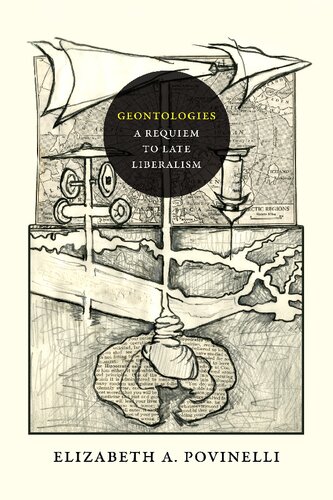
Geontologies: A Requiem to Late Liberalism
2016 · PDF

The Inheritance
2021 · PDF

Between Gaia and Ground: Four Axioms of Existence and the Ancestral Catastrophe of Late Liberalism
2021 · PDF