Cyclones in Southern Africa: Volume 1: Interfacing the Catastrophic Impact of Cyclone Idai with SDGs in Zimbabwe (Sustainable Development Goals Series)
Book information
Description
There is evidence that the world has been witnessing more intense tropical cyclones. Accompanying these tropical cyclones are heightened levels of devastation that witness the loss of human life and wildlife, destruction of natural resources and property and the disruption of major economic and social activities. To this end, there is a growing demand for publications focusing on tropical cyclones at various levels that include regional, national and local levels, especially from Africa. One sub-region that has been witnessing the harsh realities of the increasing intensity of tropical cyclones in southern Africa. However, within this region, countries are usually impacted at varying degrees of damage. Among the countries that usually encounter the harshness of these tropical cyclones are the Comoros, Botswana, Madagascar, Mauritius, Malawi, Mozambique, Reunion, the Seychelles, South Africa and Zimbabwe. From the history books, the following tropical cyclones made landfall and hit southern Africa: Eline (2000), Favio (2007), Dineo (2017), Idai (2019), Kenneth (2019), Eliose (2021), and Chalane (2020). Although all these tropical cyclones had negative impacts, it is undoubtedly Tropical Cyclone Idai that shocked the world with its devastation mainly in Mozambique, Malawi and Zimbabwe in March 2019. Key infrastructure was destroyed, livelihoods were lost, and the environment was degraded. Thousands of people died, many more were injured, many remain unaccounted for and others remained homeless as of the time of finalising this book in February 2021. This book, therefore focuses on the devastating impacts of Tropical Cyclone Idai in Zimbabwe. The book interfaces Tropical Cyclone Idai’s impacts with the 2030 Agenda for Sustainable Development and some of the 17 Sustainable Development Goals (SDGs). This linkage was deliberate given that there is still time remaining until 2030, and the world has generally agreed to move into the future along the pathways of sustainable development and sustainability. The book adds to the first comprehensive profiling of the impacts of tropical cyclones on southern African economies, particularly that of Zimbabwe. It also comes up as the first in a three-volume series. The other volumes to look out for are Cyclones in Southern Africa Vol 2: Foundational and Fundamental Topics; and Cyclones in Southern Africa Vol 3: Implications for the Sustainable Development Goals. To this end, this book is suitable as a read for several professionals and disciplines such as tourism and hospitality studies, economics, sustainable development, development studies, environmental sciences, arts, geography, life sciences, politics, planning and public health.
Similar books

Sustainable Development Goals for Society Vol. 2: Food security, energy, climate action and biodiversity
2021 · PDF

Counting the Cost of COVID-19 on the Global Tourism Industry
2020 · PDF

COVID-19, Tourist Destinations and Prospects for Recovery: Volume Three: A South African and Zimbabwean Perspective
2023 · PDF

COVID-19, Tourist Destinations and Prospects for Recovery: Volume One: A Global Perspective
2023 · PDF
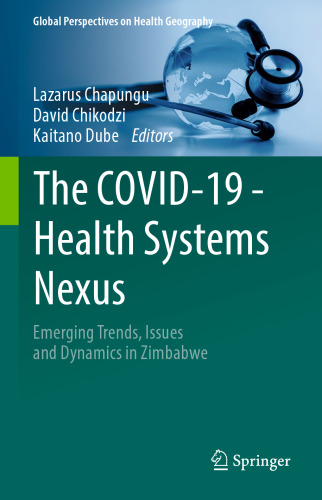
The COVID-19 - Health Systems Nexus: Emerging Trends, Issues and Dynamics in Zimbabwe
2023 · PDF

COVID-19 in Zimbabwe: Trends, Dynamics and Implications in the Agricultural, Environmental and Water Sectors
2023 · PDF

Sustainable Development Goals for Society Vol. 1: Selected topics of global relevance
2021 · PDF
Sustainable Development Goals and Institutions of Higher Education
2020 · PDF