Pragmatics of Human Communication: A Study of Interactional Patterns, Pathologies, and Paradoxes
Book information
Description
In this study of pragmatic (behavioral) effects of human communication, disturbed behavior is seen as a communicative reaction to a particular situation rather than evidence of the disease of an individual mind. Communication is a relationship that is qualitatively different from the "properties" of the individuals involved. After defining certain general concepts, the authors present basic characteristics of human communication and illustrate their manifestations and potential pathologies. Then the systemic aspects of human interactions that arise from the patterning of specific characteristics of communication are exemplified by the analysis of Albee's Who's Afraid of Virginia Woolf? They then extend it to psychotherapeutic double binds and the technique of "prescribing the symptom." In conclusion, they postulate about man's communication with reality in the existential sense.
Similar books
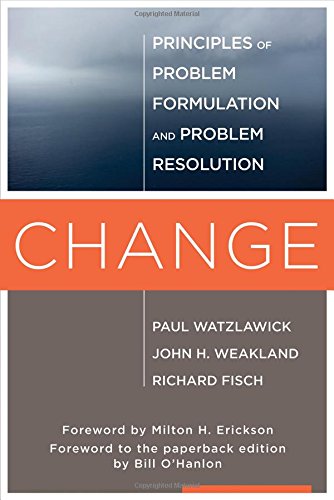
Change: Principles of Problem Formation and Problem Resolution
2011 · MOBI

Key Themes in Interpersonal Communication: Culture, Identities and Performance
2007 · PDF

Pragmatica della comunicazione umana. Studio dei modelli interattivi, delle patologie e dei paradossi
1978 · PDF

Ultra-Solutions: How to Fail Most Successfully

Es real la realidad? : confusión, desinformación, comunicación
1979 · PDF

El lenguaje del cambio
1989 · PDF

El arte de amargarse la vida(c.1)
1983 · FB2
Was macht den Menschen krank?: 18 kritische Analysen
1991 · PDF