Roman Birmingham 3: Excavations at Metchley Roman Fort 1999-2001 and 2004-2005: Western settlement, the livestock complex and the western defences
Book information
Description
Archaeological excavation, salvage recording and watching briefs were undertaken at Metchley Roman fort, Birmingham in 1999–2001 and 2004–2005. The areas investigated were located mainly to the west of the Roman military complex. The earliest features may have belonged to a construction camp (Phase A/ Phase 1A), preparatory to the layout of the first fort (Phase 1B), around AD 48. The western defences of this fort comprised double-ditches and a turf rampart. A new discovery was a palisade trench forming a western annexe or enclosure (Phase 1C) which may have been associated with the on-site manufacture of pottery, specifically mortaria. Most importantly, the excavations provided the first structural evidence for a civilian settlement at the site (Phase B). This comprised a total of six timber-framed structures, including three open-sided strip buildings, interpreted as shops, laid out along a gravelled trackway leading out of the fort. The western annexe or enclosure and the settlement were contemporary with the first fort. This short-lived settlement was succeeded by a complex of ditched livestock compounds (Phase C). A livestock 'funnel' leading to the fort's west gate was an integral part of this arrangement, confirming the nexus between the external livestock enclosures and the livestock enclosures previously recorded within the fort interior. Both the external and internal livestock enclosures belonged to the Neronian military stores depot (Phase 2B). The location of Metchley at an important road junction, and at, or adjoining, several tribal boundaries, could have proved important for the collection of livestock from the surrounding countryside. Assuming it was concerned with the supply of auxiliary rather than legionary units, Metchley is likely to have supplied forts within the local or regional area. The western livestock complex was abandoned by the early Flavian period. This zone to the west of the military complex was not brought back into use during subsequent occupations of the military complex, which continued up to the end of the 2nd century (Phases 3–4). Front Cover Title Page Copyright CONTENTS CHAPTER 1: SUMMARY AND INTRODUCTION CHAPTER 2: THE WESTERN FORT DEFENCES AND WESTERN ANNEXE OR ENCLOSURE CHAPTER 3: THE SETTLEMENT AND THE LIVESTOCK COMPLEX CHAPTER 4: BOREHOLE INVESTIGATIONS WEST OF FORT CHAPTER 5: SALVAGE RECORDING AND WATCHING BRIEF TO THE WEST OF THE FORT DEFENCES CHAPTER 6: DISCUSSION AND SYNTHESIS CHAPTER 7: ACKNOWLEDGEMENTS AND REFERENCES REFERENCES
Similar books

The SECRET BOOK
202 · PDF

The SECRET BOOK
2024 · EPUB

Essentials of Plastic Surgery: Q&A Companion
2022 · EPUB

Excavations at Little Paxton Quarry, Cambridgeshire, 1992-1998: Prehistoric and Romano-British Settlement and Agriculture in the River Great Ouse Valley
2011 · PDF

Settlement, Burial and Industry in Roman Godmanchester: Excavations in the extra-mural area: The Parks 1998, London Road 1997–8, and other investigations
2003 · PDF
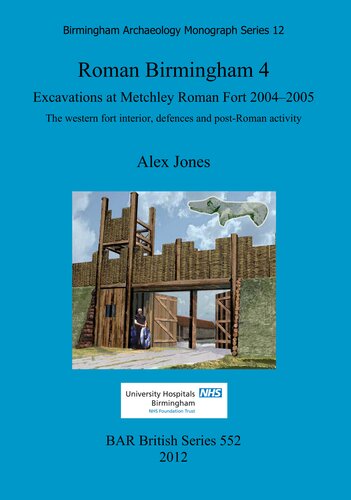
Roman Birmingham 4: Excavations at Metchley Roman Fort 2004–2005: The western fort interior, defences and post-Roman activity
2012 · PDF

A Romano-British Livestock Complex in Birmingham: Excavations 2002-2004 and 2006-2007 at Longdales Road, King's Norton, Birmingham
2008 · PDF

Der grosse Umbruch und der Krieg um die Welt
2022 · PDF