Terror, Security, and Money: Balancing the Risks, Benefits, and Costs of Homeland Security
Book information
Description
In seeking to evaluate the efficacy of post-9/11 homeland security expenses--which have risen by more than a trillion dollars, not including war costs--the common query has been, "Are we safer?" This, however, is the wrong question. Of course we are "safer"--the posting of a single security guard at one building's entrance enhances safety. The correct question is, "Are any gains in security worth the funds expended?"In this engaging, readable book, John Mueller and Mark Stewart apply risk and cost-benefit evaluation techniques to answer this very question. This analytical approach has been used throughout the world for decades by regulators, academics, and businesses--but, as a recent National Academy of Science study suggests, it has never been capably applied by the people administering homeland security funds. Given the limited risk terrorism presents, expenses meant to lower it have for the most part simply not been worth it. For example, to be considered cost-effective, increased American homeland security expenditures would have had each year to have foiled up to 1,667 attacks roughly like the one intended on Times Square in 2010--more than four a day. Cataloging the mistakes that the US has made--and continues to make--in managing homeland security programs, Terror, Security, and Money has the potential to redirect our efforts toward a more productive and far more cost-effective course.
Similar books

International Compendium of Coastal Engineering
2015 · PDF
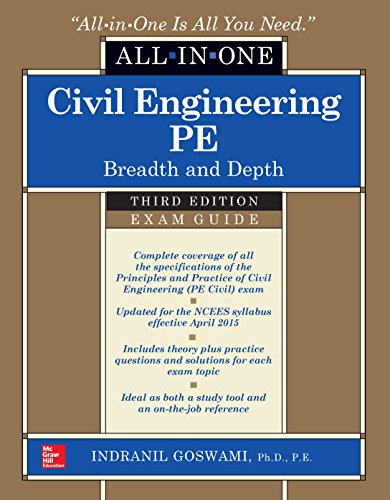
Civil Engineering All-In-One PE Exam Guide: Breadth and Depth
2015 · PDF

Applied Fluid Mechanics. Solutions Manual
2005 · PDF

The Guide to Hydropower Mechanical Design
1996 · PDF

Introduction to the Mechanics of Solids Solution Manual

Engineering Mechanics, Vol. 1: Statics SI Units (Ch1-Ch5)
2008 · PDF

Engineering Mechanics: Statics (3rd Edition)
2001 · PDF

Engineering Mechanics: Statics: Solutions Manual
2007 · PDF