History of the Alps, 1500-1900: Environment, Development, and Society
Book information
Description
In the 1700s, Jean-Jacques Rousseau celebrated the Alps as the quintessence of the triumph of nature over the “horrors” of civilization. Now available in English, History of the Alps, 1500-1900: Environment, Development, and Society provides a precise history of one of the greatest mountain range systems in the world. Jon Mathieu's work disproves a number of commonly held notions about the Alps, positioning them as neither an inversion of lowland society nor a world apart with respect to Europe. Mathieu's broad historical portrait addresses both the economic and sociopolitical—exploring the relationship between population levels, development, and the Alpine environment, as well as the complex links between agrarian structure, society, and the development of modern civilization. More detailed analysis examines the relationship between various agrarian structures and shifting political configurations, several aspects of family history between the late Middle Ages and the turn of the twentieth century, and exploration of the Savoy, Grisons, and Carinthia regions. Front Cover Contents Preface The Alps: A Historical Space? Key questions and the state of the research The political construction of territory Endnotes Population Data and collection methods Comparing long-term trends Endnotes Agriculture and Alpiculture The intensity differential in the Alps Cropping frequency and yields The intensification of animal husbandry . . . . . . and of plant cultivation Technology Endnotes Cities Statistics in the early modern era Acceleration of growth The slowing of urban growth The nineteenth century Endnotes Environment and Development An intermediate assessment: differentiated growth Relations between the Alps and surrounding areas History and ecological models Endnotes Image Gallery The location of the Alps "An Italian mountain" Map of Italy Maize plant Homage rendered to Emperor Leopold I in Klagenfurt Grenoble and its surroundings The Savoyard cadastre Law concerning feudal rights Hay harvesting below the castle of Hochosterwitz Navigable canal near the Preintaler Gscheidl View of a hotel Tribute from an Alpine pasture at the church of Nendaz Mountain farm at Hüttau Two Agrarian Structures (Nineteenth Century) Farming establishments Public order and property Inheritance law, collective resources Endnotes Territories during the Early Modern Period Savoy: the duke, the notables The Grisons: communes with subjects Carinthia: Lord, peasant, servant Endnotes State Formation and Society The European dimension Politics as a factor of differentiation Rural societies Endnotes History of the Alps from 1500 to 1900 A summary Arguments and outlook Appendices Bibliography Official statistical sources A-Statistics – Austria CH-Statistics – Switzerland F-Statistics – France FL-Statistics – Principality of Liechtenstein I-Statistics – Italy Selected literature Index Maps Map 1.1: Physical relief of the Alps #19,-1,-24 Map 1.2: Political divisions in the Alps, before 1790 and in 1900 #27,-2,-24 Map 2.1: Regions whose surface area is 75–100% Alpine #36,-2,-24 Map 3.1: Forms of agriculture in the Alps, ca. 1900, according to de Martonne #63,-2,-24 Map 4.1: Cities with 5000 or more inhabitants, in the Alps and surrounding areas, 1500 #96,-2,-24 Map 4.2: Cities with 5000 or more inhabitants, in the Alps and surrounding areas, 1800 #97,-2,-24 Map 4.3: The area surrounding Innsbruck, 1928 Map 6.1: Medium and large farms in Alpine regions and districts, 1900 #163,-1,-1 Map 6.2: Agricultural servants in Alpine regions and districts, 1900 #164,-2,-2 Map 6.3: Illegitimacy rates in Alpine regions and districts, 1900 #165,-2,-2 Map 7.1: The duchy of Savoy in the late eighteenth century Map 7.2: The Freestate of the Three Leagues before 1797 Map 7.3: The duchy of Carinthia in the late eighteenth century Map 8.1: Elements of agrarian structure in the Alps and in surrounding areas, eighteenth and nineteenth centuries #230,4,-24Tables Table 2.1: Indications of total Alpine population levels, 1500 –1900 Table 2.2: Population in Alpine regions, 1500 –1900 #37,29,-1 Table 2.3: Population growth and density in Alpine regions, 1500 –1900 Table 2.4: Population growth and density in the Alps and in surrounding areas,1500 –1900 Table 3.1: Introduction of corn and potatoes in the Alpine regions, 1500 –1900 Table 4.1: Cities with 5000 or more inhabitants, in the Alps and at the foot of theAlps, 1500 –1800 Table 4.2: Cities and urban population in the Alps according to altitude, 1600 –1800 Table 4.3: Cities and urban population in the Alps according to size, 1800 –1900 Table 4.4: Cities and urban population in the Alps according to altitude, 1800 –1900 Table 7.1: Household and family in Savoy-Piedmont and in the Grisons, 1561–1832 Table 7.2: Household and economic status in Carinthia and in the Grisons, 1750 –1798 Table A.1: Percentages of agricultural workers in Alpine regions, 1870 and 1900 Table A.2: Farm sizes in Alpine regions, 1900 #255,-1,-24 Table A.3: Agricultural labor force in Alpine regions, 1900 #256,-2,-24 Table A.4: Illegitimacy rates in Alpine regions, 1870 and 1900 Table A.5: Farm size, agricultural labor force, and illegitimacy rates in Alpine regions of Hapsburg Austria by district, 1870 and 1900 Table A.6: Cities with 5000 or more inhabitants in the Alps, 1870 and 1900 Back Cover
Similar books

History of the Alps, 1500-1900: Environment, Development, and Society
2009 · PDF

Zeit und Zeitperzeption: Historische Beiträge zur interdisziplinären Debatte
2020 · PDF

Geschichte der Alpen 1500-1900: Umwelt, Entwicklung, Gesellschaft
2001 · PDF
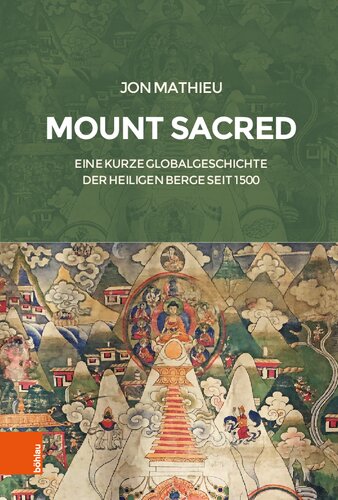
Mount Sacred: Eine kurze Globalgeschichte der heiligen Berge seit 1500
2023 · PDF

Empowering Interactions
2009 · PDF

MySQL® Notes for Professionals book
2018 · PDF

MrExcel 2022: Boosting Excel
2022 · PDF

MrExcel 2022: Boosting Excel
2022 · PDF