The Routledge Handbook of Embodied Cognition
Book information
Description
Embodied cognition is one of the foremost areas of study and research in philosophy of mind, philosophy of psychology and cognitive science. The Routledge Handbook of Embodied Cognition is an outstanding guide and reference source to the key topics and debates in this exciting subject and essential reading for any student and scholar of philosophy of mind and cognitive science. Comprising over thirty chapters by a team of international contributors, the Handbook is divided into six parts: Historical underpinnings Perspectives on embodied cognition Applied embodied cognition: perception, language, and reasoning Applied embodied cognition: social and moral cognition and emotion Applied embodied cognition: memory, attention, and group cognition Meta-topics. The early chapters of the Handbook cover empirical and philosophical foundations of embodied cognition, focusing on Gibsonian and phenomenological approaches. Subsequent chapters cover additional, important themes common to work in embodied cognition, including embedded, extended and enactive cognition as well as chapters on empirical research in perception, language, reasoning, social and moral cognition, emotion, consciousness, memory, and learning and development.
Similar books

The Routledge Handbook of Embodied Cognition
2014 · EPUB

The Miracle Myth: Why Belief in the Resurrection and the Supernatural Is Unjustified
2017 · PDF

Generalized Anxiety Disorder Workbook: CBT Activities to Manage Anxiety, Cope with Uncertainty, and Overcome Stress
EPUB

The CBT Workbook for Anxious Teens: 57 Exercises to Find Relief from Worry, Panic, Negative Thinking & Perfectionism

Quando persone intelligenti hanno idee stupide. Come la filosofia ci salva da noi stessi
2022 · EPUB
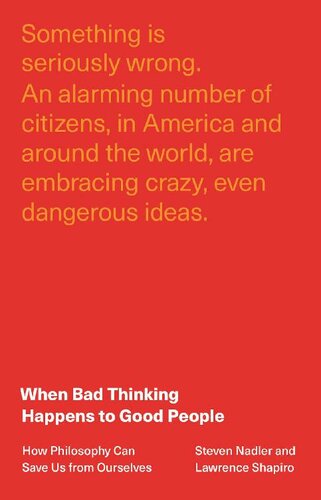
When Bad Thinking Happens to Good People: How Philosophy Can Save Us from Ourselves
2021 · EPUB

The Miracle Myth: Why Belief in the Resurrection and the Supernatural Is Unjustified
2016 · EPUB

Stopping the Pain. A Workbook for Teens Who Cut and Self Injure
2008 · PDF