Modern conflict in the greater Middle East: a country-by-country guide
Book information
Description
Primary documents : Declaration of the First Zionist Congress, Basel, Switzerland, August 1897 -- The Sykes-Picot Agreement: Sir Edward Grey to Paul Cambon, 1916 -- The Balfour Declaration: British Foreign Secretary Arthur J. Balfour to Lord Rothschild, 1917 -- United National Security Council, Resolution adopted at its 30th meeting, 1946 -- U.S. recognition of Israel, 1948 -- Egyptian law nationalizing the Suez Canal Company (excerpt), 1956 -- Abba Eban, Knesset Statement (excerpt), 1969 -- United National Security Council Resolution 338, 1973 -- Egypt-Israel Peace Treaty, 1979 -- U.S. Department of State, Statement on Afghanistan, 1979 -- Department of State, Daily Press Briefing on U.S. policy toward the Iran-Iraq War and toward exports to Iraq, 1982 -- Israel's assumptions with regard to the Baker Peace Plan, 1989 -- President George H.W. Bush announcement of the deployment of U.S. Armed Forces to Saudi Arabia for Operation Desert Shield, 1990 (excerpt) -- President George H.W. Bush, "The new world order," address before a joint session of Congress on the cessation of the Persian Gulf Conflict, 1991 (excerpts) -- Brent Scowcroft, "Don't attack Saddam," 2002 -- President George W. Bush, address to the Nation on Iraq, 2003 -- White House Press statement on lifting sanctions on Libya, 2004 -- President Obama on military operations against ISIS, 2014.;Introduction -- Afghanistan -- Algeria -- Bahrain -- Cyprus -- Egypt -- Iran -- Iraq -- Israel -- Jordan -- Kuwait -- Lebanon -- Libya -- Morocco -- Oman -- Pakistan -- Qatar -- Saudi Arabia -- Syria -- Tunisia -- Turkey -- United Arab Emirates -- Yemen --;Modern Conflict in the Greater Middle East: A Country-By-Country Guide is a concise reference for students exploring the importance of each nation-state in the Middle East and their level of involvement in major conflicts in the region. It supplies the broad historical background necessary for readers to understand each country's unique role in the conflicts that have characterized the region since the end of World War I. The book also enables readers to grasp the various motives and ideologies that have shaped each nation's military objectives and to appreciate the political and social climates of each of these countries that propelled them into various wars. The book presents a chapter-by-chapter discussion of the origins and impacts of war on specific Middle Eastern countries, giving readers an in-depth understanding of the global importance of the conflicts within the region. These chapters--along with detailed timelines, sidebars, and primary source documents--will help readers grasp the connections between individuals, developments, and conflicts in the Middle East and events and developments such as European imperialism, World Wars I and II, U.S. foreign policy during and after the Cold War, the formation of the state of Israel, Arab nationalism, the emergence of the oil industry in the region, and the origins of radical Islam.
Similar books

Transformation Processes in Egypt After 2011 : The Causes, Their Course and International Response
2015 · PDF

Beyond the Arab Spring in North Africa
2017 · EPUB

The Arab World Upended : Revolution and Its Aftermath in Tunisia and Egypt
2016 · PDF

The Arab Spring and Arab Thaw : Unfinished Revolutions and the Quest for Democracy
2013 · EPUB

Arab Spring in Egypt : Revolution and Beyond
2012 · EPUB

The Arab Spring, Democracy and Security : Domestic and International Ramifications
2013 · EPUB

Arap İsyanları Güncesi
2014 · PDF
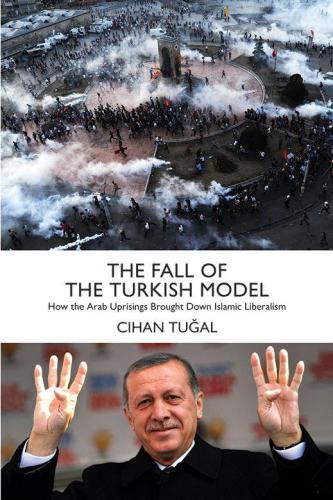
The Fall of the Turkish Model: How the Arab Uprisings Brought Down Islamic Liberalism
2016 · AZW3