Rossini and Post-Napoleonic Europe
Book information
Description
This book examines Rossini within the context of his own time, one of Napoleonic domination of Italy, restoration of the Bourbon monarchy in Naples in 1815, and the 1830 Revolution in Paris. Using the techniques of the historian, and reading librettos as texts, the author analyzes the five operas treated in detail in the book (Il barbiere di Siviglia, Cenerentola, La gazza ladra, Matilde di Shabran, and Il viaggio a Reims) as responses, each in its own way, to the history that the composer experienced. Roberts shows that Rossini made probing commentaries on politics and religion in a time of reaction and revolution, and that the composer was well-informed on post-Napoleonic politics. Rossini's comic writing served very serious purposes, exposing the problems and complications of an age that he observed with striking clarity. Warren Roberts is Professor Emeritus of History at the University at Albany, SUNY, and has published extensively on eighteenth-century French culture.
Similar books

Morality and Social Class in Eighteenth-Century French Literature and Painting
1974 · PDF
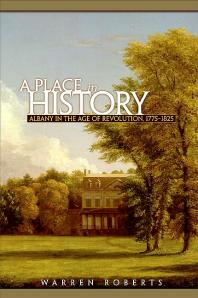
A Place in History: Albany in the Age of Revolution, 1775-1825
2010 · EPUB

Rossini and Post-Napoleonic Europe
2015 · PDF

Jane Austen and the French Revolution
2001 · PDF

MySQL® Notes for Professionals book
2018 · PDF

MrExcel 2022: Boosting Excel
2022 · PDF

MrExcel 2022: Boosting Excel
2022 · PDF

Session C11: Ancient Cultural Landscapes in South Europe – their Ecological Setting and Evolution, Session C22: Gardeners from South America, Session S04: Agro-Pastoralism and Early Metallurgy Sessions, Session WS29: The Idea of Enclosure in Recent Iberian Prehistory, Session C88: Rhytmes et causalites des dynamiques de l'anthropisation en Europe entre 6500 ET 500 BC: Hypotheses socio-culturelles et/ou climatiques: Proceedings of the XV UISPP World Congress (Lisbon 4-9 September 2006) / Actes du XV Congrès Mondial (Lisbonne 4-9 Septembre 2006) Vol.36
2010 · PDF